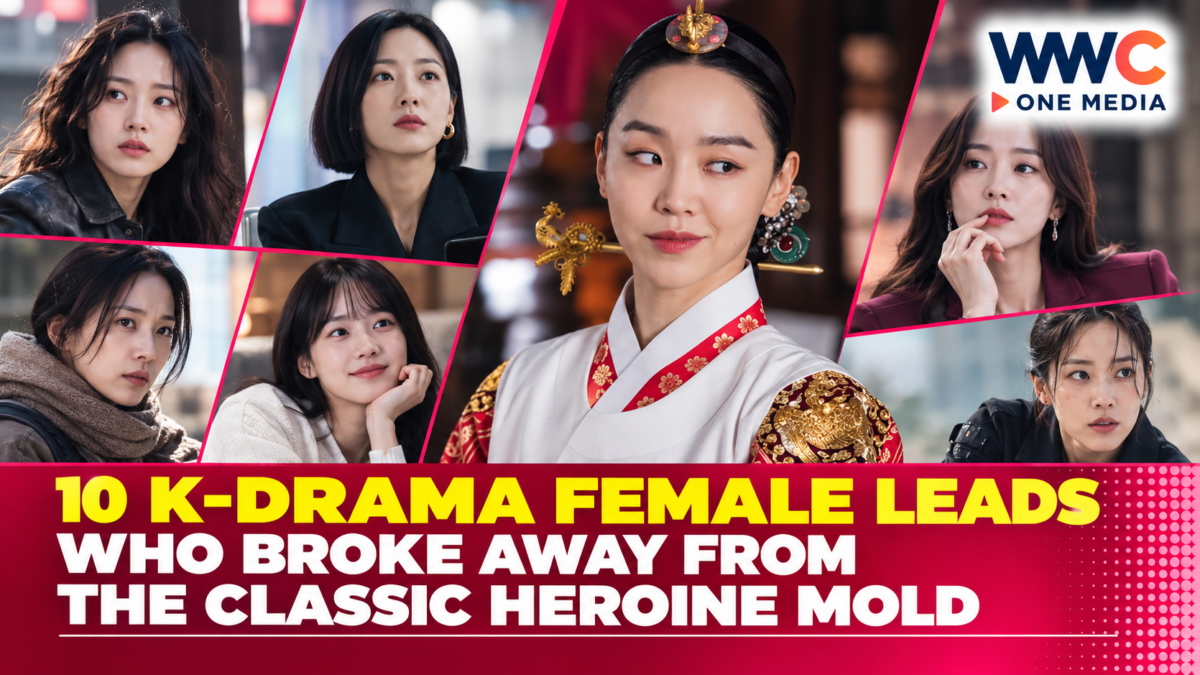
K-dramas have long been associated with familiar romantic formulas: an ordinary woman crosses paths with a wealthy heir, a career-minded heroine finds love, or a seemingly delicate character is rescued by the male lead. But a growing number of series have moved beyond those conventions, creating female characters who are ambitious, physically strong, complicated, unconventional and sometimes deeply flawed.
These characters are not defined solely by romance. Their careers, ambitions, personal struggles and sometimes questionable decisions are central to their stories, giving audiences a broader range of what a K-drama heroine can be.
One early example is Go Eun-chan from Coffee Prince, played by Yoon Eun-hye. The 2007 drama follows a young woman who disguises herself as a man so she can secure employment at a coffee shop. Her decision is driven largely by economic necessity rather than romance.
Eun-chan is portrayed as physically active, hardworking and unconcerned with conventional feminine presentation. She works multiple jobs and eventually becomes one of the coffee shop’s employees while its owner, Choi Han-gyeol, believes she is a man. His growing attraction to Eun-chan creates one of the drama’s central conflicts and allows the series to explore questions surrounding gender, attraction and identity.
Another memorable character is Kim Bok-joo from Weightlifting Fairy Kim Bok-joo. Played by Lee Sung-kyung, Bok-joo is a university-level weightlifter whose physical strength is an important part of her identity.
Rather than presenting athleticism or a muscular physique as something the heroine needs to change, the drama makes Bok-joo’s training, discipline and sporting ambitions central to her story. Her romance develops alongside her life as an athlete, allowing her character to remain strong and feminine without requiring a conventional makeover.
Mr Queen took the concept of an unconventional female lead in an entirely different direction. Shin Hye-sun plays Kim So-yong, a Joseon-era queen whose body becomes inhabited by the consciousness of Jang Bong-hwan, a modern-day male chef.
The unusual premise allows the character to behave in ways that are far removed from the traditionally restrained image associated with historical royal heroines. She brings modern cooking techniques into the palace while becoming involved in political intrigue and navigating the contradictions between Bong-hwan’s personality and Queen Kim So-yong’s life.
In My Name, Han So-hee took on the role of Yoon Ji-woo, a character whose story is driven by revenge rather than romance. After her father’s death, Ji-woo joins a criminal organisation, undergoes combat training and infiltrates the police under an assumed identity.
The character is repeatedly placed in physically dangerous situations and is portrayed as someone who must rely on her own fighting abilities and determination. Her central motivation remains finding her father’s killer, rather than following the conventional romantic storyline often associated with female leads.
Crash Course in Romance introduced another departure from the typical young K-drama heroine through Nam Haeng-seon, played by Jeon Do-yeon. She is a woman in her 40s, a former national handball player and the owner of a side-dish shop who has devoted years to caring for her niece and family.
When she becomes involved with star maths instructor Choi Chi-yeol, her age, family responsibilities and established identity are not treated as obstacles that must disappear before she can become the romantic lead. Instead, those experiences form an important part of who she is.
Extraordinary Attorney Woo brought disability representation into the centre of its story through Woo Young-woo, portrayed by Park Eun-bin. Young-woo is an autistic rookie lawyer who joins the prestigious law firm Hanbada.
The series follows her as she handles courtroom cases, workplace relationships and ethical challenges while building her professional identity. Her autism affects how she experiences and navigates the world, but the character is also presented with ambitions, personal quirks, relationships and agency beyond the condition itself. Park Eun-bin later received the Television Grand Prize at the 59th Baeksang Arts Awards in 2023 for the role.
Hyena offered yet another variation with Jung Geum-ja, played by Kim Hye-soo. Unlike the traditionally idealised lawyer heroine, Geum-ja is intensely ambitious, financially motivated and willing to use unconventional tactics when pursuing her cases.
Her rivalry with fellow attorney Yoon Hee-jae is not simply a romantic subplot. Their professional competition is woven into their relationship, with both characters repeatedly attempting to outmanoeuvre each other. Geum-ja’s willingness to compete aggressively in a male-dominated legal environment makes her distinctly different from more accommodating female protagonists.
Anna presented a much darker version of female ambition. Bae Suzy plays Lee Yu-mi, a woman facing financial hardship who decides to reinvent herself by taking on another person’s identity and educational background.
Rather than following a straightforward Cinderella story in which the heroine is rewarded for her goodness, Anna focuses on deception, social class and the lengths Yu-mi is willing to go to escape her circumstances. Her choices are morally complicated, making her an unconventional protagonist rather than an easily likeable heroine.
Jeongnyeon: The Star Is Born placed artistic ambition at the centre of its female lead. Kim Tae-ri plays Yoon Jeong-nyeon, a young woman in 1950s Seoul who dreams of becoming a star of traditional Korean women’s musical theatre, known as gukgeuk.
Unlike many romantic dramas, Jeong-nyeon’s defining relationships are shaped by artistic competition, friendship and professional rivalry rather than a central love story. Her journey focuses on training, setbacks, vocal performance and the determination required to master her craft.
Finally, It’s Okay to Not Be Okay introduced viewers to Ko Mun-yeong, portrayed by Seo Yea-ji. Mun-yeong is a successful children’s author who is outspoken, provocative, demanding and often difficult to deal with.
She does not fit the familiar image of a gentle, accommodating heroine. Mun-yeong openly pursues Moon Gang-tae and remains forceful and uncompromising even as the series explores the childhood experiences behind her emotional defences. Her character demonstrates that a female lead can be flawed, difficult and morally complicated while still remaining at the centre of a compelling story.
Together, these characters reflect the widening range of female protagonists appearing in Korean dramas. Some challenge traditional ideas about beauty and femininity, while others place careers, sport, family responsibilities, artistic ambition, disability, survival or personal revenge ahead of conventional romance.
Their stories also show how the role of the K-drama heroine has expanded. Instead of existing primarily as a romantic counterpart to the male lead, these women increasingly carry stories in which romance is only one part of a much larger identity.