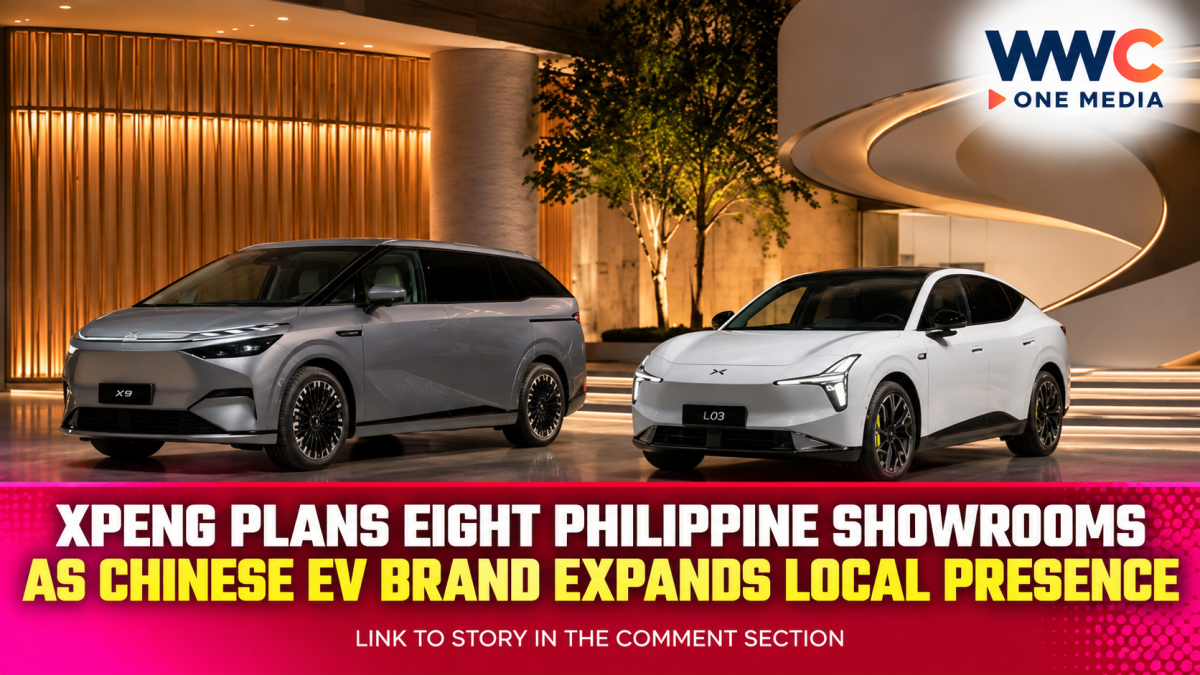
Chinese electric vehicle maker XPENG is expanding its presence in the Philippines with plans to establish eight showrooms across Metro Manila, Cebu and Davao by the end of 2026, marking a major step in its entry into the local automotive market.
The company formally launched its Philippine operations on Sept. 25, introducing the X9 electric multi-purpose vehicle and the L03 sedan, which is available in both fully electric and range-extended versions. XPENG is establishing its sales, service and after-sales network as it seeks to build a long-term presence in the country.
XPENG Philippines is a direct subsidiary of the Chinese automaker and represents the company’s first subsidiary in Southeast Asia. The local operation is positioning the brand around electric mobility, artificial intelligence, software and advanced driver-assistance technologies.
The company plans to have eight showrooms operating across Metro Manila, Cebu and Davao by yearend. Initial locations include Greenhills, Makati, North EDSA and Cebu, with the North EDSA flagship dealership expected to open in October.
The expansion comes as the Philippine automotive market sees increasing competition among electric and electrified vehicle brands. Chinese manufacturers in particular have been expanding their local footprints, offering models that combine competitive pricing with increasingly sophisticated technology.
XPENG’s initial Philippine lineup consists of six variants across two models. The L03 starts at ₱1.548 million for the EV Standard Range, while the range-extended version starts at ₱1.598 million. The EV Long Range is priced at ₱1.698 million, while the top L03 EV RWD Long Range Ultra costs ₱2.058 million.
The X9, meanwhile, is positioned as XPENG’s flagship seven-seat electric MPV. Its two Philippine variants are priced at ₱3.858 million and ₱4.058 million, with the more expensive version equipped with an upgraded second-row premium seating package.
The X9 is powered entirely by electricity, while the L03 gives buyers a choice between battery-electric versions and a range-extended electric vehicle. The L03 REEV uses a gasoline engine as a generator, allowing the vehicle to continue operating beyond its pure-electric driving range.
XPENG is also building an ownership-support package around the Philippine launch. X9 buyers receive five years of preventive maintenance, five years of roadside assistance, a five-year vehicle warranty and an eight-year warranty covering the battery and electric motor. L03 buyers receive two years of preventive maintenance alongside five-year vehicle and eight-year battery warranties.
Charging infrastructure remains one of the challenges for electric vehicle adoption in the Philippines. XPENG has therefore included home-charging equipment with its vehicles, while its expanding dealer network is expected to provide customers with access to sales and after-sales services in more locations.
The company is also emphasizing technology as a central part of its identity. XPENG says more than 40% of its global workforce is involved in research and development, with the company developing its own artificial intelligence, vehicle operating systems, advanced driver-assistance technologies and other core vehicle technologies.
XPENG’s global expansion provides the backdrop for its Philippine push. The company said it had expanded into more than 60 countries, with cumulative global deliveries exceeding 1.2 million vehicles as of July 31, giving the relatively new Philippine operation access to a broader international product and technology ecosystem.
The Philippine rollout is also expected to expand beyond the initial two models. XPENG has indicated that it plans to introduce two additional vehicles within six months, potentially giving local consumers more choices as the company establishes its dealer network.
For XPENG, the immediate challenge is no longer simply introducing its vehicles to Filipino consumers but building the infrastructure required to support ownership after the sale. A wider showroom network, service capacity, charging accessibility and customer familiarity with EV technology will all influence how quickly the brand can establish itself.
With eight showrooms targeted by the end of the year and additional models planned, XPENG is moving to compete for a larger share of the Philippines’ rapidly developing electrified vehicle market. The coming months will show how the company’s technology-focused strategy and expanding local network translate into sustained demand from Filipino buyers.