
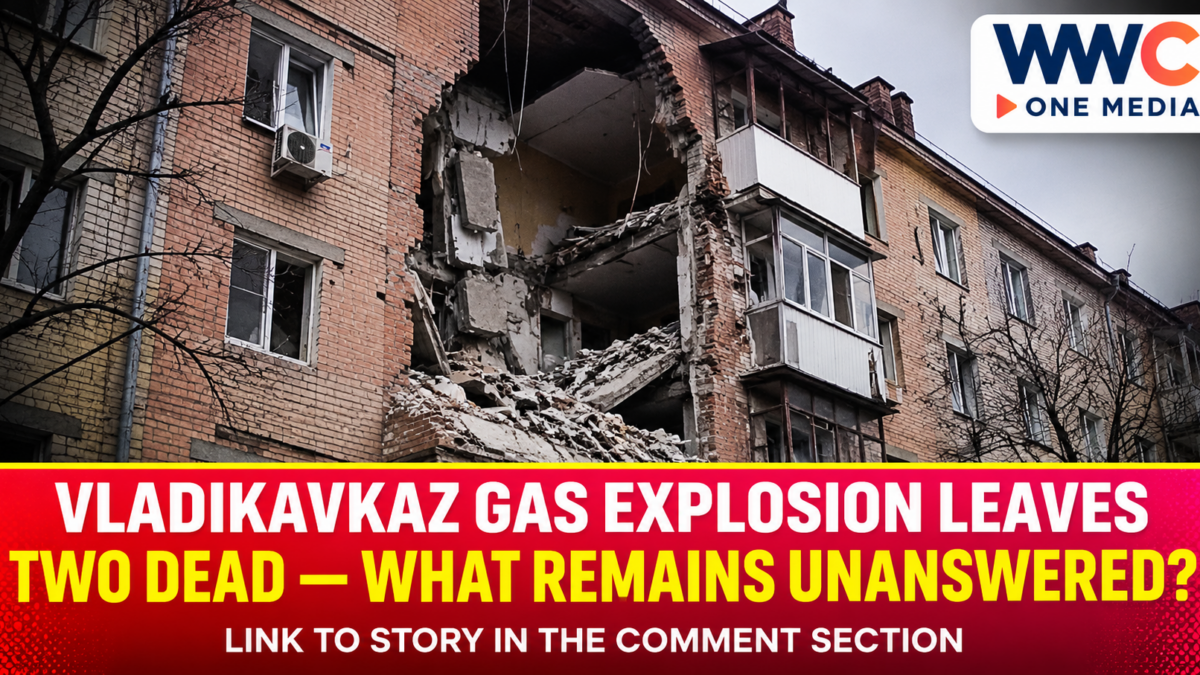
VLADIKAVKAZ, Russia — Nov. 22, 2026. A gas explosion at an apartment building in Vladikavkaz on Nov. 21 killed two people and prompted the authorities in Russia’s North Ossetia region to declare a municipal emergency. Regional head Sergey Menyaylo confirmed that two people sought medical attention and that a criminal investigation had begun.
The immediate toll is established in the regional government’s public announcements, but the investigation into the circumstances remains open. That distinction matters for residents seeking assurances about housing safety and for anyone trying to understand whether the emergency response has identified its causes.
Vladikavkaz Gas Explosion: What Officials Confirmed
Menyaylo identified the location as an apartment building on Kursantov-Kirovtsev Street in Vladikavkaz. In his Nov. 21 statement, he confirmed two deaths and extended condolences to the families affected.
He said two people had sought medical assistance. One was in hospital in a condition described as serious but stable, while the other received treatment at the scene. The distinction is important: receiving medical assistance is not the same as being admitted to hospital.
In a further public update on Nov. 22, Menyaylo again referred to two fatalities and one person remaining in hospital under medical care. His statement did not present a completed investigation or assign responsibility for the incident.
The confirmed information describes a deadly residential emergency, not a settled account of everything that happened inside the building. Precise details about the physical sequence of events require the investigators’ own findings.
Why a Municipal Emergency Was Declared
Menyaylo announced that Vladikavkaz had introduced a municipal-level emergency regime and that rescue and recovery operations were continuing at the incident site. Such an announcement establishes that the authorities activated an emergency response; it does not, by itself, establish how many flats were uninhabitable or when residents could safely return.
A major explosion can create several overlapping needs: immediate medical assistance, securing the affected area, examining damaged structures and helping occupants who cannot return home. These are operational questions for the local authorities, and the public record reviewed for this article does not resolve every one of them.
For comparisons about how a damaged residential building can leave families facing a longer recovery, WWC has separately examined a Brooklyn building collapse and its aftermath. That was a different incident, under different authorities, and does not establish anything about the cause in Vladikavkaz.
What the Criminal Investigation Must Determine
The regional head confirmed that a criminal case had been opened and that law enforcement was working to establish the circumstances and causes. Opening a case is an investigative step, not a conviction and not evidence that a named person or company is responsible.
An investigation of this kind needs to separate the event itself from conclusions about conduct. What material ignited, where it accumulated, how it entered the property and whether any applicable safety rules were breached are distinct questions. The public statements available for this report do not provide final answers.
That caution is especially relevant when early explanations circulate quickly. A preliminary account may help direct an investigation without establishing the complete chain of responsibility. A fair report should not turn an untested possibility into an allegation against residents, owners, installers or utility personnel.
WWC has addressed a similar reporting distinction in its coverage of Thailand’s building-collapse proceedings, where one legal outcome did not settle separate questions about a structure’s failure. The Russian incident is unrelated, but the principle of keeping investigative stages separate remains useful.
Why Gas Safety Questions Matter Beyond One Building
Gas systems in occupied buildings raise both technical and administrative questions. Safe operation depends on the design and condition of equipment, appropriate installation, maintenance, and the ability to identify and respond to hazards. None of those general considerations should be treated as a finding that any particular defect existed in the Vladikavkaz apartment.
For residents, the most useful public information will eventually be specific: whether the affected structure has been checked, what restrictions remain and what the relevant authorities have determined about continued occupancy. Speculation cannot replace those assessments.
WWC has also published an explainer on household LPG safety checks. It concerns household cylinders and consumer precautions, not the technical configuration or cause of this Russian building explosion. The systems should not be assumed to be interchangeable.
The broader lesson is that prevention and accountability need verifiable facts. A tragedy can prompt legitimate questions about inspections and responsibilities without making it acceptable to assign fault before the evidence has been assessed.
What This Could Mean for Residents
Analysis: The emergency declaration and opening of a criminal investigation signal two parallel priorities: managing immediate safety risks and establishing a reliable account of what happened. Neither process can substitute for the other.
People affected by a damaged residential building need practical decisions about access, accommodation, services and structural safety. Investigators, meanwhile, need time and evidence to determine whether any individual’s or organisation’s actions warrant legal consequences. The publicly accessible statements reviewed here do not give a confirmed timetable for either outcome.
Keeping those questions separate also avoids suggesting that a criminal investigation proves a safety violation occurred. It does not. The evidence and any subsequent official findings must determine that.
What Happens Next
The next meaningful developments would be an official update on the investigation, an assessment of the building’s safety and any published decision about assistance or access for affected residents. As of the Nov. 22 public statement reviewed for this article, the region’s head continued to describe an investigation and medical treatment for one hospitalised person.
Any revised casualty count, technical explanation or legal charge should be incorporated only after checking the underlying official announcement. Until then, the confirmed story is serious enough without unsupported additions: two people died, others required care, a city emergency was declared and the authorities were investigating what led to the explosion.
Frequently Asked Questions
When did the Vladikavkaz gas explosion happen?
The incident occurred on Nov. 21, 2026, at an apartment building on Kursantov-Kirovtsev Street in Vladikavkaz, North Ossetia.
How many people died in the explosion?
Regional head Sergey Menyaylo confirmed two deaths in his Nov. 21 announcement and repeated that figure in a Nov. 22 update.
How many people were injured?
Two people sought medical assistance, the regional announcement said. One was hospitalised in a serious but stable condition; the other received treatment at the scene.
Was an emergency declared in Vladikavkaz?
Yes. The regional head announced a municipal-level emergency following the explosion.
Has the cause been conclusively established?
Not in the official statements directly reviewed for this article. The regional head confirmed that a criminal investigation was underway to establish the circumstances and causes.










