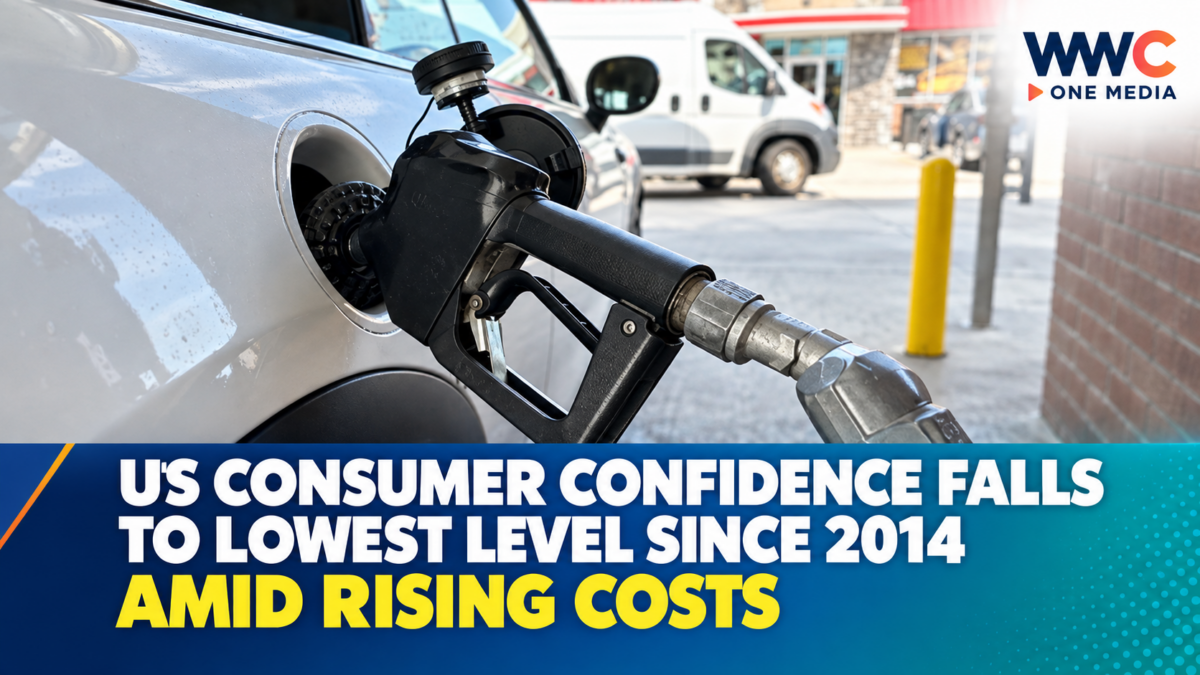
Americans’ confidence in the economy fell sharply in September to its lowest level since 2014, as higher prices, rising fuel costs and concerns about the labor market weighed on households.
The Conference Board’s Consumer Confidence Index dropped 6.7 points to 81.9 in September from 88.6 in August. It was the lowest reading since April 2014 and marked the third consecutive monthly decline.
Consumers became less optimistic about both current economic conditions and the months ahead. The Present Situation Index fell 7.9 points to 109.3, while the Expectations Index declined 5.9 points to 63.6.
The survey found that views of current business conditions turned negative for the first time since September 2024. The share of respondents describing business conditions as bad increased, while perceptions of job availability also weakened.
Rising prices were among the most frequently cited concerns. Responses collected between Sept. 1 and 23 repeatedly mentioned the cost of gasoline, goods and services, with concerns about oil and fuel prices increasing significantly during the month.
Consumers also became more worried about inflation. Average 12-month inflation expectations rose to 6.1%, while the median expectation increased to 5.1%. The proportion expecting interest rates to rise over the next year also climbed to 68.4%.
The deterioration in sentiment came despite some signs of resilience in the labor market. US employers added 162,000 jobs in August, while the unemployment rate remained at 4.1%. However, average hourly wages increased 3.1% from a year earlier, the weakest annual growth since May 2021, according to government data cited in reports.
Higher energy costs have added to the pressure on households. Gasoline prices rose during September amid continued conflict in the Middle East, while higher borrowing costs have also increased the cost of mortgages, auto loans and credit cards following the Federal Reserve’s recent rate increase.
The decline in confidence was broad-based across political affiliations. The Conference Board said confidence fell among Democrats, Republicans and independents, indicating that the September deterioration was not limited to one political group.
Spending plans also showed signs of caution. Six-month plans to purchase homes and automobiles declined slightly, while expected spending on several discretionary services, including hotels, airfare, movies and amusement parks, also moderated.
The latest reading highlights the growing gap between some relatively strong employment figures and households’ perceptions of their financial situation. Whether consumer confidence improves will depend in part on the path of inflation, energy prices, interest rates and employment in the months ahead.