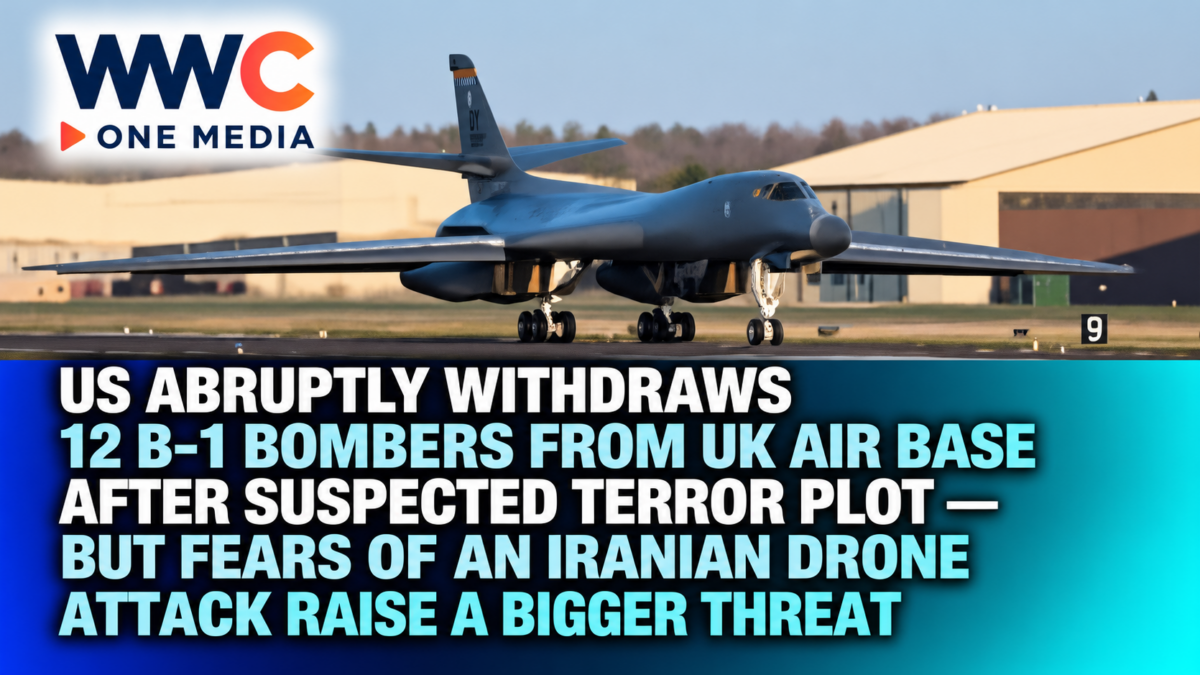
The United States has abruptly withdrawn approximately 12 B-1B Lancer strategic bombers from a major military air base in Britain following intelligence warnings about a possible terrorist attack, raising fresh concerns over the vulnerability of American military installations in Europe.
The aircraft were removed from RAF Fairford in Gloucestershire and returned to their home stations in the United States after British authorities launched an investigation into suspicious activity near the facility.
American and British officials suspect the incident may be linked to a broader Iranian-backed operation involving explosive devices or weaponized drones.
However, Iran has denied involvement, and investigators have not publicly established that Tehran directed the suspected plot.
The developments have heightened tensions between Washington, London and Tehran as the United States continues military operations connected to the conflict involving Iran.
The withdrawal also raises an uncomfortable question for Western defense planners:
If a suspected attack can force the removal of an entire deployment of American strategic bombers, how secure are other military installations across Europe?
Pentagon Confirms Bombers Have Left RAF Fairford
The United States confirmed that its deployed bombers had returned to their home bases.
The Pentagon said the redeployment had occurred but declined to disclose sensitive operational details concerning the movement.
Approximately a dozen B-1B Lancer aircraft had been stationed at RAF Fairford, a strategically important installation used by American forces for long-range bomber missions.
The sudden departure drew attention because some aircraft had reportedly arrived at the base only days earlier.
The speed of the withdrawal suggested that American commanders were responding to information they considered sufficiently serious to warrant immediate precautions.
The Pentagon did not publicly confirm every detail of the threat assessment.
Nevertheless, Reuters and other international outlets reported that concerns about an alleged attack were central to the decision.
What Happened Near RAF Fairford?
The security investigation began after suspicious activity was reported near the air base on September 27.
British counterterrorism officers arrested five men in connection with the incident.
Reports indicated that several individuals had been seen near the facility using vehicles and behaving suspiciously.
Investigators subsequently examined vehicles associated with the suspects.
Petrol or other accelerants were reportedly discovered.
However, authorities did not report finding explosives in the vehicles.
The arrests prompted an extensive security investigation involving British counterterrorism authorities.
A sixth suspect, identified as a British-Iranian dual national, was arrested separately in London.
As the investigation expanded, American officials reassessed the threat to aircraft and personnel stationed at RAF Fairford.
Seventh Suspect Arrested in London
The investigation took another significant turn on October 6.
British police arrested a seventh person in connection with the suspected plot.
The suspect, a 22-year-old British man, was detained in Westminster, central London.
He was arrested on suspicion of preparing terrorist acts under British counterterrorism legislation.
The six previously arrested suspects had been released on bail while investigations continued.
Their release did not mean the investigation had ended or that the allegations had been resolved.
Police continued examining evidence and possible connections among those involved.
As of October 7, the publicly reported arrests did not establish that any suspect had been convicted of plotting an attack.
The investigation remains active.
US Intelligence Reportedly Feared an Iranian Drone Attack
The most serious concerns involved the possibility of a coordinated attack using armed drones.
According to Reuters, American officials received intelligence suggesting that the suspected operation could involve an Iranian-linked attempt to strike RAF Fairford.
Other reports indicated that the threat assessment included the possibility of drones targeting parked aircraft and American personnel.
A successful attack could potentially damage valuable military equipment and endanger service members.
However, important details remain unresolved.
Investigators have not publicly demonstrated that the suspects possessed operational attack drones.
Nor have they established that an attack was ready to take place.
The reported drone threat therefore remains an intelligence concern rather than a confirmed attempted drone strike.
That distinction is essential because the authorities are still determining the suspects’ intentions and capabilities.
Why Iran Is Being Investigated
Suspicion has focused on Iran because of the ongoing confrontation involving American military operations against Iranian targets.
RAF Fairford has served as a base for US bombers involved in strikes connected to the conflict.
British officials have publicly indicated that they suspect Iranian involvement in the alleged plot.
American officials have also discussed the possibility of a foreign-state connection.
Iran, however, has rejected accusations of involvement.
Tehran has described the claims as baseless and protested the allegations through diplomatic channels.
There is therefore a significant difference between the intelligence assessments reported by officials and evidence presented publicly establishing responsibility.
The existence of an investigation does not prove that Iran planned, financed or directed the suspected operation.
Why RAF Fairford Matters to the United States
RAF Fairford is one of America’s most important forward operating locations for strategic bombers in Europe.
Situated in Gloucestershire, the base has supported long-range American military aviation for decades.
It can accommodate large aircraft and provides a valuable staging location for operations involving Europe, the Middle East and surrounding regions.
The B-1B Lancer is a long-range bomber designed to carry substantial conventional weapons payloads.
Its ability to undertake extended missions makes it an important part of America’s conventional strike capabilities.
Deploying these aircraft to European bases allows the United States to position military assets closer to potential operating areas.
But concentrating valuable aircraft at a known installation also presents security challenges.
Aircraft parked on the ground can be vulnerable to attacks involving relatively inexpensive weapons.
That vulnerability is becoming increasingly important as military technology changes.
The Drone Threat Is Changing Military Warfare
The suspected RAF Fairford plot has drawn attention to a broader concern across Western militaries.
Small, inexpensive drones can potentially threaten equipment worth millions of dollars.
Recent conflicts have demonstrated how unmanned aircraft can be used for surveillance, disruption and attacks against military installations.
One example was Ukraine’s June 2025 operation against Russian military air bases.
That operation involved drones launched near aircraft facilities and demonstrated the potential danger of attacks against parked military planes.
Security analysts say the incident underscored the importance of defending military installations against threats that do not require conventional aircraft or long-range missiles.
Reports suggest American officials considered that precedent when evaluating the alleged threat to RAF Fairford.
However, investigators have not established that the British incident followed the same operational design.
Could Other US Military Bases Face Similar Threats?
The incident raises questions about the security of other American installations in Europe.
The United States maintains a substantial military presence across the continent through bases, logistical facilities and partnerships with NATO allies.
These installations support training, transport, intelligence and military operations.
Their security arrangements must account for conventional threats as well as emerging risks involving drones and sabotage.
A suspected attack against RAF Fairford does not establish that other installations face identical threats.
But the rapid withdrawal highlights the importance of reassessing how valuable military aircraft are protected.
Possible security considerations include surveillance, access control and counter-drone defenses.
The central challenge is protecting aircraft and personnel without unnecessarily disrupting military readiness.
Did the Withdrawal Weaken America’s Military Capabilities?
The immediate withdrawal removed a significant bomber deployment from British territory.
However, that does not necessarily mean the United States lost the ability to conduct long-range military operations.
American strategic bombers are capable of operating from bases in the United States and conducting extended missions when required.
US European Command has emphasized that American military forces retain global strike capabilities.
The redeployment can therefore be understood as a precaution intended to protect personnel and aircraft while preserving operational options.
Nevertheless, removing aircraft from a forward location can change logistical requirements and the time needed to conduct certain missions.
The operational consequences depend on mission planning and other military resources available.
Those details have not been fully disclosed.
Britain Faces Questions About Military Base Security
The incident has also created pressure on British authorities.
RAF Fairford is located in an area where civilian communities live relatively close to military facilities.
Residents have reported increased security activity around the installation.
British officials have sought to reassure the public that the site is secure.
But the withdrawal of American bombers naturally raised questions about the seriousness of the threat.
Authorities must balance several responsibilities.
They need to protect military personnel and nearby communities.
They must investigate possible criminal activity.
And they must avoid disclosing sensitive information that could compromise an ongoing investigation.
The British government has maintained that appropriate security arrangements are in place.
The situation nevertheless demonstrates how an international military crisis can create consequences for communities far from the primary conflict zone.
Suspects Remain Entitled to Due Process
The investigation has generated intense public attention.
But several essential legal distinctions remain.
An arrest on suspicion of preparing terrorist acts does not establish that a person committed terrorism.
Being released on bail does not mean an allegation has been disproved.
Similarly, possessing petrol or being present near a military installation does not, without further evidence, establish participation in a coordinated attack.
Investigators must determine the significance of the available evidence.
Prosecutors must establish whether criminal charges are justified.
And any resulting allegations must be tested through the legal process.
The suspects remain entitled to the presumption of innocence.
These safeguards are particularly important in a case involving allegations of foreign-state involvement and national security.
US-Iran Tensions Add to the Security Concerns
The suspected plot comes against the backdrop of heightened tensions involving the United States and Iran.
American military operations have placed additional attention on bases used to support strikes against Iranian targets.
Tehran has warned that facilities supporting attacks on its territory could become targets.
Western governments have also raised concerns about possible retaliation or activity involving groups associated with Iran.
But the existence of these broader tensions cannot independently establish who was responsible for the events near RAF Fairford.
The specific allegations must be assessed through intelligence and criminal evidence.
The broader geopolitical context helps explain why American commanders may have taken the reported threat seriously.
It does not settle the question of responsibility.
What Happens Next?
Several developments will determine how the investigation proceeds.
British counterterrorism authorities are continuing to examine the circumstances surrounding the arrests.
Investigators must determine whether the suspects were involved in preparing an attack and whether any foreign organization directed or supported their activities.
American officials will also assess the security requirements for future bomber deployments.
RAF Fairford remains a strategically valuable installation, but decisions about returning aircraft will depend on operational and security considerations.
The United States has not announced that it is permanently abandoning the base.
The withdrawal should therefore be understood as a redeployment rather than the closure of an American military facility.
For now, significant questions remain unanswered.
The Bigger Security Question: Can Expensive Bombers Be Protected From Cheap Drones?
The most important consequence may extend beyond the alleged plot itself.
Modern military power depends heavily on advanced and expensive equipment.
Yet relatively inexpensive technology can potentially threaten those assets when they are concentrated at predictable locations.
The RAF Fairford episode illustrates why Western defense planners are increasingly concerned about the security of aircraft on the ground.
The threat of a drone attack does not need to materialize to influence military decisions.
Credible intelligence can be enough to trigger protective action.
In this case, approximately a dozen American bombers were returned to the United States while British authorities continued investigating a suspected terrorist operation.
The Pentagon has confirmed that its deployed bombers left RAF Fairford.
British police have arrested seven suspects in connection with the investigation.
And intelligence reports have raised concerns about a possible Iranian-linked drone threat, which Tehran denies.
But the bigger question remains:
Was RAF Fairford the target of a credible, coordinated attack—or does the episode reveal a broader vulnerability that could force the United States and its allies to rethink how they protect their most valuable military aircraft?
The answer could have implications far beyond one British air base.