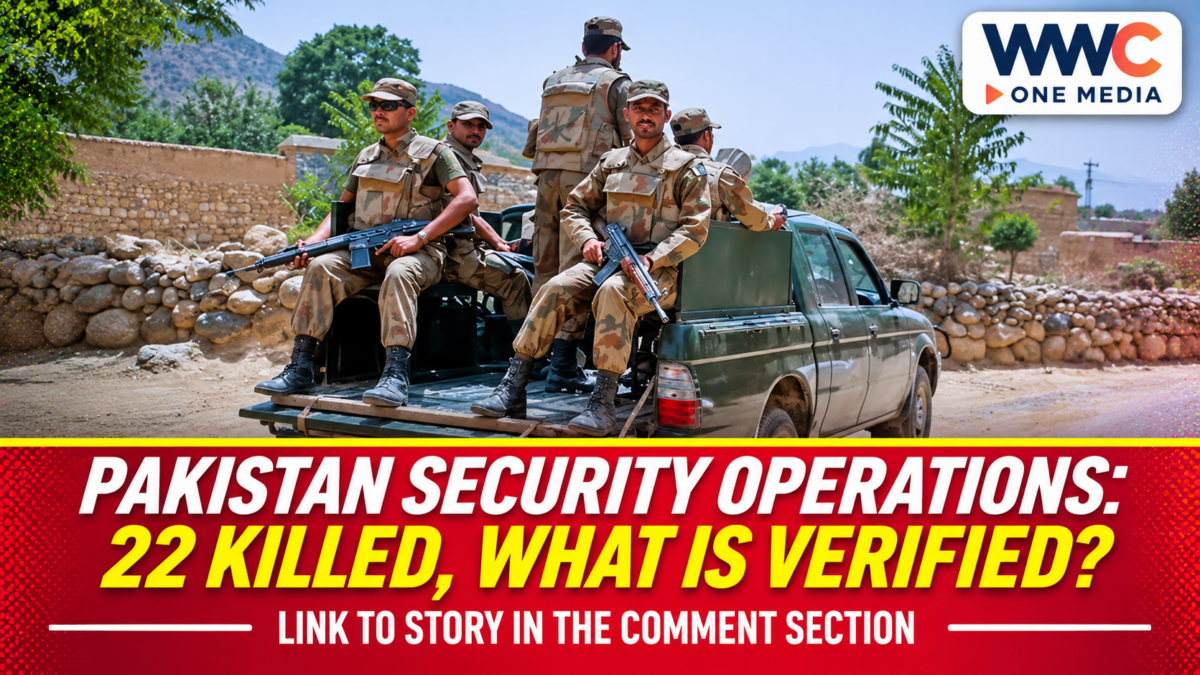
ISLAMABAD, Pakistan — Nov. 21, 2026. Pakistan security operations reportedly killed 22 suspected militants in engagements across South Waziristan, Bannu and Tank districts of Khyber Pakhtunkhwa, according to a government announcement issued on Nov. 19. The authorities described an intelligence-based operation, separate clashes and recovered weapons, while saying that security operations would continue.
The public record establishes what Pakistan’s military has announced, not an independently verified account of each person’s identity or alleged activities. The distinction is especially important because Islamabad also alleged foreign sponsorship, a claim the available official announcement does not substantiate with publicly disclosed evidence.
Pakistan Security Operations: What the Official Account Says
The Nov. 19 government announcement divided the reported deaths among three districts. It said 15 suspected militants were killed during an intelligence-based operation in South Waziristan, six in two separate engagements in Bannu and one in Tank. The total across the three areas is 22.
The same announcement said security personnel recovered weapons and ammunition and were undertaking additional clearance operations. It did not publish a complete inventory, independent forensic findings or identities for the people reported killed.
The announcement describes events inside Pakistan. Proximity to the border with Afghanistan should not be mistaken for evidence that the engagements happened on Afghan territory. Nor does the publication of a military statement establish that a separate cross-border operation occurred.
What the Casualty Count Does and Does Not Establish
An official operational tally is newsworthy, but it is one category of evidence. The published account does not provide the underlying incident logs, medical records or an independent verification process for the 22 deaths. The number is therefore properly described as a military-reported total.
The record also does not establish whether any civilians were harmed in the encounters, or whether every person described as a militant belonged to the same organisation. Absence of such details is not proof that civilian casualties occurred; it means the accessible announcement cannot answer that question.
Analysis: Responsible reporting should keep operational outcomes separate from conclusions about longer-term security. A government may describe an operation as successful, but assessing its lasting effect requires further evidence about subsequent violence and local conditions.
WWC’s earlier report on Pakistan’s airstrikes in Afghanistan and disputed border accounts concerns a different event. It illustrates why a claimed security objective should not erase questions about the location of an operation or its effect on civilians.
Foreign-Sponsorship Allegations Need Their Own Evidence
The Nov. 19 military account used an official designation for the fighters and alleged they received support from India. That characterisation is Pakistan’s allegation. It is not a finding independently established by an opened investigation, court decision or disclosed intelligence record.
The label used by authorities should not substitute for a verified description of individual actions. A security agency can identify a suspected affiliation in a public statement without publishing all of the evidence that led to its assessment. WWC should not convert that assessment into a proven fact about a foreign government.
Analysis: Cross-border accusations can affect diplomacy even when the reported military activity takes place on one state’s territory. Separating the reported engagements from allegations of external responsibility allows readers to understand what was announced without overstating what was demonstrated.
Why the Districts Matter
South Waziristan, Bannu and Tank are districts in Khyber Pakhtunkhwa. The military reported multiple engagements across these locations rather than a single confrontation at one site. The official account lists distinct death tolls for each and says further operations were being conducted.
That geography matters for understanding the limits of the report. A combined total does not reveal whether the same network was involved in all three areas, how the operations were coordinated or what the consequences were for surrounding communities.
The evolving risks faced by security personnel have appeared in WWC’s report on protective measures against militant drone threats in Pakistan. That is separate background on security tactics, not evidence that drones were used in the Nov. 19 operations.
Political Support Does Not Replace Investigation
Pakistan’s president and prime minister publicly commended the security forces following the reported operations. President Asif Ali Zardari indicated that the government’s Operation Azm-e-Istehkam effort would continue, while Prime Minister Shehbaz Sharif reiterated support for personnel confronting militant violence.
Those statements communicate an official policy position. They do not provide an independent review of the engagements or establish that all suspected militant activity in the province has ended.
Pakistan’s regional diplomacy and Afghanistan-focused economic agenda also places security concerns alongside trade and cross-border cooperation. That existing WWC story addresses a different policy development; the Nov. 19 military account does not establish that a new diplomatic agreement resulted from the reported operations.
Analysis: The public can reasonably assess a security response on more than the number of people killed. Useful follow-up measures include whether authorities publish further operational records, clarify alleged affiliations and explain steps taken to protect nearby residents. None of those outcomes can be presumed from a short announcement.
What Happens Next
The government’s account said additional clearance operations were under way. A subsequent official update could establish whether those activities concluded, whether further arrests occurred and whether any independent review of the encounters became public.
For now, the verified news is the existence and contents of Pakistan’s Nov. 19 official announcement: its military reported 22 deaths in three districts and the country’s leaders praised the response. The complete circumstances, individual identities and alleged foreign sponsorship remain outside what the opened record independently establishes.
Frequently Asked Questions
How many people did Pakistan say were killed in the operations?
Pakistan’s military reported 22 suspected militants killed across South Waziristan, Bannu and Tank, as communicated in the Nov. 19 government announcement.
Where did the reported security operations take place?
The three districts are in Khyber Pakhtunkhwa, Pakistan. The official announcement does not say these engagements occurred inside Afghanistan.
Has the allegation of Indian sponsorship been independently proved?
Not through the opened government records reviewed here. It remains an allegation made by Pakistani authorities, not an independently verified conclusion.
Did the announcement establish that the security threat had ended?
No. The military said further clearance operations were ongoing, and the public announcement did not quantify the long-term security effect.