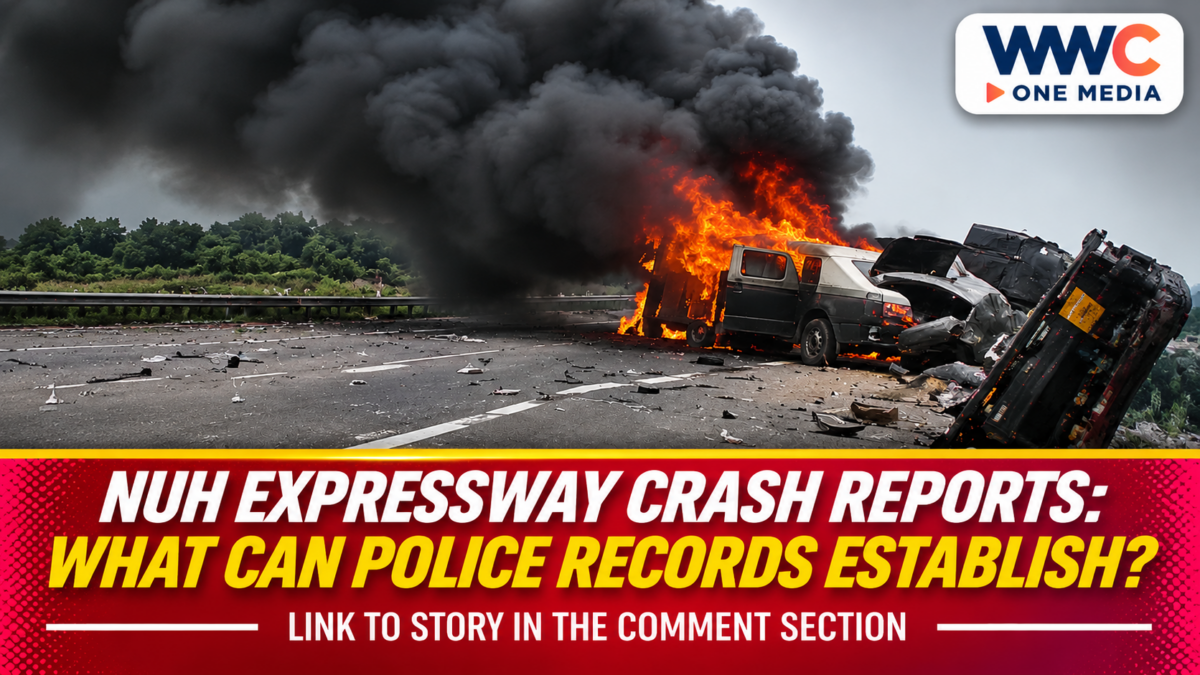
NUH, India — Nov. 21, 2026. A reported collision on the Kundli–Manesar–Palwal (KMP) Expressway in Haryana has prompted questions about injuries, emergency response and what caused the vehicle to leave its course. For a Nuh expressway crash report to meet a primary-record standard, the decisive evidence would be the relevant police incident entry, an attributable official briefing and, where necessary, confirmed medical information—not a repeated description in news articles.
The government of Nuh district identifies Rojka Meo as one of its police stations. Haryana Police also publishes the procedures used to register reports and investigate incidents. Neither publication, however, confirms the reported November collision or its alleged casualty count. That means the event-specific details remain on editorial hold, even as official records explain how a road collision should be checked.
Nuh Expressway Crash: The Missing Incident Record
The district’s public directory lists Rojka Meo Police Station in Nuh, Haryana. Its presence in an official directory establishes where a police office is located, not that its officers handled a specific incident at a stated hour.
Haryana Police’s public description of investigation work includes registration of a first information report when applicable, witness examination, visits to the scene, evidence collection and preparation of a site plan. These are general investigative functions, not proof that each step occurred in this reported crash.
An original record would allow journalists to distinguish the date officers were notified from the time a collision occurred. It could also establish the road location and whether any vehicle or roadside feature was involved. Until such evidence is obtained, a detailed reconstruction would be premature.
WWC has previously examined how a Singapore expressway crash affected traffic beyond the immediate scene. That separate event illustrates why the effects of a crash and the circumstances that caused it need distinct evidence.
Injury Reports Need More Than an Initial Description
Emergency accounts often separate the number of people inside a vehicle from the number injured, the number taken to hospital and the number later assessed as critical. Those categories cannot be assumed to be identical.
For the reported KMP incident, an independently inspected police statement or authorised hospital update would be needed before publishing specific patient numbers or an individual’s medical condition. It would also be important to establish when that information was accurate. The absence of a later update is not evidence that a person’s condition remained unchanged.
Analysis: The responsible approach protects both accuracy and privacy. A family experiencing an emergency should not have to contend with unverified names, photographs or claims about diagnoses circulating as settled facts.
In a different Philippine case, WWC discussed why investigators’ findings matter after a jeepney crash in Quezon. That article concerns a different vehicle and jurisdiction and cannot independently verify events in Haryana.
What Haryana Police Says an Investigation Involves
Haryana Police’s official organisational statement identifies collecting evidence, visiting a scene and examining witnesses as investigative functions carried out under Indian criminal procedure. It also lists the preparation of case diaries and reports among its responsibilities.
Such documentation can help determine whether road conditions, vehicle condition or driver actions require closer investigation. These remain possibilities to examine—not conclusions about the Nuh report.
A collision with a divider, if ultimately established, would still not prove the precise cause. Authorities might need vehicle inspection findings, measurements, roadway evidence and witness accounts before drawing conclusions.
Haryana Police also lists a citizen service for copies of certain police records, including first information reports or daily diary reports through its published service channels. Availability of a record in a system does not mean this particular incident report has been obtained or authenticated.
Official Road-Safety Statistics Provide Context, Not a Verdict
Haryana’s Transport Department maintains a public road-accident statistics page. It records historical accidents, deaths, injuries and the number of incidents attended by emergency services. This establishes that road safety is tracked as a public administrative responsibility.
But those historical figures cannot establish whether the alleged November 2026 crash occurred as described. They are aggregate data from other periods, not the accident file for a particular family.
The National Highways Authority of India publishes information on its road-safety responsibilities and highway projects. That does not by itself establish which agency was responsible for any particular stretch of KMP road, nor whether road maintenance played a role in this event.
In the Philippines, the difficulty of preparing highways for heavy travel is also a familiar policy question. WWC’s report on planned holiday traffic management on Luzon expressways addresses a separate preventive effort, not evidence of the Haryana collision.
What an Accurate Public Update Would Answer
The next attributable record should settle several questions: the incident date and location, how many people were travelling, the independently confirmed injury count, the action emergency responders took, and the present status of any investigation.
If officers identify a suspected contributing factor, it should be presented as their assessment, with an indication of whether it is preliminary. Claims about speeding, fatigue, mechanical failure or road design require evidence; none can be inferred simply from the reported outcome.
There is also a difference between an investigative report and a court finding. Registration of a complaint, where applicable, does not establish criminal responsibility. That distinction matters for a driver and for anyone else named in an allegation.
What Happens Next
The meaningful next step is an original statement or incident document from the responsible police office. It should be matched against any official medical or road-operator record that clarifies the consequences and contributing circumstances.
Until then, an article stating an exact casualty count or definitive cause would rely on information that WWC has not independently verified. The stronger public-service response is to keep the unresolved claims clearly identified and publish a fuller account only when the official evidence supports it.
Frequently Asked Questions
1. Has the reported November KMP Expressway crash been confirmed by an original police record?
No directly reviewable incident-specific police release or report was located for this editorial review. The event details remain unverified under the required standard.
2. Is Rojka Meo an official police station in Nuh?
Yes. The Nuh district government’s police-station directory lists Rojka Meo Police Station.
3. Have the reported casualty figures been independently confirmed?
Not through an original police or medical record examined for this article. Those figures should not be published as established facts.
4. What evidence would clarify the cause of the collision?
An attributable investigation report, supported where relevant by scene documentation, witness accounts and vehicle or roadway assessments.
5. Does an initial police report prove that a driver was at fault?
No. An incident report records information for investigation; legal responsibility requires the applicable evidentiary and legal process.