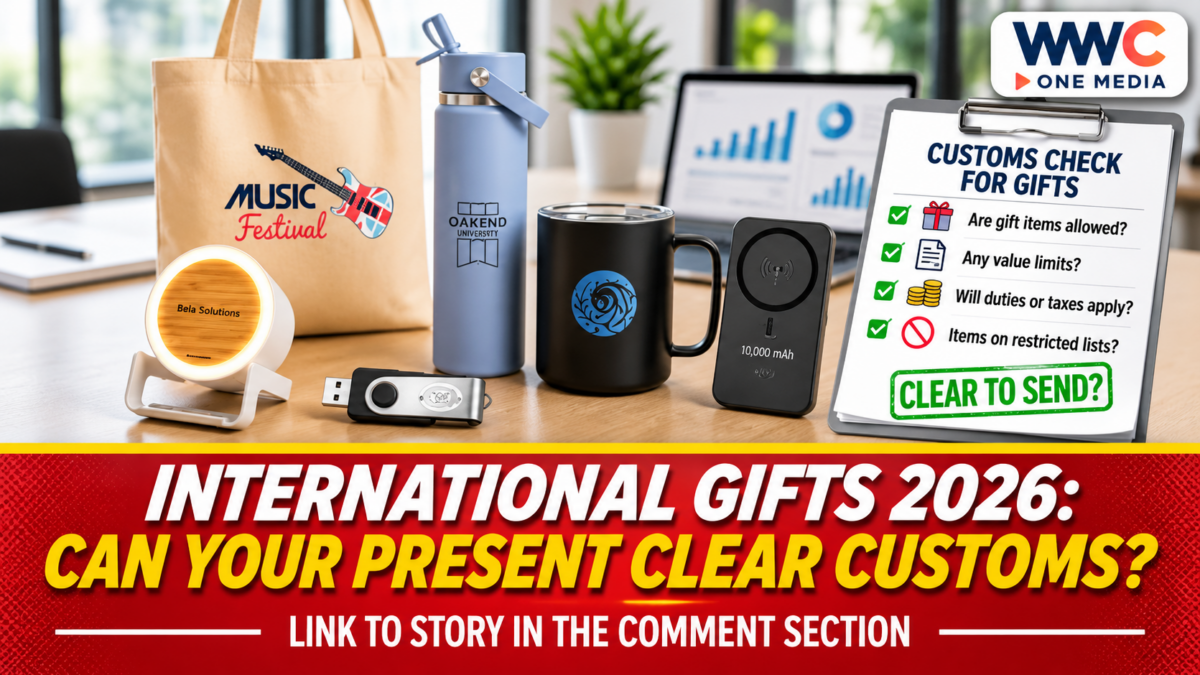
MANILA, Philippines — Nov. 21, 2026. Filipino consumers planning to send presents overseas this Christmas face a practical problem beyond finding the right gift: international shipping rules can change what arrives, when it arrives and how much the recipient must pay. Official postal and consumer-protection guidance updated in 2026 highlights customs declarations, destination-specific restrictions and fraudulent online sellers as issues buyers should check before spending.
The lesson is not that international gifts are inherently difficult. It is that shopping and cross-border delivery are separate transactions with separate risks. A present that seems affordable at checkout can become an inconvenient surprise if its contents are restricted, its import charges are unclear or the retailer cannot explain the delivery arrangements.
International Gifts 2026: Start With the Destination
The Universal Postal Union maintains information on goods that countries prohibit or restrict in international mail. Its customs guidance makes clear that import rules are not uniform. A product accepted for delivery in one market may face different requirements in another.
For senders using the United States Postal Service, the agency instructs customers to check destination-specific lists, available services, weight limits and international service disruptions before mailing. It also warns that incorrect information can result in a delay, additional fees or rejection by the receiving country.
Analysis: Gift selection should start with the recipient’s country and address, not just an appealing product photograph. The easiest item to purchase is not necessarily the easiest item to import. A straightforward book, piece of clothing or non-restricted household accessory may be simpler to investigate than food, plants, cosmetics containing restricted substances or battery-powered merchandise, though no category is universally exempt.
The Price Tag May Not Be the Final Cost
International shipping can involve postage, currency conversion, import duties, taxes and clearance charges. Whether a charge applies depends on the destination, the nature and value of the goods, and the rules in force when the package enters the country.
The Universal Postal Union’s 2026 customs notice outlines new processes for eligible goods entering the European Union. It distinguishes certain business-to-consumer purchases from qualifying personal gifts, including consumer-to-consumer gifts valued at no more than €45 for specified requirements. That distinction should not be read as a blanket exemption from every customs rule or payment.
The US Postal Service likewise tells senders to enter detailed, accurate item information on electronic customs documentation. Labelling a commercial purchase as a personal gift does not make the underlying transaction something different.
For Philippine recipients purchasing from overseas, WWC has examined FedEx’s digital customs-payment and shipment-management tools. Such tools can help with paperwork, but they do not eliminate lawful charges or guarantee immediate release of a parcel.
Choose the Gift Format Around the Recipient
Analysis: A practical international gift does not always need to cross a border as a physical parcel. Someone overseas might prefer a retailer-issued digital credit, a locally delivered purchase or an experience that can be redeemed in their own city. Those alternatives can avoid some international shipping steps, although each carries its own eligibility and refund restrictions.
WWC’s 2026 guide to experience gifts explains why booking rules, redemption dates and local availability matter when choosing activities or vouchers. An experience that cannot be used in the recipient’s country is not automatically more convenient than a physical gift.
Similarly, the practical Christmas gifts guide for Filipino shoppers explores everyday presents as an alternative to high-priced purchases. For overseas delivery, the additional question is whether the goods and packaging comply with the receiving country’s import requirements.
Rather than naming an unverified best product or lowest-price seller, shoppers can compare three options: buying locally in the destination country, sending a physical parcel from home or purchasing a legitimate digital gift. The most suitable choice depends on the person’s needs and the seller’s actual terms.
Holiday Shopping Scams Add Another Risk
The United States Federal Trade Commission issued a November 2026 warning that fraudulent shopping sites may appear among sponsored search results. A top placement in search results is not independent proof that a store is genuine.
The FTC recommends checking unfamiliar sellers, examining complaint information and navigating directly to a known company’s website where possible. Its broader online-shopping guidance also tells consumers to review return conditions, delivery costs and accepted payment methods.
Analysis: Cross-border purchases can be harder to resolve when a seller is unresponsive or an item is sent to another jurisdiction. Before paying, a consumer should verify the merchant’s identity, review the final checkout cost, check the refund terms and keep transaction records. A delivery tracking number alone does not establish that the goods are authentic or that customs clearance is complete.
Timing and Documentation Determine Whether a Gift Arrives
USPS requires electronic customs information for merchandise in international packages and explains that overseas shipments may have different tracking visibility from domestic deliveries. Its instructions identify a separate process for country restrictions and disrupted routes.
A reasonable sending plan should account for preparation, dispatch, possible customs examination and delivery to the recipient. But there is no universal Christmas cut-off date that can be inferred from general postal guidance. Carrier deadlines depend on the route and service, and disruptions can change them.
Senders should describe package contents truthfully, retain receipts and check whether the recipient may need to provide identification or pay charges. They should also avoid promising a particular arrival day until the carrier has published the applicable timetable and accepted the shipment.
What Happens Next
As the December holidays approach, consumers can review official destination-country restrictions, postal service alerts and merchants’ published policies before choosing how to give. The most useful final check is whether the recipient can actually receive, redeem or return the present without unexpected obligations.
For WWC readers, the practical conclusion is simple: a thoughtful gift is one whose delivery and conditions are understood. A beautiful product that cannot clear customs, arrives late or exposes the buyer to fraud is a poor substitute for a modest, properly planned present.
Frequently Asked Questions
Do international Christmas gifts need customs declarations?
International parcels containing merchandise generally require customs information. Requirements depend on the sender’s postal operator, goods and destination; consult the operator’s current official instructions.
Are gifts sent abroad always exempt from import tax?
No. Gift treatment and thresholds differ by jurisdiction, and some exemptions apply only to eligible personal shipments. Verify the receiving country’s rules before sending.
Are gift cards safer than mailing a parcel?
A legitimate, destination-compatible digital gift may avoid physical customs processing, but buyers must still check geographic restrictions, expiry, refund rules and seller authenticity.
How can buyers identify fake holiday shopping sites?
Check the seller’s official address, search for independent complaint information and avoid assuming a sponsored search result is trustworthy. Keep records of the purchase.
When should overseas Christmas presents be sent?
There is no universal deadline. Check the carrier’s current destination-specific cut-offs, service availability, customs requirements and potential disruption notices.