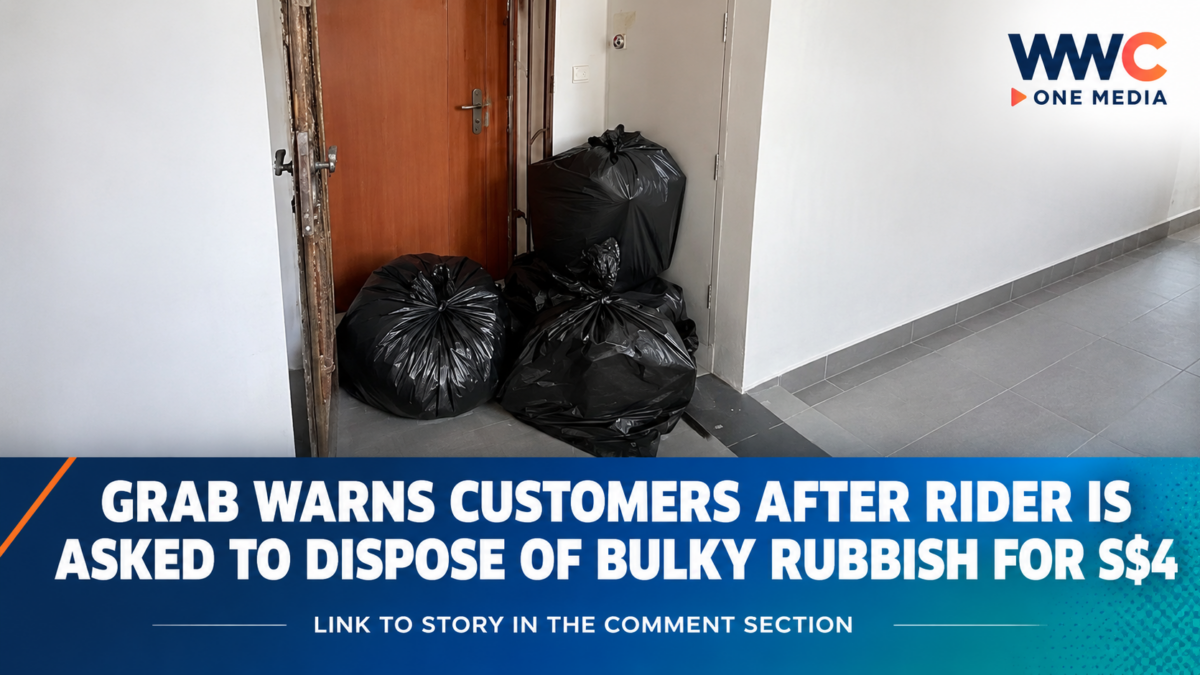
A Grab delivery rider in Singapore was reportedly assigned a job to remove and dispose of four large bags of household rubbish for just S$4, prompting the company to remind customers that its courier service is not intended for waste disposal.
The incident came to light after an anonymous rider posted about the unusual booking on a Facebook group on Sept. 25. The rider questioned why he had been assigned the task and said he did not cancel the booking because he was concerned about the effect on his cancellation rating.
Screenshots shared with the post showed a GrabExpress booking with the same pickup and drop-off location in the Joo Seng Road area. The customer had reportedly left four large rubbish bags outside a flat and instructed the rider to move them downstairs to the rubbish chute.
The booking note reportedly described the bags as bulky and instructed the rider to remove all of them from the doorstep for disposal. Photos accompanying the post showed several large waste bags placed outside the residential unit.
The booking appeared to have been made through GrabExpress, which is designed for on-demand transportation of documents, parcels and other goods. Grab’s delivery-partner information also lists Express as a service for documents and parcels rather than household waste collection.
Grab has since addressed the incident, saying it was aware of the booking involving household waste disposal. The company said waste management generally involves specific safety protocols, handling procedures and licences that fall outside the scope of its courier service.
The company reminded users to use Grab services only for their intended purposes. It also said delivery partners would not be penalised for declining non-compliant requests.
Customers and delivery partners who encounter suspected misuse can report the issue through the app’s Help Centre so that the company can investigate and provide support, Grab said.
Grab’s terms and delivery information set out various requirements and restrictions for its transport and logistics services. Its platform allows delivery partners to receive Express requests, but the company has emphasized that these services are intended for transporting permitted items rather than carrying out unrelated household tasks.
The incident highlights the distinction between arranging a courier delivery and hiring a waste-removal service. While a rider may be able to transport permitted goods, disposing of bulky household rubbish can involve different handling requirements and responsibilities.
For delivery partners, the company’s clarification also provides a route for rejecting requests that fall outside the service’s intended use without being penalised for doing so.