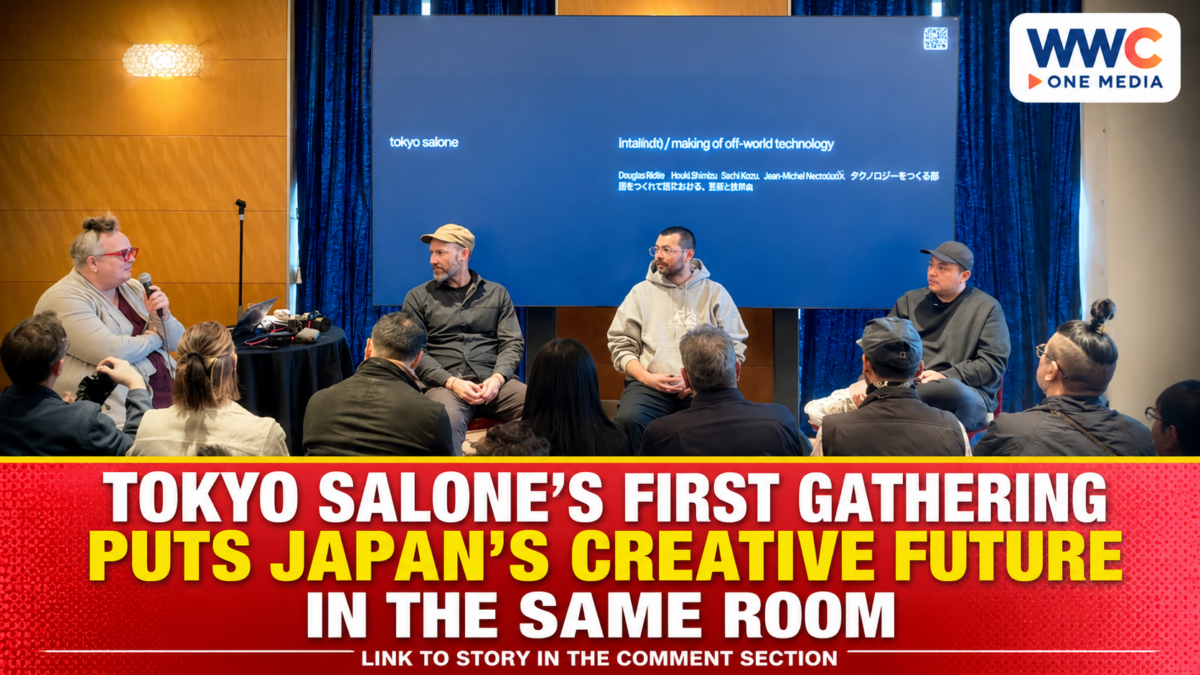
Tokyo Salone brought together designers, artists, technologists, researchers, chefs and other cultural practitioners in Tokyo on Nov. 14, 2026, for a cross-disciplinary gathering built around shared ideas and practical experience. The event formed part of a wider programme running from Nov. 13 to 17, with activities spread across several venues in the Japanese capital.
The initiative is being developed as more than a one-day conference. Its organisers describe Tokyo Salone as a year-round cultural platform intended to connect people and disciplines through conversations, workshops, shared meals and other in-person experiences. That ambition reflects a broader question for creative industries: how can new ideas and collaborations emerge when people from different professional circles rarely have opportunities to work together? a year-round institution for culture+1
A Programme Designed Around More Than One Industry
The Nov. 14 flagship gathering took place at Tokyo American Club, with the published programme running from 8 a.m. to 10 p.m. Its agenda brought together people working in areas that do not always share the same professional spaces.
The listed participants included designers Rachel Gogel and Takayuki Tanaka, filmmaker and author Matt Alt, Pixar artist Dylan Sisson, coffee-equipment maker Doug Weber, and Ignacio Lopez-Francos, associated with NASA’s Artemis programme. Other names on the schedule represented architecture, fashion, landscape design, music, media and technology. a year-round institution for culture+1
The programme was organised in thematic sections rather than being limited to a sequence of unrelated presentations. It included discussions, sound experiences, shared meals and sessions focused on the process behind creative and technical work.
That format matters because collaboration often requires more than putting people with different job titles in the same venue. Participants need time to explain how they approach problems, what they have learned from their work and where their expertise might complement someone else’s.
The organisers’ published agenda suggests that Tokyo Salone was designed to make those exchanges part of the event itself, rather than leaving all networking to informal conversations after the programme.
Tokyo Salone Is Building a Year-Round Network
The organisers are positioning Tokyo Salone as a continuing institution, not a festival that disappears when its main event ends.
Its stated structure includes gatherings during spring and autumn, alongside smaller activities throughout the year. These include conversations, workshops, listening experiences, field trips, shared meals and cultural exchanges. The organisers say the aim is to connect people who might not otherwise encounter one another through their regular work. semipermanent.com+1
The project is curated by semi permanent and teenage engineering, with 「 yes, 」 acting as its steward in Japan. The organisers describe the initiative as an extension of semi permanent’s work bringing together practitioners from design, architecture, technology, hospitality and culture.
Its choice of locations is also part of the concept. Rather than relying on a single convention centre, the programme uses venues across Tokyo, including Tokyo American Club, Kudan House, Soho House Tokyo, Massif Tokyo and WPÜ Shinjuku. The organisers describe this arrangement as a distributed campus, with each setting serving a different kind of gathering. semipermanent.com+1
The opening event, held at WPÜ Shinjuku on Nov. 13, was presented as a welcoming for communities connected with semi permanent, WPÜ Shinjuku and Ü Culture, alongside friends, partners and creatives involved in Tokyo Salone. The venue’s event listing described the gathering as an opportunity for people from different fields to connect and explore possible collaborations. Event
This approach gives the project a footprint beyond its flagship programme. It also means that the success of the initiative will depend on whether those smaller encounters continue to attract people and produce meaningful connections.
Food, Design and Technology Share the Same Platform
The programme continued beyond the main Tokyo Salone day. On Nov. 15 and 16, the organisers scheduled Nourish, a gathering focused on food, hospitality and the future of how people produce, prepare and share food.
Its listed participants included chefs, farmers, producers, fermenters, scientists, designers and researchers. The programme featured people associated with restaurants and food businesses, as well as sessions involving producers and suppliers. semipermanent.com+1
A separate event, Speculative Futures, was scheduled for Nov. 17 at Kudan House. Its agenda included discussions involving architecture, urban development, artificial intelligence, emerging technology, longevity and demographic change. a year-round institution for culture
The different themes demonstrate how the organisers interpret creativity. It is not confined to visual art, fashion or entertainment. It also includes the design of products, the development of technology, the organisation of food systems and the way communities respond to social and economic changes.
That broad definition is increasingly relevant as creative work crosses traditional industry boundaries. A fashion project can incorporate electronic materials, for example, while an artist may use digital tools to introduce a traditional craft to new audiences.
WWC has previously examined this intersection in its coverage of electronic-paper technology entering fashion through a collaboration with Japanese label Anrealage. Another report explored how artists are combining technology with traditional cultural practices.
Tokyo Salone’s programme places this kind of cross-sector exchange in a shared setting, where a conversation about materials, for example, could involve a designer, engineer, manufacturer or artist.
The Opportunity—and the Challenge—of Bringing People Together
A gathering that connects different industries can create opportunities for participants to discover partners, exchange knowledge and develop projects. However, those outcomes are not automatic.
A conference can attract prominent speakers and still have limited impact if conversations do not continue after the event. A year-round platform faces a different test: it must give participants a reason to return, contribute and build relationships over time.
Tokyo Salone’s organisers have made continuity part of the stated model. Their plans include recurring activities and gatherings in different locations, while the flagship events provide moments when a wider group can meet in person. semipermanent.com+1
There is also a question of access. The official Tokyo Salone page listed the Nov. 14 event at US$900, with registration closed and the gathering marked sold out. The Nourish and Speculative Futures programmes were also listed at US$900, with registration closed. a year-round institution for culture+2
That pricing and the limited-attendance format indicate that these particular experiences were designed for a relatively selective group, rather than as open public festivals. The organisers say attendance is intentionally limited, but the available public information does not establish how many people ultimately attended each session.
This distinction is important when assessing the project’s wider ambitions. A small gathering can create focused conversations, but a platform seeking to influence a country’s creative ecosystem must also consider how its ideas and relationships can reach people who are not in the room.
For Japan’s creative industries, the long-term value may therefore depend not only on who attends, but also on whether the network develops pathways for emerging practitioners, independent studios and people outside established professional circles.
The same challenge is relevant to Southeast Asia. The Philippines, for example, is pursuing stronger regional cooperation through the ASEAN creative industries initiative hosted in the country. Both approaches point to the importance of connecting talent with knowledge, institutions and potential collaborators, although their structures and objectives are different.
What Happens Next
The Nov. 13–17 programme has concluded, but the organisers describe Tokyo Salone as a year-round platform, with further gatherings planned around its wider network.
Its official programme identifies recurring activities in areas such as design, culture, hospitality and emerging ideas. The organisers also describe spring and autumn as the periods when relationships developed through the wider network converge in Tokyo. semipermanent.com+1
The next measure of progress will be whether the platform can sustain those connections beyond its flagship events. Future programmes, participation opportunities and collaborations will provide a clearer indication of how the initiative develops.
For now, Tokyo Salone offers one model for bringing different creative disciplines into closer contact. Whether it becomes a lasting influence will depend on what participants build after the gatherings end.
Frequently Asked Questions
What is Tokyo Salone?
Tokyo Salone is a year-round cultural platform that brings together people working in design, architecture, technology, food, art, film, research and other creative fields through gatherings and shared experiences.
When was the 2026 Tokyo Salone event held?
The flagship Tokyo Salone gathering took place on Nov. 14, 2026, at Tokyo American Club in Tokyo. Related programme activities ran from Nov. 13 to 17.
Who organised Tokyo Salone?
The organisers listed on the official programme are semi permanent, teenage engineering and 「 yes, 」. The programme also named several co-hosts, including KCRW, WPÜ, Massif Tokyo, Kudan House, Soho House Tokyo and Kammui.
What other events were part of the programme?
The wider schedule included Nourish, a gathering focused on food and hospitality, and Speculative Futures, which explored emerging ideas and future-facing topics.
Is Tokyo Salone open to the general public?
The 2026 flagship event required advance registration. Its official page listed the event as sold out, with registration closed. Future participation arrangements will depend on the organisers’ announcements.