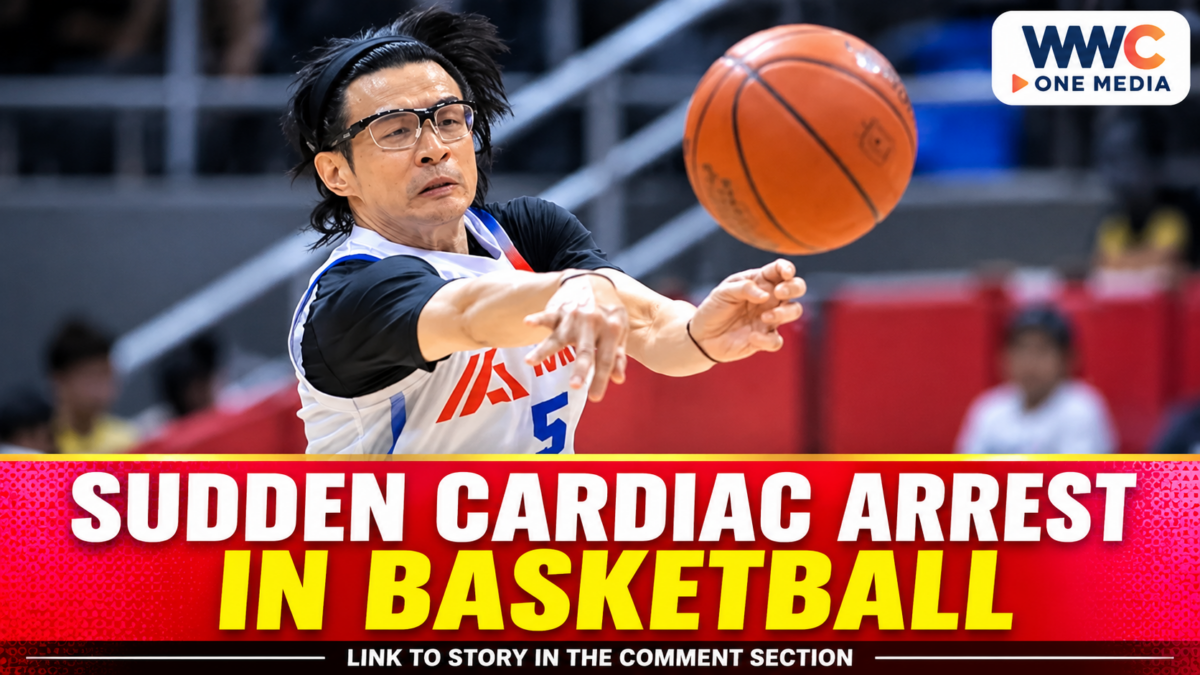
A basketball game can change in seconds when a player or spectator suddenly collapses. As Philippine sports communities confront renewed attention on cardiac emergencies, an existing national law offers an important starting point: basic life-support training in schools, backed by practical preparation and access to emergency equipment.
The country’s Republic Act No. 10871, or the Basic Life Support Training in Schools Act, requires public and private basic education schools to provide age-appropriate life-support instruction. The law is not a guarantee that every sporting venue has the equipment or trained personnel needed for a cardiac emergency, but it establishes a national policy that emergency-response skills should be taught before they are needed. Lawphil+1
What Philippine law says about basic life support
Republic Act No. 10871 became law on July 17, 2016. Its central requirement is that public and private basic education schools nationwide provide students with basic life-support training through age-appropriate, hands-on instruction.
The law specifically refers to programmes developed by the Philippine Heart Association or the Philippine National Red Cross, using nationally recognised, evidence-based guidelines for emergency cardiovascular care. It also defines hands-on practice as an essential part of the learning process. Lawphil
This distinction matters. Knowing what cardiopulmonary resuscitation (CPR) means is different from having practised the technique. Students need opportunities to learn the procedure and develop the confidence to respond appropriately when someone requires urgent assistance.
The legislation also provides for the certification of successful student-trainees. School principals and administrators are directed to coordinate with the Department of Health for assistance in securing competent instructors. The DOH is tasked with accrediting non-government organisations qualified to provide basic life-support instruction. Lawphil
The law recognises that training must be appropriate for the people receiving it. Students whose physical or mental disabilities may prevent them from performing a basic life-support procedure are exempted from the training requirement.
In 2022, the Department of Education announced that it had established implementing guidelines for the law, covering public and private basic education institutions, including Alternative Learning System centres. The department said the programme would include training developed by the DOH, the Philippine Heart Association and the Philippine National Red Cross. Department of Education
Why cardiac arrest requires an immediate response
Cardiac arrest happens when the heart suddenly stops pumping blood effectively. It is a life-threatening emergency because the brain and other vital organs are deprived of the blood flow they need.
It is not the same as a heart attack. A heart attack is generally caused by a problem with blood flow to the heart muscle, while cardiac arrest involves the heart’s pumping activity suddenly failing. A heart attack can sometimes lead to cardiac arrest, but the terms do not describe the same condition. American Heart Association+1
The American Heart Association identifies sudden loss of responsiveness and the absence of normal breathing as warning signs of cardiac arrest. A person who is only gasping should not be assumed to be breathing normally.
The organisation’s emergency guidance stresses that treatment must begin immediately. CPR can help maintain blood circulation while an automated external defibrillator (AED) can assess the heart’s rhythm and deliver a shock when appropriate. American Heart Association
This is why a sports venue’s emergency arrangements should not depend entirely on waiting for an ambulance to arrive. People already at the venue may be the first to recognise a collapse and summon help.
CPR and AEDs: The first steps can make a difference
The American Heart Association recommends a clear response when someone collapses and appears unresponsive.
First, check whether the area is safe. Try to get a response by tapping the person’s shoulders and speaking loudly. If there is no response, call for help and instruct someone to contact emergency services.
Another person should be asked to locate an AED if one is available. If the person is unresponsive and is not breathing normally or is only gasping, CPR should begin with chest compressions. American Heart Association
For adult CPR, the association’s guidance specifies compressions in the centre of the chest, at least two inches deep, at a rate of 100 to 120 compressions per minute. Rescuers should allow the chest to return to its normal position between compressions.
When an AED arrives, it should be switched on and its voice or visual instructions followed. The machine assesses the heart rhythm and determines whether a shock is advised. CPR should continue as directed until the person begins moving or breathing normally, or trained emergency personnel take over. American Heart Association
These instructions are not a substitute for certified training or professional medical care. They illustrate why public access to training and emergency equipment matters.
Why sports facilities need an emergency plan
Schools are not the only places where basic life-support knowledge can be useful. Basketball courts, gyms, fitness centres and other sporting venues bring together players, coaches, officials, staff and spectators.
A practical emergency plan should identify who is responsible for calling emergency services, who can begin CPR, where an AED is located and how responders can reach the person needing assistance.
The plan should also be understood by the people working at the facility. An AED that is locked away, difficult to locate or unfamiliar to staff may not be as useful during an emergency as one that is accessible and supported by regular training.
This is a reasonable preparedness standard for sports organisers to consider. It is not a claim that every Philippine sports facility is legally required under RA 10871 to install an AED. The statute specifically addresses basic-life-support education in basic education schools; its provisions should not be stretched into a nationwide AED-installation mandate for all gyms and arenas. Lawphil
The wider sports discussion also includes the importance of responding appropriately when athletes experience health problems. WWC has previously covered Blackie Chen’s heart attack during a basketball event, a reminder that medical emergencies can affect people involved in sport in different capacities.
Another case involving football striker Jesús de Miguel and a cardiac emergency during a match also illustrates why sporting organisations need clear procedures for medical incidents. Each case has its own circumstances, and neither should be treated as proof that all sudden collapses have the same cause.
The difference between a law and its implementation
RA 10871 provides a legal foundation for teaching basic life support, but the existence of a law does not automatically establish how consistently training is delivered in every school.
The legislation itself identifies the responsibilities of education authorities, school administrators and the DOH. It also provides for funding through the appropriations of implementing agencies and subsequent annual budgets. Lawphil
That makes implementation an important part of the discussion. Schools need access to qualified instructors, suitable training materials and opportunities for students to practise the skills required by the programme.
The same principle applies to sports facilities, even where a specific legal requirement may differ. Emergency plans need to be more than written procedures. Staff should know their responsibilities, equipment should be accessible, and response arrangements should be reviewed regularly.
For professional leagues and major tournaments, organisers can also examine whether medical teams, communication systems and emergency transport arrangements are appropriate for the size and nature of their events.
These measures cannot prevent every medical emergency. They can, however, help reduce avoidable delays when someone needs urgent assistance.
What happens next
The next step is to keep attention on the practical delivery of basic-life-support education and emergency preparedness.
Schools can review how they implement RA 10871, including whether students receive hands-on instruction and whether training providers meet the requirements set out in the law. Education and health authorities can continue supporting the programme through qualified instructors and recognised training materials.
Sports organisations and facility operators can separately review their emergency plans, staff training and access to AEDs. They should also make sure that spectators and participants know how to alert venue personnel when a medical emergency occurs.
The central question is not whether a sporting event can eliminate every risk. It is whether the people present know what to do when an emergency happens.
The law has already established that basic life-support training belongs in the country’s education system. Turning that principle into practical readiness is the responsibility that follows.
Frequently asked questions
What is Republic Act No. 10871?
Republic Act No. 10871 is the Basic Life Support Training in Schools Act. It requires public and private basic education schools in the Philippines to provide students with age-appropriate basic life-support training. Lawphil
Does the Samboy Lim Law require CPR training in schools?
Yes. The law requires schools to provide basic-life-support instruction, including hands-on practice, using programmes developed by the Philippine Heart Association or the Philippine National Red Cross and based on recognised emergency cardiovascular-care guidelines. Lawphil
What should someone do if a person collapses and is not breathing normally?
Check for responsiveness, call emergency services, ask someone to bring an AED and begin CPR if the person is unresponsive and not breathing normally or is only gasping. Follow the AED’s instructions when it becomes available. American Heart Association
What is the difference between cardiac arrest and a heart attack?
A heart attack generally involves blocked or disrupted blood flow to the heart muscle. Cardiac arrest occurs when the heart suddenly stops pumping blood effectively. A heart attack can sometimes trigger cardiac arrest, but they are different medical emergencies. American Heart Association+1
Are all basketball gyms legally required to have an AED?
RA 10871 requires basic-life-support training in basic education schools. Its text does not establish a blanket requirement for every basketball gym or sports facility in the country to install an AED. Lawphil