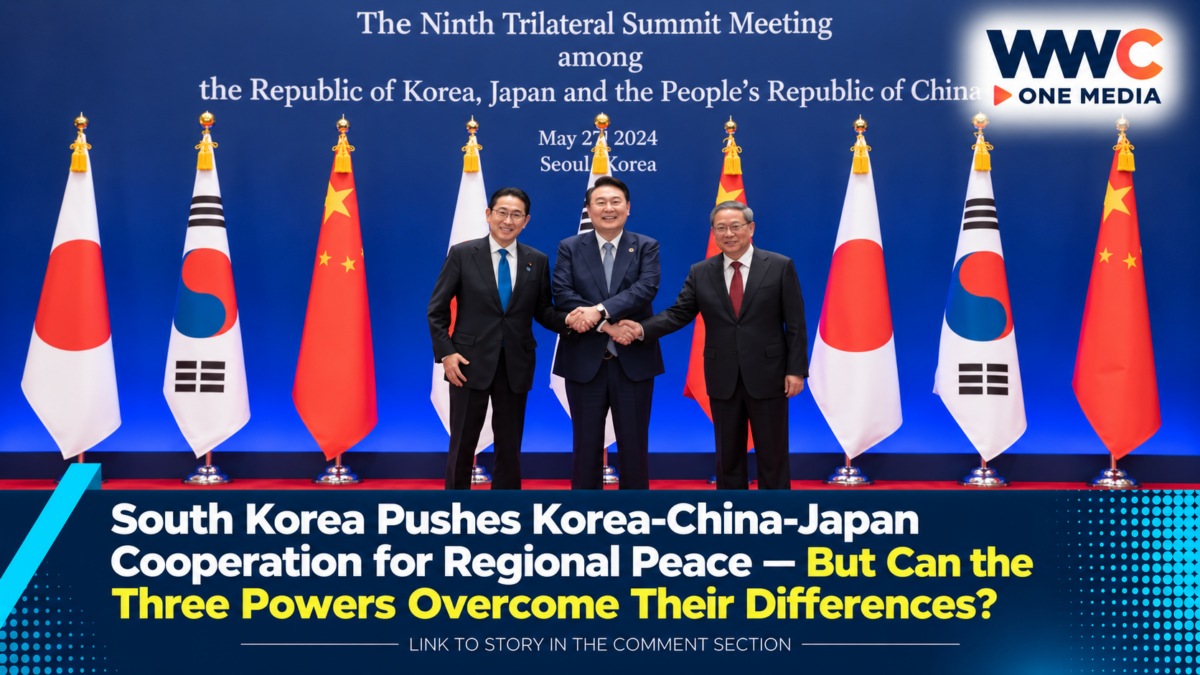
SEOUL — South Korea is calling for stronger cooperation with China and Japan as Seoul seeks to promote dialogue, stability and regional peace amid growing security and diplomatic challenges across Northeast Asia.
Foreign Minister Cho Hyun emphasized the importance of trilateral engagement during a meeting with Nishioka Tatsushi, the newly appointed secretary-general of the Trilateral Cooperation Secretariat, in Seoul on September 29.
The meeting came as the three countries marked 15 years of institutionalized trilateral cooperation, with officials highlighting the need to maintain communication even when bilateral relationships become difficult.
Seoul Sees Trilateral Cooperation as a Tool for Stability
Cho has previously outlined a diplomatic approach that combines South Korea’s alliance with the United States, stronger national capabilities and expanded partnerships with countries around the world.
In a September 3 address, he said Seoul wants to strengthen ROK-U.S.-Japan cooperation alongside Korea-Japan-China engagement, with the goal of creating a regional environment where dialogue and cooperation can prevail over confrontation.
That approach places the Korea-China-Japan framework alongside Seoul’s other diplomatic partnerships rather than treating the three-way relationship as an isolated channel.
Security and Economic Issues Are Driving the Agenda
The push for closer cooperation comes as Northeast Asia faces overlapping security and economic challenges.
South Korea has been working to expand cooperation with regional partners on issues ranging from peace and security to advanced technologies and supply chains.
During trilateral talks with the United States and Japan in New York on September 21, Cho discussed North Korea as well as economic security and advanced technologies. The three countries agreed to maintain cooperation aimed at peace and denuclearization of the Korean Peninsula.
Cho has also identified areas such as artificial intelligence, semiconductors and shipbuilding as sectors where South Korea can strengthen its contribution to broader international partnerships.
Trilateral Cooperation Has Continued Despite Disputes
The Trilateral Cooperation Secretariat was established to support cooperation among South Korea, China and Japan.
At the September 29 meeting, Nishioka highlighted that trilateral cooperation had continued for 15 years even when relations between individual countries became strained.
That institutional continuity gives Seoul, Beijing and Tokyo an established diplomatic channel for discussing issues of common interest.
However, significant differences remain among the three governments, including disagreements over history, security and regional affairs.
A Diplomatic Test for Northeast Asia
The renewed emphasis on Korea-China-Japan cooperation comes at a complicated moment for regional diplomacy.
South Korea is simultaneously strengthening its cooperation with the United States and Japan while seeking engagement with China and maintaining efforts to reopen dialogue with North Korea.
Cho said earlier this month that Seoul would continue diplomatic efforts to facilitate renewed U.S.-North Korea dialogue and pursue lasting peace on the Korean Peninsula.
For Seoul, maintaining multiple diplomatic channels could allow cooperation on areas where interests overlap while keeping dialogue open on more contentious regional issues.
The question now is whether the three Northeast Asian neighbors can translate their longstanding diplomatic framework into deeper practical cooperation — and whether that cooperation can withstand the region’s increasingly complicated security and economic landscape.
WWC ONE MEDIA G,A