
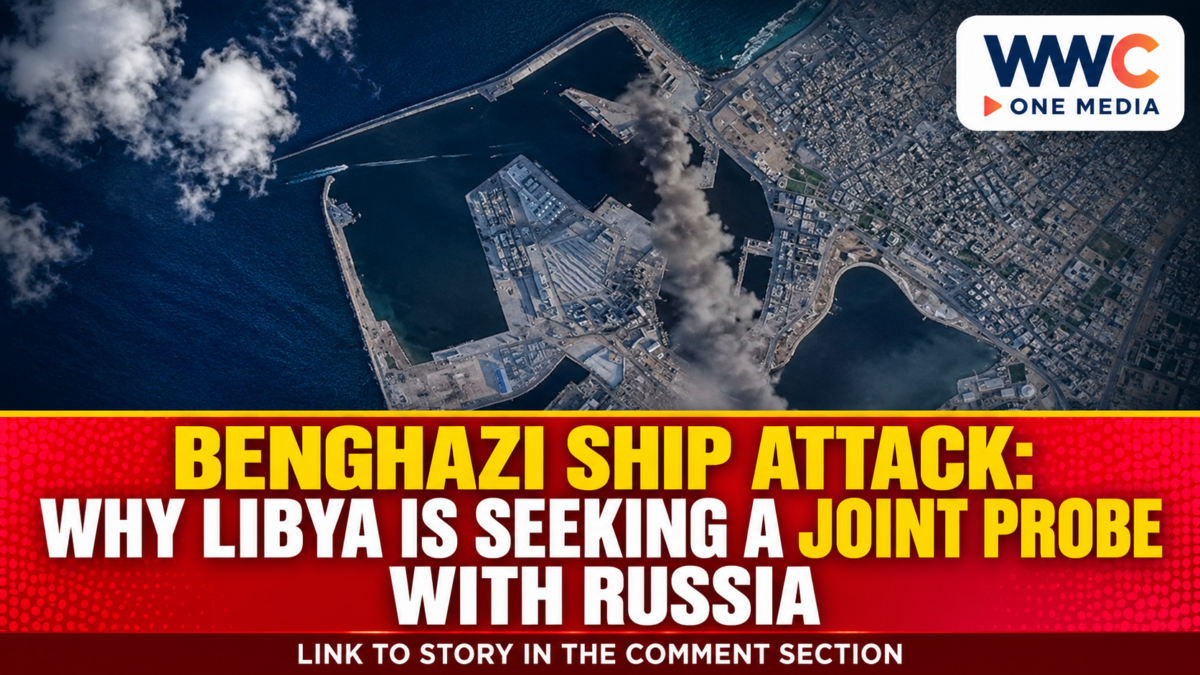
Libya’s eastern-based government has ordered an investigation after an explosion aboard a Russian vessel at Benghazi’s naval base on Nov. 22, saying preliminary findings point to a possible drone attack. The administration also wants Russian authorities involved in a joint inquiry to establish what happened, where the threat originated and who may have been responsible.
The incident places renewed attention on the security of Libyan ports as the country remains divided between rival political and military authorities. It also raises questions about how foreign military cooperation can be managed when a conflict involving international powers creates risks far beyond its principal battleground.
Benghazi ship attack prompts an official investigation
In a statement identified as No. 19 of 2026, the eastern-based Libyan government said the explosion occurred aboard a Russian ship anchored at Benghazi port during the early hours of Nov. 22.
The government said the vessel was travelling back to Russia and had stopped in Benghazi to take on fuel and supplies. It described the stop as part of existing maritime cooperation and facilitation arrangements between the two countries.
The administration said preliminary investigative findings indicated that the vessel may have been attacked using unmanned vehicles. That wording is significant: it identifies the suspected method, not a confirmed attacker or a final determination of what caused the explosion.
The statement assigned the relevant security and military authorities to conduct a comprehensive investigation and coordinate with Russian officials on a joint inquiry. The stated purpose is to establish the circumstances, source and responsible party.
The government also said the fire had been brought under control and that the port, naval-base facilities and warehouses remained safe and operational.
What the official statements establish — and what they do not
The government’s statement provides an initial account of the incident, but it does not publish technical findings that would independently demonstrate how the explosion occurred.
It does not identify the Russian vessel by name, disclose its cargo, provide a detailed damage assessment or identify the origin of the suspected drones. Nor does it name a group or country as responsible.
Those gaps matter. A suspected drone attack is not the same as a confirmed attribution. Establishing responsibility would require evidence beyond the fact that an explosion occurred aboard a vessel.
The distinction is especially important in an international security environment where competing parties may have political or military interests in how an incident is interpreted. Until investigators release supporting evidence, claims about the operator, launch point or intended target should remain unconfirmed.
The eastern government’s announcement also should not be confused with a separate naval update published later on Nov. 22. The Naval Forces General Staff said naval units had conducted rescue operations for the crew of a targeted commercial vessel. Its statement did not identify that ship as the Russian vessel at the naval base.
A second ship incident adds to maritime concerns
A separate statement from the eastern administration’s Health Ministry described injuries among people aboard a commercial vessel targeted by unmanned attack boats off Benghazi’s coast on the evening of Nov. 22.
The ministry said the injured people received medical examinations and treatment. It described their injuries as minor and their conditions as stable.
That notice concerns a commercial vessel offshore. It should not be treated as a casualty report for the Russian ship at the naval base, because the public statement does not establish that the two accounts involve the same vessel or crew.
The two developments nevertheless show why the security situation around Benghazi’s maritime facilities deserves close attention. One government statement concerns an explosion aboard a Russian vessel inside the naval base; another describes an attack on a commercial ship offshore.
For readers following the wider risks to shipping, WWC has also examined drone attacks involving commercial vessels in the Black Sea. The incidents are separate, but both illustrate how unmanned systems can create risks for vessels operating in waters affected by regional conflict.
Libya says it will not become an arena for foreign conflicts
The eastern-based government condemned the incident as an attack on Libyan sovereignty and a threat to port security and maritime navigation. It said Libya was not a party to the Russia-Ukraine war or to armed conflicts beyond its borders.
It also reserved the right to take legal and diplomatic measures against anyone proven to have planned, carried out or supported the attack.
The position reflects a central concern for a country whose political and security institutions remain divided: foreign military relationships and the use of national facilities can become sensitive issues when external conflicts intensify.
The United Nations Support Mission in Libya has continued to describe the country’s political and security environment as fragile while supporting efforts to unify state institutions. That broader context does not explain the cause of the Benghazi explosion, but it helps show why a transparent investigation and clear coordination between authorities matter.
WWC has previously discussed the limits of early claims surrounding military facilities in its report on unconfirmed drone activity near Russia’s Baltic Fleet facilities. In both cases, the central reporting question is what official evidence actually establishes, rather than what the location or wider conflict might suggest.
Why the investigation matters beyond the damaged vessel
A port is more than a place where ships load, unload or refuel. It is also part of a country’s transport infrastructure, commercial network and national security system.
An incident involving a foreign vessel inside a naval facility can therefore have implications beyond the immediate damage. Authorities may need to review access procedures, vessel movements, surveillance arrangements and coordination between military and civilian port operators.
The eastern government’s statement that port facilities remained safe and operational is an official assurance. It is not, by itself, a detailed technical assessment of the vessel or a complete account of any security weaknesses.
The investigation will need to answer several distinct questions: what caused the explosion, whether a drone was involved, how the vessel was approached, what damage occurred and whether any evidence identifies the operator.
For shipping companies and crews, the outcome could also matter to risk assessments for vessels calling at Libyan ports. WWC’s coverage of unidentified projectile incidents involving tankers near the Strait of Hormuz explains why early incident notices should not be mistaken for a complete account of a vessel’s exposure or the identity of those responsible.
What happens next
The next major development should come from the investigation ordered by the eastern-based government and the proposed coordination with Russian authorities.
A more conclusive public account would need to identify the vessel, explain the technical findings and clarify whether investigators have established the origin and operator of the suspected attack. Any official casualty or damage figures should also specify which vessel and incident they refer to.
As of Nov. 23, the public records reviewed do not establish who was responsible for the explosion aboard the Russian vessel. The eastern administration has announced an investigation, but its preliminary suspicion should not be treated as a final finding.
Frequently Asked Questions
What happened to the Russian ship in Benghazi?
Libya’s eastern-based government said an explosion occurred aboard a Russian vessel anchored at Benghazi’s naval base on Nov. 22, 2026. It said preliminary findings pointed to a possible drone attack.
Has anyone claimed responsibility?
The official statements reviewed do not identify a group or country as responsible for the explosion.
Why was the Russian ship in Benghazi?
The eastern-based government said the vessel had stopped to refuel and take on supplies while travelling back to Russia, under maritime cooperation arrangements between the two countries.
Were people injured?
A separate Health Ministry statement reported minor injuries among people aboard a commercial vessel targeted offshore near Benghazi. That statement does not establish that those injured were aboard the Russian vessel at the naval base.
What happens to the investigation?
The eastern-based government said security and military authorities would conduct a comprehensive investigation and coordinate with Russian authorities on a joint inquiry. The public record reviewed does not yet contain final findings.










