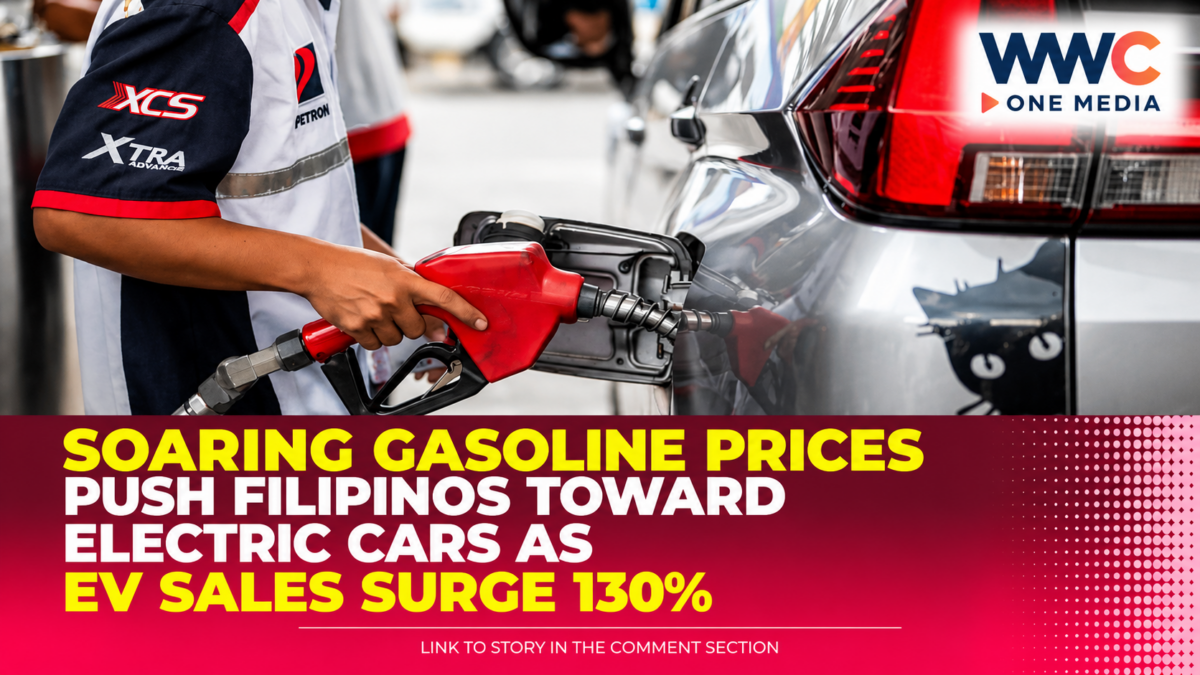
The sharp rise in gasoline prices is accelerating the Philippines’ shift toward electric vehicles (EVs), as more motorists look for ways to reduce their fuel expenses amid mounting cost-of-living pressures.
Electric vehicle registrations, including hybrids, surged by 130% year-on-year to more than 67,000 units in the first eight months of 2026, according to energy officials cited by Reuters. The increase highlights how expensive fuel is changing purchasing decisions in a country that imports nearly all its petroleum requirements.
Gasoline prices in the Philippines have climbed by 68.3% since US-Israeli strikes on Iran began in late February, according to data cited in the report. The price surge has made vehicles that rely less on conventional fuel increasingly attractive to Filipino consumers.
BYD Sales Nearly Double as Buyers Turn to EVs
Chinese automaker BYD has emerged as one of the beneficiaries of the growing demand.
The company delivered 28,399 vehicles in the Philippines between January and August 2026, representing a 99% increase compared with the same period last year, according to BYD Cars Philippines managing director Bob Palanca.
He said the company had already exceeded its total sales for 2025 four months ahead of its target, adding that it expected the momentum to continue into 2027.
The broader electric vehicle market has also expanded rapidly. EVs accounted for nearly 25% of passenger vehicle sales in the Philippines in 2026, according to industry estimates cited by Reuters, compared with 12% in 2025 and 4% in 2024.
For motorists who regularly travel long distances, the prospect of spending less on fuel is becoming an important factor when choosing their next vehicle.
Government Looks to Expand Electric Mobility
The Philippine government is encouraging the transition to electric transportation as part of efforts to reduce dependence on imported fuel.
Energy officials are seeking to extend duty-free treatment for EV imports beyond its planned 2028 expiration. Authorities also aim for electric vehicles to account for half of the country’s taxi fleet and vehicles used by government officials by 2030.
However, the transition is not without challenges. Electric vehicles can require a larger upfront investment, while access to convenient charging facilities remains an important consideration for prospective buyers.
The market is also seeing different levels of adoption across vehicle types. Electric motorcycles, despite their potential to reduce daily transport expenses, have been gaining traction more slowly than electric cars and hybrids.
Lower-priced models could help change that trend. Energy officials have pointed to the arrival of more affordable electric motorcycles as one way to make the technology accessible to a wider group of Filipino commuters.
Will the Shift Reduce the Philippines’ Dependence on Gasoline?
Despite the rapid growth in EV sales, gasoline demand remains significant. Conventional motorcycles and jeepneys continue to play a major role in daily transportation, limiting how quickly electric vehicles can reduce the country’s overall reliance on petroleum.
For now, rising fuel prices are giving Filipino consumers a stronger financial reason to consider electric alternatives. Whether the shift becomes a lasting transformation will depend on vehicle affordability, charging infrastructure, government policy and the availability of models that suit local driving needs.
As fuel costs continue to influence household budgets, the electric vehicle boom could become an increasingly important part of the Philippines’ response to energy-price volatility.