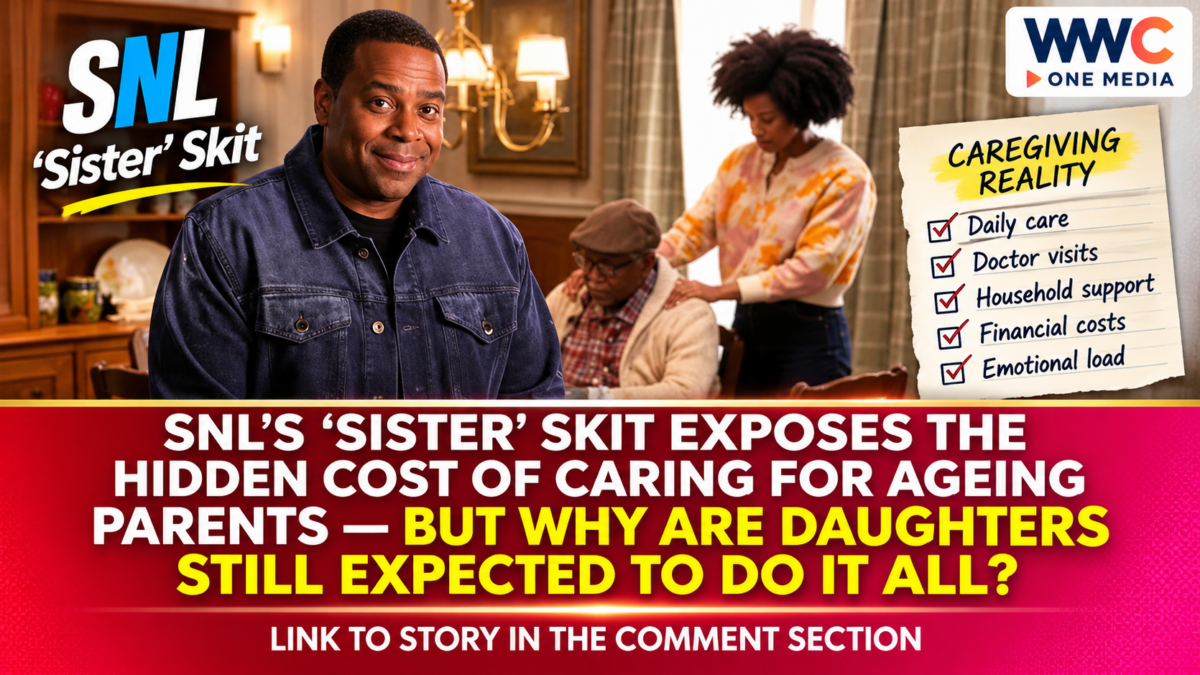
WELLINGTON, NEW ZEALAND — A comedy sketch about elderly care has provided an uncomfortable starting point for a much larger discussion about family responsibility, gender inequality and the economic contribution of unpaid caregivers.
Released on Nov. 14, 2026, the Saturday Night Live (SNL) sketch titled Sister addresses a familiar dilemma: who takes responsibility when ageing parents can no longer manage everyday life independently?
Behind the humour lies a serious social and economic issue. Caring for a family member may not come with a salary, but that does not mean the work comes without a cost.
In New Zealand alone, government estimates place the number of unpaid and informal caregivers between 500,000 and one million, with women accounting for the majority of carers.
The SNL Sister skit offers an opportunity to examine why this essential work remains largely invisible and whether governments, employers and families are doing enough to support those providing it.
SNL Sister skit puts unpaid family caregiving in the spotlight
The comedy’s central subject is elderly care, but its relevance extends beyond entertainment.
When an older parent requires additional assistance, families must make decisions about living arrangements, healthcare appointments, transportation, household responsibilities and financial support.
Without an agreed division of responsibilities, much of that work can fall to one family member.
The resulting imbalance raises an important question: when one person provides care without payment, who ultimately absorbs the cost?
A family might avoid some professional care expenses, but the primary caregiver could sacrifice working hours, career opportunities, personal time and financial independence.
What appears to be a convenient arrangement for the wider family may be considerably more demanding for the individual responsible for maintaining it.
That is the uncomfortable economic reality beneath the subject of the comedy sketch.
New Zealand’s invisible caregiving workforce
New Zealand’s unpaid caregivers include relatives, friends and members of wider family and community networks who assist people experiencing illness, disability, ageing or other circumstances requiring additional support.
The Ministry of Health estimates that approximately one in 10 New Zealanders are carers, with women making up the majority.
These responsibilities are not limited to elderly care. They also include assistance for people living with disabilities, chronic illnesses and other conditions affecting everyday independence.
The Ministry of Social Development’s broader estimate of between 500,000 and one million informal and unpaid carers illustrates the difficulty of measuring work that often takes place outside formal employment.
Caregiving responsibilities may develop gradually. A person who initially helps a parent with occasional errands may eventually find themselves coordinating a much more demanding routine.
The financial implications can become particularly important when families consider alternative accommodation and professional support.
These decisions are also explored in New Zealand’s retirement housing costs and the financial questions families must consider.
The challenge is finding arrangements that protect both the older person’s independence and the caregiver’s wellbeing.
Why unpaid care can threaten financial independence
Unpaid caregiving creates economic value even when no money changes hands.
A caregiver who reduces their working hours may experience lower earnings. Leaving employment altogether could affect future career prospects, retirement savings and long-term financial security.
The consequences may extend beyond the immediate care arrangement.
Someone who spends several years outside the workforce may face additional challenges when attempting to return to employment.
There is also the issue of personal time. Managing a relative’s care while maintaining employment and other family responsibilities can leave little opportunity for rest or social participation.
The economic challenge is not simply the absence of payment for caregiving work. It is the potential loss of income and opportunities that would otherwise have been available.
Professional care services represent another dimension of the issue.
WWC ONE MEDIA’s coverage of Japan’s healthcare cooperation and growing demand for trained care workers provides further context on the importance of developing a sustainable care workforce.
A well-functioning care economy requires both professional services and meaningful support for relatives providing assistance at home.
Why the gender imbalance matters
New Zealand’s official health information recognises that caring responsibilities are not evenly distributed across the population.
Women represent the majority of carers, making caregiving an important consideration in discussions about employment participation, financial independence and gender equality.
However, this does not mean that men are absent from caregiving or that every family follows the same pattern.
Individual circumstances differ. Some families distribute responsibilities equally, while others organise care around employment schedules, geographical proximity, financial resources or the preferences of the person receiving assistance.
The concern arises when caregiving becomes an obligation assigned automatically rather than a responsibility negotiated fairly.
Family members who cannot provide daily physical assistance may still contribute through financial support, administrative responsibilities, transportation or arrangements for temporary replacement care.
The objective should not be to turn caregiving into a competition between siblings.
It should be to ensure that the responsibilities and sacrifices involved are recognised and distributed as fairly as circumstances allow.
New Zealand introduces a long-term plan for unpaid carers
New Zealand has launched a new Mahi Aroha Carers’ Strategy Action Plan to address the challenges experienced by informal and unpaid caregivers.
The programme concentrates on three priorities: improving health and wellbeing, strengthening financial security, and increasing recognition of caregivers’ contributions.
Unlike previous action plans, the new framework has no fixed expiry date.
It establishes an ongoing approach that can be updated over time, with government agencies expected to remain accountable for their responsibilities.
The distinction between recognising caregivers and delivering practical assistance will be important.
Public appreciation alone cannot replace financial security, adequate rest or access to appropriate support services.
Community infrastructure can also contribute to a more sustainable care environment. Regional initiatives such as Singapore’s development of neighbourhood spaces that support active ageing illustrate a broader approach to supporting older residents outside traditional institutional settings.
Accessible public services and opportunities for independent living should form part of the wider discussion about supporting families.
What happens next for the care economy?
New Zealand’s government identifies longer life expectancy, multiple long-term health conditions and an increasing preference for home-based living among the factors contributing to demand for informal care.
These pressures make caregiving relevant to healthcare planning, employment policy, housing development and community infrastructure across the Asia-Pacific region.
Accessible transportation is another consideration, particularly for older residents requiring regular appointments or experiencing cognitive difficulties.
These challenges are examined in Singapore’s plans to improve public transport accessibility for its ageing population.
Governments can strengthen formal support services, employers can consider appropriate workplace flexibility, and families can discuss how caregiving responsibilities should be shared before an urgent situation arises.
The success of these approaches should ultimately be measured by improvements in the quality of life of both caregivers and the people receiving care.
The SNL Sister skit may have approached elderly care through comedy, but the underlying question deserves a serious response.
If families and economies depend on unpaid caregivers, should those individuals continue carrying so much of the responsibility without adequate recognition and support?
Frequently Asked Questions
What is the SNL Sister skit about?
Sister is a Saturday Night Live comedy sketch released on Nov. 14, 2026, addressing elderly care and the distribution of caregiving responsibilities within families.
How many unpaid caregivers are there in New Zealand?
The Ministry of Social Development estimates that between 500,000 and one million New Zealanders provide informal or unpaid care.
Are most caregivers in New Zealand women?
Yes. New Zealand’s Ministry of Health identifies women as the majority of carers, although people of all genders provide family care.
What are the financial risks of unpaid caregiving?
Potential consequences include reduced earnings, interrupted employment, lower retirement savings and additional household expenses.
What is New Zealand doing to support unpaid caregivers?
The Mahi Aroha Carers’ Strategy Action Plan establishes a long-term framework focused on caregiver wellbeing, financial security and recognition.