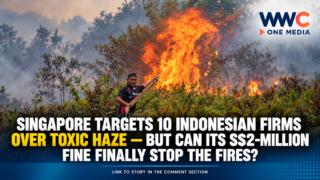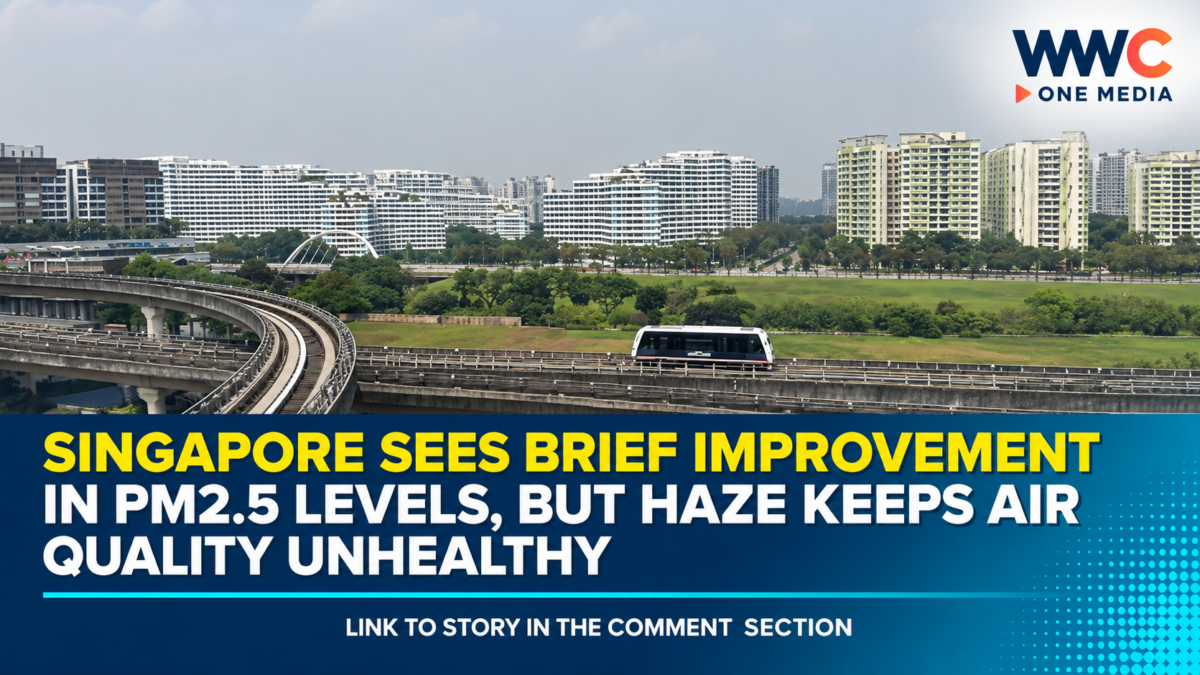
Parts of Singapore recorded normal fine-particle pollution levels on Sunday, October 18, offering some relief after nearly two weeks of hazy conditions, although the overall air quality remained unhealthy in much of the city-state.
At 11am, one-hour concentrations of fine particulate matter known as PM2.5 were within the normal range in northern, eastern and southern Singapore. The readings were between zero and 55 micrograms per cubic metre, a level at which people, including vulnerable groups, could continue their usual activities.
However, conditions remained worse in other areas. The central region recorded a PM2.5 concentration of 88, while the western region registered 142, both in the elevated band. The western region’s 24-hour Pollutant Standards Index (PSI) reached a seasonal high of 230 at 10am and 11am, placing it in the very unhealthy range.
By noon, PM2.5 readings across Singapore ranged from 52 in the north to 136 in the west. The western region’s PSI remained very unhealthy at 227, while readings elsewhere ranged from 127 in the north to 180 in the central region.
Singapore’s PSI takes into account six air pollutants, including PM2.5, PM10, sulphur dioxide, nitrogen dioxide, ozone and carbon monoxide. The one-hour PM2.5 reading is particularly useful for assessing immediate air quality and deciding whether outdoor activities should be adjusted.
Smoke Haze Continues to Drift Towards Singapore
The National Environment Agency (NEA) said winds shifting to blow from the south could reduce the amount of smoke haze travelling from fires in Kalimantan towards Singapore. However, haze from Sumatra could still reach the island.
The haze has persisted since October 5, with Singapore recording unhealthy 24-hour PSI readings for 14 consecutive days by October 18, matching the longest such stretch since the 2015 haze crisis.
Sustainability and the Environment Minister Grace Fu previously said conditions could improve towards the end of October or early November as winds become lighter and more variable during the inter-monsoon period. The arrival of the northeast monsoon in early December could also bring winds that carry haze away from Singapore.
Residents Urged to Check Readings Before Outdoor Activities
Authorities advised residents to check the latest one-hour PM2.5 readings before exercising or spending extended periods outdoors.
Healthy people should reduce prolonged or strenuous outdoor activity when pollution levels are elevated. Children, older adults, pregnant women and people with chronic heart or lung conditions should take additional precautions and avoid strenuous outdoor activity when readings are elevated.
Although the improvement in several regions offered temporary relief, changing wind directions mean air quality can vary significantly across Singapore. Residents are therefore encouraged to monitor local readings rather than assume conditions are the same throughout the island.