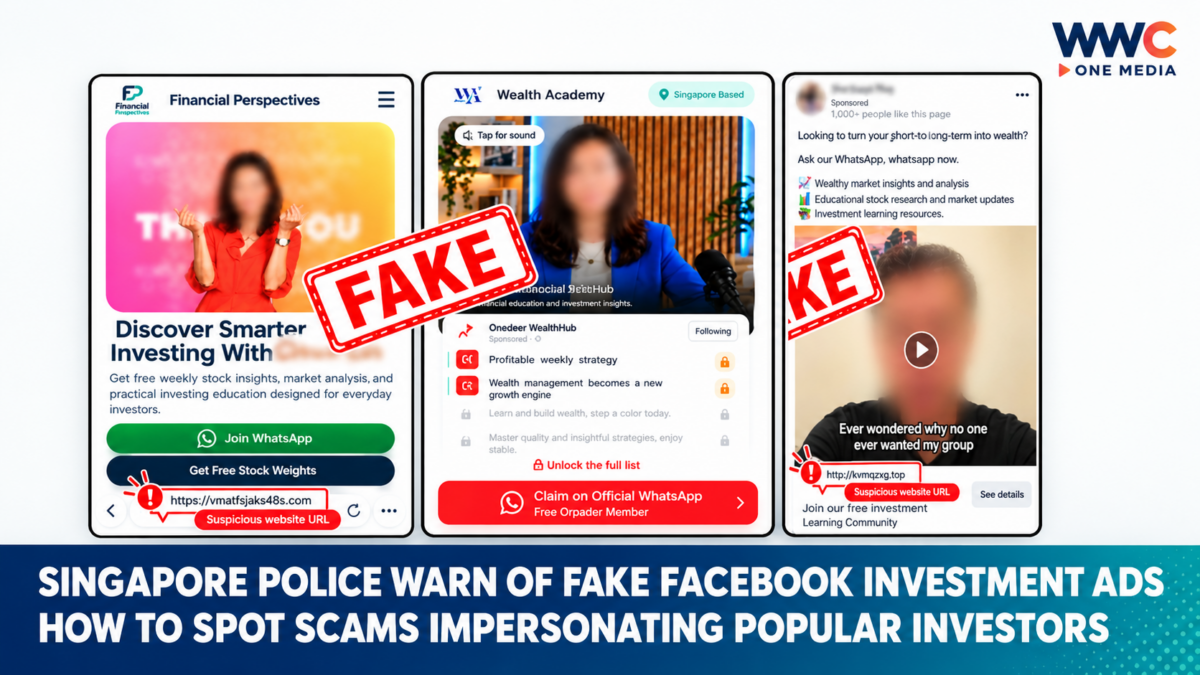
Singapore police have warned the public about a growing investment scam in which criminals impersonate well-known investors, financial experts and popular personalities on Facebook to trick victims into transferring money to fraudulent trading platforms.
In an advisory issued on Sunday, October 18, 2026, the Singapore Police Force urged members of the public to be cautious of social media advertisements promising “exclusive investment tips”, “free stock analysis” and unusually high returns with little or no risk.
The scammers use these advertisements to attract people seeking investment opportunities before directing them to fraudulent websites and messaging groups, where they are pressured to invest increasingly large amounts of money.
Victims often discover the deception only when they attempt to withdraw their supposed profits and find that their funds are inaccessible or the people they have been communicating with have disappeared.
The warning highlights how scammers are exploiting social media advertising and the reputations of trusted financial personalities to make fraudulent investment schemes appear legitimate.
How the Facebook Investment Scam Works
According to police, the scam typically begins when a Facebook user encounters an advertisement promoting investment advice supposedly provided by a well-known investor or financial expert.
The advertisement may promise exclusive market insights, free stock recommendations or opportunities to earn substantial profits with minimal risk.
People who click on the advertisement are redirected to an external website, which then sends them to a WhatsApp conversation with individuals posing as investment gurus or financial advisers.
These fake advisers attempt to build trust by offering investment guidance and encouraging victims to sign up for trading accounts.
Victims may then be instructed to download investment applications or access trading websites controlled by the scammers. The platforms can display fabricated account balances and apparent investment profits to convince users that their money is growing.
Once victims believe the scheme is genuine, the criminals encourage them to transfer increasingly large sums of money.
The deception usually becomes apparent when investors try to withdraw their funds but are unable to do so, or when the supposed advisers stop responding to messages.
Fake Investment Gurus Exploit Trust and Promises of High Returns
One of the most concerning aspects of the scam is the use of familiar names and trusted public figures to create a false sense of credibility.
Fraudsters may use photographs, names, fabricated endorsements or misleading advertisements to make it appear that a respected investor is personally recommending a particular investment opportunity.
However, an advertisement featuring a recognisable face does not prove that the individual endorses the investment or that the trading platform is legitimate.
Scammers also rely on urgency and the promise of exceptional returns to pressure victims into acting before they have time to investigate.
Singapore’s ScamShield resources warn that investment scams commonly use fake testimonials, fabricated success stories and misleading displays of profits to persuade victims to commit more money.
Some schemes may even allow small initial withdrawals to make the investment appear genuine before encouraging much larger transfers.
Investors should therefore be suspicious of any opportunity that promises guaranteed profits, exceptionally high returns with little risk, or exclusive access to supposedly privileged investment information.
Singapore Police Urge Investors to Check Financial Credentials
Police have advised members of the public to verify investment companies and the people offering financial services before committing money.
Investors can consult the Monetary Authority of Singapore’s official resources, including the Investor Alert List, Financial Institution Representatives Register and Financial Institutions Directory, to check relevant warnings, licensing information and representatives’ credentials.
However, the absence of a company or individual from a warning list does not automatically establish that an investment is safe or legitimate.
Members of the public should also examine reviews and ratings before downloading investment applications, while remembering that online reviews can themselves be manipulated.
Most importantly, investors should independently contact the financial institution through its official website or verified contact details rather than relying on links, telephone numbers or instructions supplied by an advertisement or an unfamiliar messaging contact.
Police have specifically warned the public against investing or transferring money solely on the instructions received through social media advertisements or messaging platforms.
Facebook and Other Social Media Platforms Remain Targets for Scammers
The latest warning comes amid wider efforts by Singapore authorities and technology companies to disrupt online fraud.
In September 2026, Meta said its collaboration with the Singapore Police Force had resulted in action against more than 113,000 entities and pages connected to fraud and scams on Facebook and Instagram during the first half of the year.
The companies also reported the removal of more than 3.6 million suspicious “shell pages” in July before they could be used in scam campaigns. These pages can appear empty or harmless initially but may later be activated to support fraudulent activity.
Separately, Singapore’s Ministry of Home Affairs said in September that investment scams had caused approximately S$170 million in losses during the first half of 2026.
Authorities have been strengthening measures to address fraudulent financial advertisements and investment scam groups that pose as legitimate communities for people seeking to learn about investing.
The scale of these efforts underscores the challenge of identifying and removing scam operations that can rapidly create new accounts, advertisements and websites after existing ones are taken down.
What to Do If You Encounter a Suspicious Investment Advertisement
Singapore residents who encounter suspicious investment promotions should avoid clicking unfamiliar links, sharing banking credentials or transferring money to unverified individuals.
They should independently verify the investment provider, check the relevant MAS resources and seek advice from someone they trust before making financial decisions.
Anyone who suspects they have been scammed should contact their bank immediately to report suspicious transactions and ask what protective steps can be taken. They should also report the incident to the police.
The 24-hour ScamShield Helpline is available at 1799 for people in Singapore who need assistance checking suspected scams.
The key lesson is simple: a familiar face, professional-looking advertisement or impressive trading dashboard is not proof that an investment is genuine.
As scammers become increasingly sophisticated in exploiting social media platforms, careful verification remains one of the strongest ways for investors to protect their savings.
SEO keywords: Singapore investment scam, fake Facebook investment ads, Singapore Police scam warning, investment guru impersonation, Facebook trading scams, WhatsApp investment fraud, fake investment apps, MAS Investor Alert List, ScamShield Singapore, online financial scams 2026.