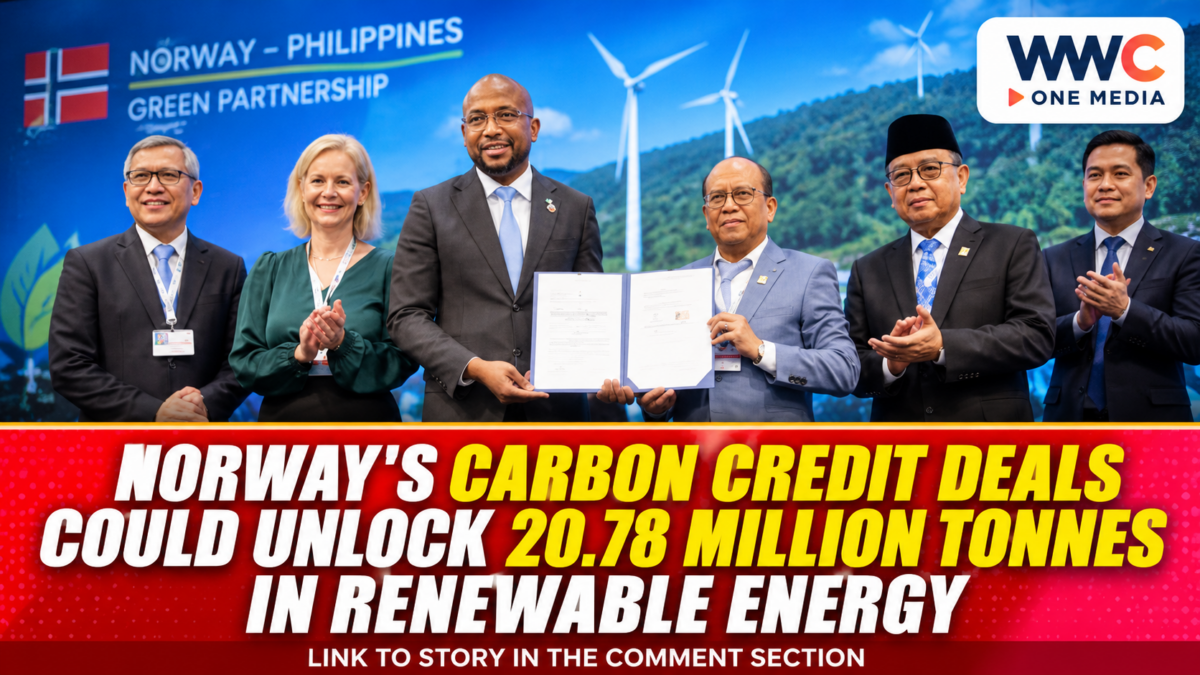
Norway has established two carbon-credit purchase programmes with Indonesia and Morocco that could support renewable energy development while allowing Norway to acquire verified emissions reductions under the Paris Agreement. The Norwegian Ministry of Climate and Environment announced the arrangements on Nov. 16, 2026, setting potential credit volumes of up to 12 million tonnes for Indonesia and 8.78 million tonnes for Morocco over 10 years. Regjeringen.no+1
The programmes create a financing route for renewable projects that may struggle to attract investment on electricity sales alone. But the structure places an important condition on the money: Norway says it will pay only after the emissions reductions have actually been achieved, verified and delivered.
That makes the agreements more than conventional funding announcements. Their value will depend on whether the projects are built, produce measurable reductions and meet the accounting requirements that prevent the same emissions cuts from being claimed twice.
Norway carbon credits: two countries, different energy programmes
The Indonesian programme targets emissions from the country’s electricity sector. The agreement was signed by the Global Green Growth Institute (GGGI), acting on behalf of Norway, and PT PLN (Persero), Indonesia’s state-owned electricity company.
Under the arrangement, Norway can purchase up to 12 million tonnes of emissions reductions over a 10-year period. The programme is intended to accelerate renewable power development and help bring forward projects that might otherwise not be realised. Regjeringen.no
Morocco’s programme has a different technology focus. It is designed to support new solar and wind power projects, with potential emissions reductions of up to 8.78 million tonnes over 10 years. Norway’s ministry says its funding will act as a subsidy for eligible projects that are not commercially viable without additional support. Regjeringen.no
The two programmes therefore share a carbon-credit purchasing structure, but they should not be treated as identical projects. Indonesia’s agreement is tied to electricity-sector emissions and PLN, while Morocco’s arrangement is directed towards qualifying solar and wind developments.
Why Indonesia’s electricity mix matters
Indonesia’s electricity demand is growing, and its existing generation mix helps explain the programme’s focus. The Norwegian government says coal accounts for more than 70% of Indonesia’s electricity generation, while solar and wind together account for less than 1%. Regjeringen.no
That gap creates an opportunity for renewable generation to displace some electricity that would otherwise come from coal-fired power plants. However, a project must produce actual electricity and demonstrate the resulting emissions reduction before the carbon-credit payment condition can be met.
For PLN, the agreement creates a potential additional revenue source connected to emissions reductions. For developers, the prospect of carbon-credit income could improve the financial case for projects that might not proceed on electricity revenue alone.
This is particularly relevant to renewable projects that require significant initial investment. WWC has previously examined the challenges of expanding solar power and battery storage across island communities in Southeast Asia. That coverage highlights why project financing, storage and implementation arrangements matter alongside renewable-energy targets.
Morocco’s solar and wind projects need commercial support
Morocco’s programme addresses a different barrier: the commercial viability of renewable developments. The Norwegian ministry says that although the country has favourable conditions for solar and wind power, some projects are not being built because they are not financially viable.
The carbon-credit arrangement is intended to provide additional income through Norwegian purchases of verified emissions reductions. That income could help eligible projects become commercially viable and proceed to development. Regjeringen.no
The programme also includes requirements for monitoring, verification and reporting. These safeguards matter because carbon credits have value only when the claimed emissions reductions can be substantiated under the applicable rules.
The Norwegian government also says the programme has been designed within the framework of its policy on Western Sahara. This is a relevant political and legal consideration in the design of the Morocco arrangement, although the public announcement does not provide detailed project locations or a list of eligible facilities. Regjeringen.no
How Article 6 changes the carbon-credit arrangement
Both programmes operate under Article 6 of the Paris Agreement. The United Nations Framework Convention on Climate Change explains that Article 6.2 provides accounting and reporting guidance for countries transferring internationally recognised emissions reductions towards their national climate targets. UNFCCC
In practical terms, a country that finances emissions reductions abroad may be able to use eligible transferred credits towards its own climate commitments. The host country, meanwhile, must account for the transfer so that the same reduction is not counted twice.
That accounting requirement is central to the Norwegian agreements. Norway says it will pay only for reductions that have been achieved, verified and delivered. For Indonesia, the ministry additionally specifies that reductions must be additional to what would have happened without the programme. Morocco’s announcement also says the reductions will be counted only once. Regjeringen.no+1
The mechanism is therefore not simply a payment for promising to build renewable infrastructure. It links payment to a measurable environmental result.
WWC has also examined the wider debate over international climate levies and how climate funding could be distributed. Carbon-credit purchases are a different financing tool, but both raise the same practical question: how can announced climate finance become money that supports measurable action?
What the agreements could mean for renewable investment
Analysis: The programmes could help reduce the financial barriers facing renewable-energy projects by adding a potential source of income beyond electricity sales. That may be especially important where project developers face high construction costs, financing constraints or difficulty competing with established fossil-fuel generation.
However, the announced maximum volumes should not be confused with emissions reductions already delivered. The Indonesian figure of 12 million tonnes and Morocco’s 8.78 million tonnes represent potential programme volumes over 10 years, not verified reductions available for immediate transfer.
The agreements also do not establish that all proposed projects have already secured construction financing, permits or final operating arrangements. Those details will need to emerge through programme implementation and project-level disclosures.
For the Philippines, the developments offer a regional example of how carbon markets could be connected to renewable-energy investment. The country has its own climate-finance and energy-transition priorities, including work to connect local climate plans with investment opportunities. WWC has examined the DENR’s partnerships with global climate networks and the challenge of turning plans into funded projects.
The lesson is that international financing mechanisms can create incentives, but they cannot replace project preparation, credible emissions measurement or transparent implementation.
What happens next
The next stage is the development and operation of the programmes. Indonesia will need to advance its renewable-energy projects and complete the technical arrangements needed to approve and record carbon-credit transfers. Morocco’s eligible solar and wind projects will need to satisfy the programme’s monitoring, verification and reporting requirements.
The decisive milestones will be actual project construction, renewable electricity generation, independently verified emissions reductions and delivery of eligible credits.
Until those steps are completed, the agreements should be understood as financing frameworks with potential environmental benefits—not proof that the full emissions reductions have already occurred.
The central test for both countries will be whether the carbon-credit arrangements lead to additional renewable generation and credible emissions cuts that can be counted only once.
Frequently asked questions
How many carbon credits could Norway buy from Indonesia?
Norway can purchase up to 12 million tonnes of emissions reductions over 10 years under the programme with Indonesia.
How many emissions reductions could Morocco’s programme deliver?
The Norwegian government says Morocco’s solar and wind programme could deliver up to 8.78 million tonnes of emissions reductions over 10 years.
Why is Norway buying carbon credits from these countries?
The purchases are intended to provide additional financing for renewable-energy projects while allowing Norway to acquire eligible emissions reductions under the Paris Agreement.
What is Article 6.2 of the Paris Agreement?
Article 6.2 provides accounting and reporting guidance for countries that transfer internationally recognised emissions reductions and use them towards their national climate targets.
Will Norway pay Indonesia and Morocco immediately?
No. Norway says payment will be made only after emissions reductions have been achieved, verified and delivered under the programme requirements.