
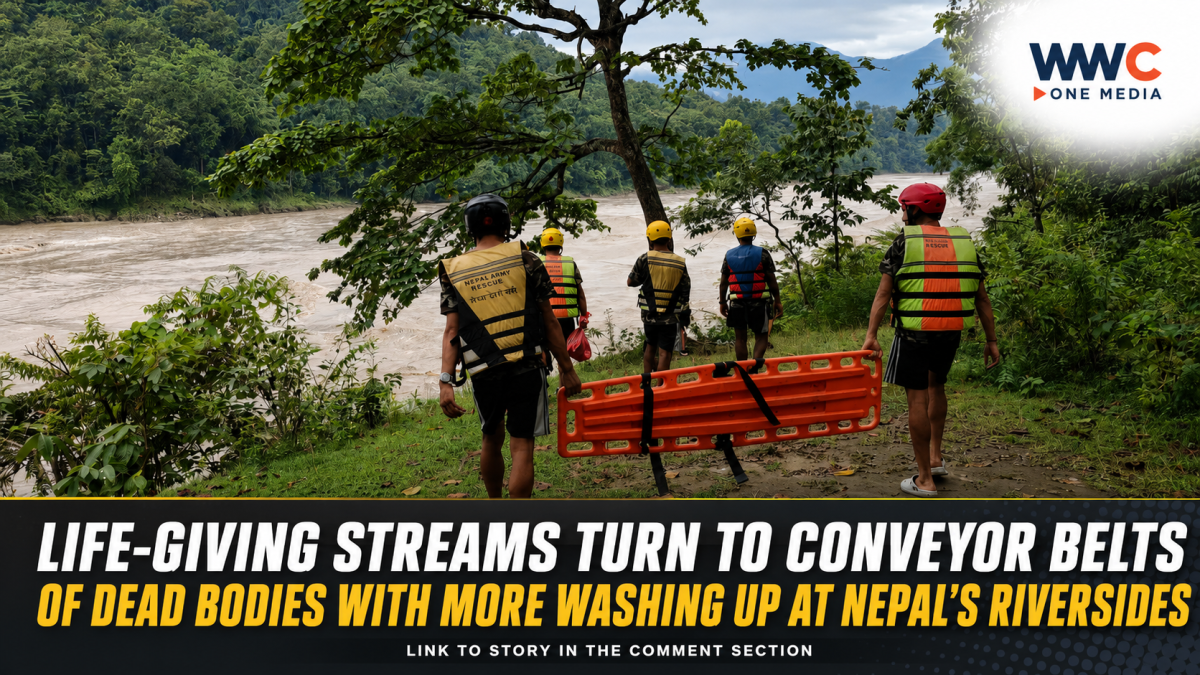
KATHMANDU, Nepal — Nepal’s catastrophic August 26 flash floods have entered an even more devastating phase, with bodies continuing to be recovered far downstream from the disaster zone as rescuers race to locate thousands still missing.
Nepal Police said Wednesday that 1,127 people had died, while 4,858 remained missing in connection with the disaster. At least 45 bodies were recovered in Rasuwa, where the flooding began, while hundreds more were found in districts farther downstream, including Nuwakot, Dhading, Chitwan, Gorkha and Nawalparasi. Nine bodies have also been recovered in neighboring India.
The scale of the downstream recovery has shocked rescuers and families. Bodies have been discovered more than 100 kilometers from the original disaster area, carried by the violent floodwaters through Nepal’s river system.
The rivers are now carrying the evidence of the catastrophe
The disaster began after an ice-and-rock avalanche/glacial collapse triggered a massive surge of water in the Himalayan region. The flood tore through settlements, roads, bridges, hydropower facilities and border infrastructure before sweeping downstream.
The devastation extended through the Bhotekoshi, Trishuli and Narayani river systems, making the search for missing people exceptionally difficult.
In Chitwan alone, authorities reported 348 recovered bodies, with hundreds still unidentified. DNA samples and other identification procedures are being used as authorities struggle to match victims with families.
Authorities have also been forced to establish temporary burial and body-management sites because the number of recovered victims has overwhelmed normal facilities. The situation has created an additional humanitarian crisis for families desperately searching for relatives.
Thousands are still unaccounted for
The death toll is still changing as search teams reach previously inaccessible areas. Nepal Police reported that 6,541 people had been rescued, while nearly 7,912 police personnel were deployed for search-and-rescue, relief operations and management of recovered bodies.
Earlier reports from international outlets put the number of missing at roughly 3,900, but Nepal Police’s latest update has raised the figure to 4,858, illustrating how rapidly authorities are reconciling reports from devastated communities.
The situation is particularly desperate around damaged hydropower facilities. Hundreds of workers are believed to be trapped or missing inside tunnels, where mud and debris have made conventional rescue operations extremely difficult. The Associated Press reported that roughly 900 workers from damaged hydropower projects were missing, with about 500 potentially trapped underground.
Families face a race against time
For families, every recovered body represents both devastating grief and the possibility of finally learning what happened to a missing loved one.
Authorities are photographing unidentified victims, collecting DNA samples and publishing identifying information to assist families. In some areas, the sheer number of bodies has forced authorities to temporarily manage unidentified victims before formal identification and final funeral arrangements can take place.
International reporting has also documented the emotional toll, with families traveling across devastated districts in search of missing relatives while rescuers continue combing rivers, tunnels and mountains of debris.
A disaster far larger than the first reports suggested
The latest figures show that Nepal’s tragedy is not simply a single flash-flood event. It has become a sprawling search-and-recovery operation stretching across multiple river systems and districts.
The 1,127 confirmed deaths and 4,858 missing reported by Nepal Police on September 2 represent the latest national figures available, although numbers may continue to change as unidentified victims are processed and previously isolated areas are reached.
China has separately reported 16 deaths and 546 missing on its side of the border, underscoring the cross-border scale of the Himalayan disaster.
The terrifying reality now unfolding along Nepal’s rivers is that the flood may have ended—but the search for those it carried away is far from over.
WWC ONE MEDIA G.A



Leave a Reply