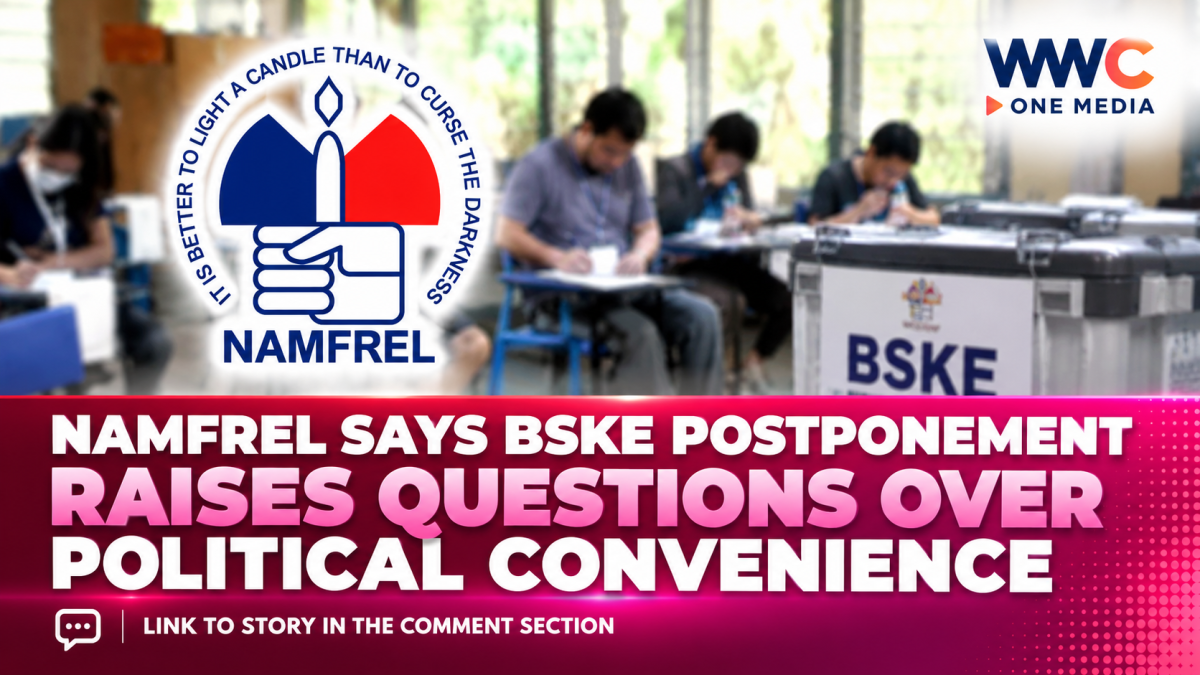
The National Citizens’ Movement for Free Elections (NAMFREL) has criticized the postponement of the Barangay and Sangguniang Kabataan Elections (BSKE), saying the move raises questions about whether the election schedule is being shaped by political considerations.
The criticism came after President Ferdinand Marcos Jr. signed Republic Act No. 12326, moving the BSKE from November 2026 to November 2028 and extending the terms of incumbent barangay and SK officials elected in 2023.
NAMFREL said it had previously questioned claims that the postponement was primarily driven by fiscal concerns. The organization pointed to the fact that the new election schedule would place the BSKE in the same year as the next national and local elections, which are scheduled for May 2028. NAMFREL said this alignment raises questions about the measure’s political implications.
The election watchdog also argued that barangay officials can play influential roles in national campaigns because of their positions within local communities. It said extending their incumbency until the 2028 elections could therefore create concerns about the relationship between local political machinery and the national electoral calendar.
NAMFREL has also objected to what it described as the repeated postponement of barangay and youth elections. The BSKE had originally been scheduled for December 2025 before being moved to November 2026, and the latest law postpones it again to November 2028.
The group said it supports efforts to challenge Republic Act No. 12326 before the Supreme Court. Separately, election lawyers have already moved to question the law, while the Commission on Elections has suspended preparations for the November 2026 polls and said it will follow whatever ruling the Supreme Court issues.
The government has defended the postponement on administrative and fiscal grounds. Marcos said the additional time would allow barangay and SK officials to improve service delivery, complete ongoing programs and focus on community and youth concerns.
With the law now in effect but facing a potential constitutional challenge, the Supreme Court could ultimately determine whether the 2028 BSKE schedule remains in place.