
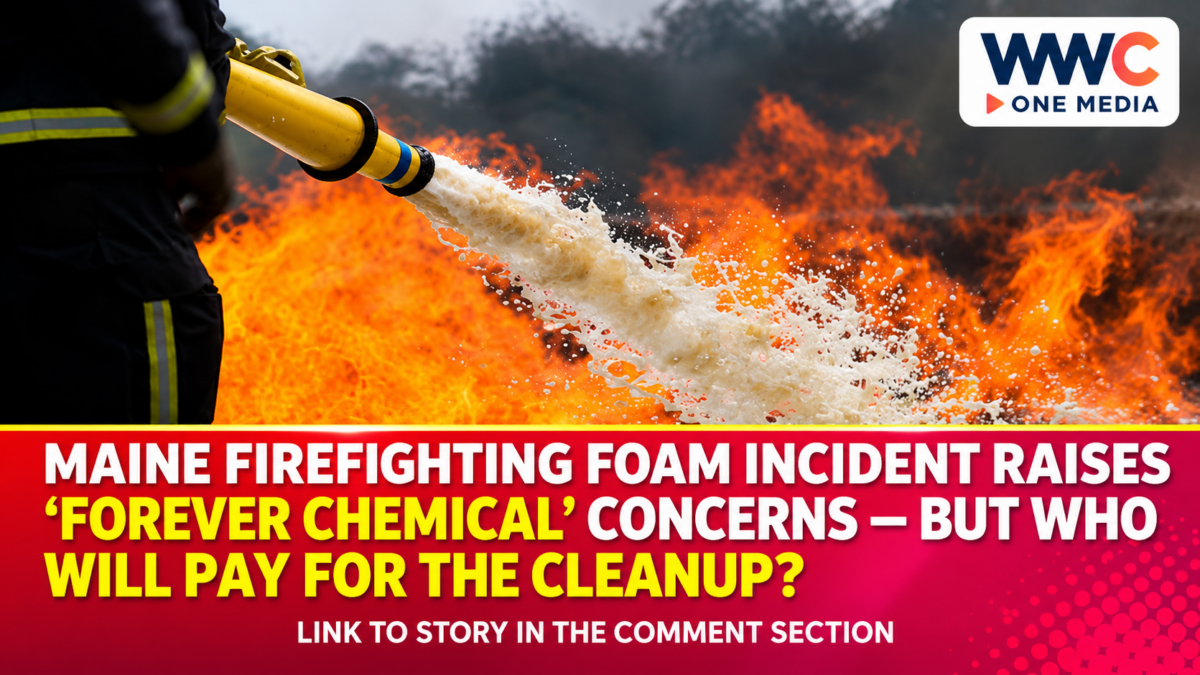
MAINE, United States — A Maine firefighting foam incident involving the South Thomaston Fire Department has raised environmental concerns after residual fire-suppressing chemicals entered a fire engine’s water tank during a routine equipment inspection on November 2, 2026.
The municipality has acknowledged concerns surrounding the potential discharge of per- and polyfluoroalkyl substances, commonly known as PFAS or forever chemicals, and pledged to cooperate with the Maine Department of Environmental Protection (DEP).
The incident brings renewed attention to the environmental risks associated with older firefighting equipment, chemical disposal procedures and the financial responsibility for potential contamination.
Beyond the immediate incident, a broader question remains: How should communities manage the environmental legacy of chemicals once considered essential to emergency response operations?
Maine Firefighting Foam Incident Raises Equipment Safety Questions
The incident occurred during a regularly scheduled monthly inspection of the South Thomaston Fire Department’s vehicles and equipment.
During the inspection, the foam system on Engine 51 was inadvertently activated, allowing residual firefighting foam to enter its main water tank.
The vehicle’s foam tanks had been drained several years earlier, and their gauges indicated that they were empty.
However, some material apparently remained inside the equipment.
Fire department personnel could not immediately determine whether the remaining substance was Class A foam, Class B foam or a combination of both.
The possibility of damage to the vehicle from mixing different foam formulations complicated the situation.
The circumstances highlight a potential operational challenge for emergency services transitioning away from older chemical-based firefighting products.
Removing a chemical from active service does not necessarily eliminate every remaining trace from the equipment previously used to store or distribute it.
Why Forever Chemicals Are an Environmental Concern
PFAS are a large family of synthetic chemicals developed for industrial and commercial applications.
Their resistance to degradation makes many of these substances particularly persistent. Some can accumulate in living organisms and remain in environmental systems over extended periods.
Certain firefighting foam formulations have historically contained PFAS because of their effectiveness against fires involving flammable liquids.
The environmental challenge emerges when these substances are released beyond controlled operational settings.
PFAS can occur in soil, groundwater, drinking water and food. Their movement through the environment makes chemical testing important when a potential release occurs.
A comparable concern over the importance of environmental safeguards has emerged in the United States amid discussions surrounding Iowa’s proposed military disposal operation and toxic lead risks.
Although the substances and circumstances are different, both situations illustrate why environmental assessment should precede conclusions about community safety.
Maine Already Restricts PFAS Firefighting Foam
Maine has established statutory restrictions governing firefighting foam containing intentionally added PFAS.
Since January 1, 2022, Maine law has prohibited the release of such foam during testing or training unless the material is fully recovered for appropriate disposal.
Emergency applications necessary to safeguard people or property remain permitted under this provision.
The legislation also requires notification within 24 hours for specified discharges affecting waterways, drainage systems, groundwater, water supplies or certain adjoining areas.
Restrictions additionally apply to the manufacture, sale and distribution of covered firefighting foam, subject to defined exemptions.
However, the existence of these regulations does not automatically establish that the South Thomaston Fire Department violated the law.
That determination would require an assessment of the foam’s composition, the circumstances surrounding its release and the relevant statutory requirements.
Who Could Be Responsible for Environmental Cleanup?
The financial consequences of chemical contamination can extend beyond the initial emergency response.
Depending on the findings of an environmental investigation, potential expenses could include laboratory analysis, soil excavation, transportation of contaminated material, waste treatment and subsequent monitoring.
The scope of any required remediation would depend on the location, concentration and movement of the substances involved.
A definitive cleanup cost or legally responsible party has not been established in the primary documentation available for this report.
Similar questions about environmental remediation and accountability have emerged following the Bataan oil spill cleanup and recovery of contaminated waste.
Different pollutants require different treatment methods, but the underlying administrative challenge remains comparable: completing an appropriate environmental response while establishing responsibility for its costs.
For municipal governments, unexpected remediation expenses could potentially place additional pressure on public finances.
This makes preventive maintenance, chemical inventories and appropriate waste-management arrangements important considerations for emergency service operators.
Are Residents Facing Immediate Health Risks?
Scientific research has associated exposure to certain PFAS compounds with adverse health outcomes, including changes in immune function and increased risks of some cancers.
However, the health implications depend on the specific chemicals involved, the level of exposure and its duration.
The presence of a potentially hazardous substance does not independently establish that nearby residents have experienced harmful exposure.
There is currently insufficient verified incident-specific laboratory information to conclude that residential drinking water has been contaminated or that residents have developed illnesses because of the November 2 incident.
Environmental monitoring and transparent public communication are therefore essential.
The importance of distinguishing measured environmental conditions from assumptions about individual health outcomes is also evident in Metro Cebu’s environmental monitoring during the Indonesian haze episode.
South Thomaston has also directed people with questions regarding private wells or drinking water to contact Maine environmental officials.
Maine’s Planned Foam Disposal Programme
Maine’s legislature has established a framework for a voluntary collection and disposal programme covering firefighting foam containing intentionally added PFAS.
Subject to funding availability, the programme is intended to be implemented by July 1, 2027.
The initiative would provide a mechanism for eligible holders to request collection and for the recovered foam to be managed through controlled disposal arrangements.
Its effectiveness could depend on adequate funding, participation by organisations holding older foam supplies and access to appropriate disposal services.
Importantly, the legislation’s existence does not establish that funding has been secured for every potential cleanup or that the programme will cover the South Thomaston incident.
The distinction between collecting unused chemicals and remediating substances already released into the environment is particularly important.
Both activities can require separate operational and financial arrangements.
What Happens Next?
South Thomaston has committed to working with the Maine Department of Environmental Protection and complying with applicable requirements.
The next significant developments would be the availability of detailed environmental testing, clarification of any required remediation and a determination of financial responsibility.
Those findings could establish whether additional soil or water assessment is necessary and whether further intervention is warranted.
The Maine firefighting foam incident also raises a wider governance question for emergency response agencies managing equipment that previously contained environmentally persistent chemicals.
Preventing future incidents may require more than removing hazardous products from purchasing lists. It may also require reliable equipment decontamination, maintenance documentation and appropriate disposal procedures.
For affected communities, the priority remains obtaining credible information about environmental conditions and ensuring that any necessary remediation is completed.
The ultimate cost of the incident remains uncertain — but the importance of establishing what was released, where it travelled and who is responsible for addressing it is already clear.
Frequently Asked Questions
What happened during the Maine firefighting foam incident?
Residual firefighting foam entered a South Thomaston fire engine’s water tank when its foam system was inadvertently activated during an equipment inspection on November 2, 2026.
What are forever chemicals?
Forever chemicals are commonly known as PFAS, a family of manufactured substances, many of which resist environmental degradation.
Has residential drinking water contamination been confirmed?
The primary records reviewed do not establish incident-related drinking water contamination. Additional environmental testing would be necessary to determine the extent of any impact.
Who will pay for the Maine firefighting foam cleanup?
A final determination of cleanup costs and legal responsibility has not been independently verified.
Does Maine restrict PFAS firefighting foam?
Yes. Maine regulates the release, sale and distribution of firefighting foam containing intentionally added PFAS, with specified exceptions and reporting requirements.










