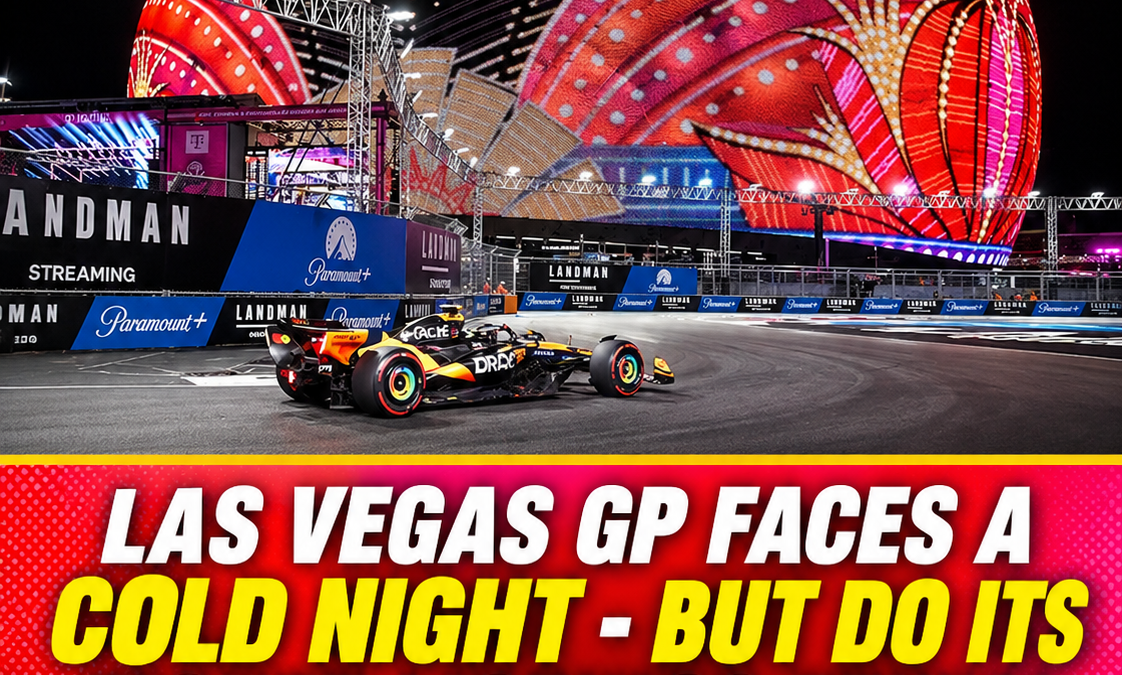
The 2026 Formula 1 Heineken Las Vegas Grand Prix enters its race weekend with general admission tickets listed as sold out, while grandstand and hospitality options remain advertised on the event’s official ticketing site. The race is scheduled for Saturday, Nov. 21, under a forecast of temperatures between 5 and 11 degrees Celsius.
The ticket picture offers an important distinction for the business of Formula 1: a sold-out ticket category does not necessarily mean every seat or premium package has been taken. And while the event’s cooler conditions may shape the experience for spectators, the public information available does not establish that weather has weakened demand.
For Las Vegas, the challenge is to turn the spectacle of racing on the Strip into a commercially sustainable event, not simply to fill a circuit for one night.
Las Vegas GP ticket demand is not captured by one sold-out label
The official Las Vegas Grand Prix website currently lists general admission as sold out. Grandstand tickets, however, remain advertised from US$137 for a single day, while hospitality packages start at US$2,500.
Those categories offer very different experiences and price points. General admission provides standing-room access, grandstands offer assigned seating, and hospitality packages include premium facilities and food and beverage offerings.
That means the availability of one category cannot be used as a complete measure of ticket demand. A sold-out general admission allocation may indicate strong interest in that particular option, while the continued listing of grandstand and hospitality inventory shows that other purchasing choices remain available.
The distinction matters because ticket availability is not the same as ticket sales performance. The promoter has not published a current breakdown of tickets sold, unsold capacity, revenue by category or the number of spectators expected for the 2026 race in the official material reviewed for this report.
Without those figures, claims that demand is either collapsing or matching last year’s performance would go beyond what the public record establishes.
A sold-out 2025 event sets a difficult comparison
The event promoter described the 2025 Las Vegas Grand Prix as sold out when it announced the 2026 single-day ticket programme in August.
For this year’s event, the organiser expanded the range of ways fans could attend. Single-day general admission, grandstand and selected hospitality options were made available, with hospitality experiences offered for individual days rather than only through multi-day packages.
The change gives potential spectators more flexibility. Someone unable to attend the full weekend can choose a particular day, while buyers seeking premium access can select a hospitality experience without committing to a three-day package.
But the additional options also make comparisons more complicated. A sold-out event in one year and a mixture of sold-out and available categories in another do not, by themselves, reveal whether total revenue, attendance or average ticket prices have increased or decreased.
A meaningful comparison would require the organiser to disclose comparable figures covering capacity, paid attendance, ticket revenue and the distribution of sales across categories.
For context, WWC previously examined how Formula 1’s commercial model can be tested even by a popular event in its report on Zandvoort’s final scheduled Grand Prix and the economics of hosting a race. The broader lesson is that public enthusiasm and the financial requirements of staging a Grand Prix are related, but they are not interchangeable.
Cooler weather changes the spectator experience
Las Vegas is not presenting the same conditions as a conventional warm-weather sporting weekend. The official Formula 1 forecast issued on Nov. 18 projected temperatures of 5 to 11 degrees Celsius for Saturday’s race, with no precipitation expected.
The cooler conditions are particularly relevant because the Las Vegas event takes place at night. Spectators spending several hours in outdoor grandstands or standing areas will need to prepare for temperatures that can feel markedly different from the daytime conditions many visitors associate with the city.
The weather also matters to the event’s overall atmosphere. Las Vegas has built its Grand Prix around the combination of motorsport, illuminated city landmarks and entertainment beyond the track. The cold may affect how comfortable some spectators feel, but the available official information does not quantify any effect on ticket purchases or attendance.
It would therefore be premature to treat the forecast as evidence of weaker demand. Weather is one consideration in a visitor’s decision, alongside ticket prices, travel expenses, accommodation, race schedules and the appeal of the event itself.
The Strip race is competing as an entertainment product
The Las Vegas Grand Prix is not marketed solely as a sporting contest. Its official programme includes fan zones, entertainment and premium experiences, while the circuit passes major landmarks along the Strip.
That positioning places the event within a wider entertainment economy. Visitors may be choosing between a race ticket, hospitality access, hotel packages and other activities during the same trip.
The promoter’s introduction of more single-day options reflects an effort to accommodate different schedules and spending preferences. It also gives the event more ways to package its inventory, although the actual commercial effect will depend on how many people complete purchases.
The business opportunity extends beyond the circuit. Hotels, restaurants, transport operators and entertainment venues can benefit from visitors attending a major international event, but the scale of that impact requires evidence such as visitor spending and hotel occupancy data.
Formula 1’s return to Malaysia in October offered another example of how a race can influence a host city’s event planning. WWC covered Kuala Lumpur’s preparations for a major F1 weekend at Sepang, where organisers and authorities had to consider the demands of a large sporting crowd alongside other events.
The Las Vegas model is different because the circuit is integrated into a major tourist destination. That creates opportunities for visitors to combine the race with other experiences, but it also means the event competes for discretionary spending beyond motorsport.
More racing does not automatically mean more ticket buyers
The event’s appeal also depends on the wider motorsport calendar. Formula 1 is one of several international racing series competing for audiences, sponsors and host-city investment.
The growth of other championships illustrates how promoters and circuits are looking for ways to attract different fan bases. WWC’s report on IndyCar’s planned return to Europe through a Barcelona event examined how racing organisations can use new venues and markets to expand their reach.
For Las Vegas, the commercial test is more immediate: whether the event can maintain interest across ticket categories and turn its global profile into attendance and spending.
The official ticket listings provide a snapshot of what buyers can still select, not a complete account of the event’s financial performance. The final assessment will require figures released after the race.
What happens next
The Formula 1 Grand Prix is scheduled to start at 8 p.m. local time on Saturday, Nov. 21, with the event timetable specifying a 50-lap race or a maximum duration of 120 minutes.
After the weekend, the most useful indicators will be confirmed attendance, ticket revenue, hospitality performance and any figures the organiser releases comparing the event with 2025.
Until then, the sold-out general admission category is evidence of limited availability in that section, not proof that the entire event has sold out. The remaining grandstand and hospitality listings make that distinction clear.
Las Vegas has secured its place on the Formula 1 calendar as a major spectacle. Whether its ticket strategy is delivering stronger commercial results is a question that only fuller post-event figures can answer.
Frequently asked questions
Are Las Vegas Grand Prix 2026 tickets sold out?
No. The official website lists general admission as sold out, but grandstand and hospitality ticket options remain advertised.
When is the 2026 Las Vegas Grand Prix?
The race is scheduled for Saturday, Nov. 21, 2026, at 8 p.m. local time.
How cold will it be during the Las Vegas GP?
The published race-day forecast projects temperatures between 5 and 11 degrees Celsius, with no rain expected.
Did the 2025 Las Vegas Grand Prix sell out?
The event promoter described the 2025 race as sold out in its August 2026 announcement for the following year’s ticket programme.
Does a sold-out general admission section mean the entire race is sold out?
No. General admission, grandstands and hospitality are separate ticket categories. Availability in one category does not establish the status of the others or the event’s total attendance.