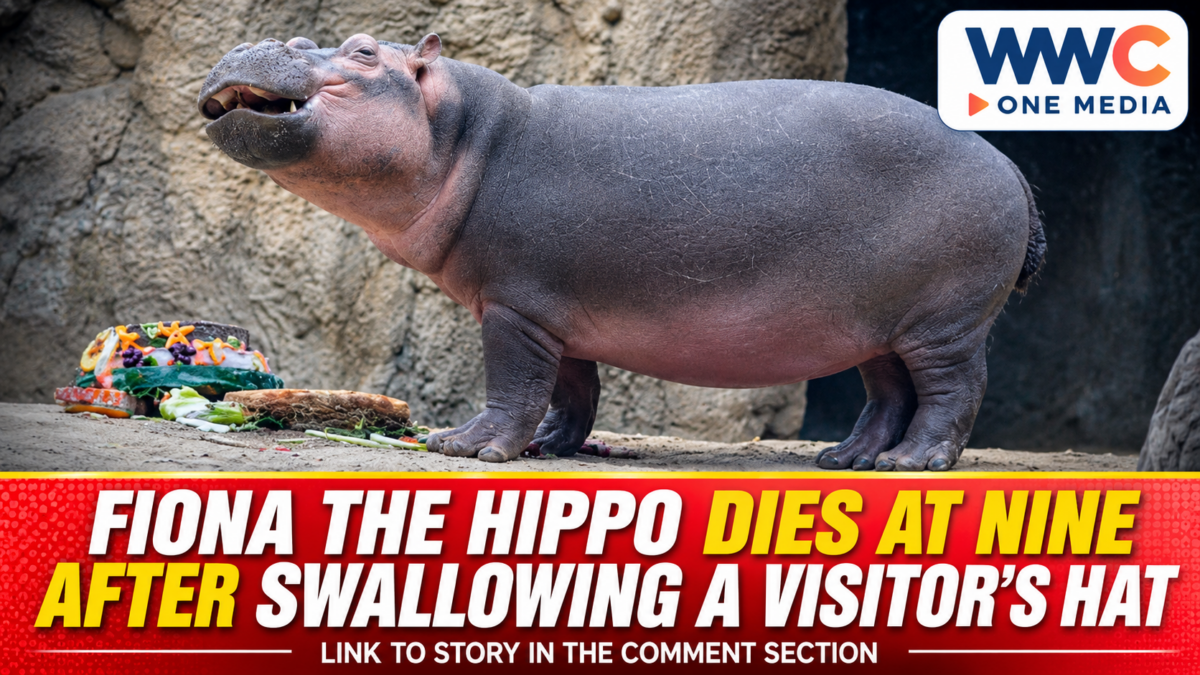
Fiona, the Cincinnati Zoo hippopotamus whose survival after a premature birth made her internationally recognised, has died following a medical emergency linked to a hat that accidentally entered her habitat. The Cincinnati Zoo & Botanical Garden announced her death on Nov. 19, 2026, saying repeated veterinary efforts to help her pass the object were unsuccessful.
Fiona was nine years old and would have turned 10 in January. Her death closes a remarkable chapter for an animal whose early struggle for survival became a source of public interest in wildlife care.
A medical emergency the veterinary team could not overcome
The zoo said Fiona had ingested a hat that entered her habitat accidentally the previous week. Veterinary staff made multiple attempts to move the object through her system and provided supportive care on the day she died.
The treatment efforts were unsuccessful, and Fiona did not recover.
Zoo director Dave Jenike said the facility had not expected the outcome. He also recognised the work of the animal-care team, which had attempted to save her.
The zoo did not describe the precise medical cause of death beyond the complications associated with the swallowed hat and the resulting emergency. It is therefore important not to add a more specific diagnosis that the official announcement did not provide.
The facility also asked the public to give the people who cared for Fiona space as they grieve.
Fiona’s life began with an extraordinary fight
Fiona first captured widespread attention because she arrived much earlier than expected.
The zoo’s account of her early life says she was born six weeks premature and was too small to stand or nurse from her mother, Bibi. The animal-care team stepped in to manage her feeding, warmth and round-the-clock care.
The zoo shared updates about her progress over an extended period, allowing people to follow her development. That openness helped turn Fiona into a widely recognised resident and a symbol of perseverance for people who had followed her recovery.
Her story also demonstrated the demands of caring for a vulnerable newborn animal. Survival required sustained attention from keepers and veterinary staff, alongside adjustments to her care as she grew.
A zoo resident who became part of Cincinnati’s identity
Fiona’s public profile extended well beyond the zoo’s visitors. The Cincinnati Zoo said she inspired millions and helped raise awareness and interest in her species.
The response to her death reflects the connection that can develop between the public and animals whose lives are shared over many years. Fiona was not simply an exhibit: people had followed her from her premature birth through her development into an adult hippopotamus.
That relationship is one reason zoos increasingly use animal-care stories to support education and conservation awareness. It can introduce audiences to the needs of species they might otherwise know little about.
WWC has also reported on other zoo-based conservation milestones, including Futa the red panda’s Guinness World Record in Japan, and the first okapi calf born in Southeast Asia. These are different stories, but each highlights the role of long-term animal care and specialist knowledge in zoological institutions.
Why objects in animal habitats can become serious hazards
Fiona’s death also draws attention to a basic responsibility for zoo visitors: keeping personal belongings and other objects away from animal habitats.
An item that appears harmless to a person can create a serious risk if an animal swallows it. Unlike food provided under a managed feeding programme, foreign objects may be difficult to detect, retrieve or move safely through an animal’s digestive system.
The Cincinnati Zoo’s announcement confirms that the hat entered Fiona’s habitat accidentally. It does not provide grounds to accuse a particular visitor of deliberately harming her.
The wider lesson is about prevention. Visitors should follow exhibit rules, avoid throwing or placing objects into enclosures and alert zoo staff if something enters an animal’s space.
These precautions matter across species and facilities. A zoo habitat is designed around the animal’s needs, and even an accidental intrusion can create an emergency that keepers cannot easily reverse.
What happens next
The zoo has announced Fiona’s death and asked the public to respect the people who cared for her. Its statement does not set out further public arrangements or provide a detailed veterinary report.
For now, the focus is on the loss felt by the animal-care team and the many people who followed Fiona’s life.
Her story began with an unusually difficult start, became a widely followed account of specialised animal care and ended after a medical emergency that the veterinary team could not overcome.
Fiona’s legacy will remain tied to the attention she brought to hippopotamuses and to the people responsible for caring for animals in human care. Her death is also a reminder that protecting wildlife requires more than affection: it demands responsible behaviour, safe habitats and constant attention to animal welfare.
Frequently asked questions
How old was Fiona the hippo when she died?
Fiona was nine years old. The Cincinnati Zoo said she would have turned 10 in January 2027.
How did Fiona die?
The zoo said she died after a medical emergency linked to a hat that accidentally entered her habitat and that she ingested. Veterinary efforts to help her pass the object were unsuccessful.
Where did Fiona live?
Fiona lived at the Cincinnati Zoo & Botanical Garden in Cincinnati, Ohio, United States.
Why was Fiona famous?
She became widely known after being born six weeks prematurely and receiving intensive care from the zoo’s animal-care team. The zoo shared her progress with the public, and her survival story reached millions.
What should zoo visitors do if an object enters an animal enclosure?
Visitors should immediately alert zoo staff and follow the facility’s rules. They should never attempt to retrieve an object themselves or throw anything into an animal habitat.