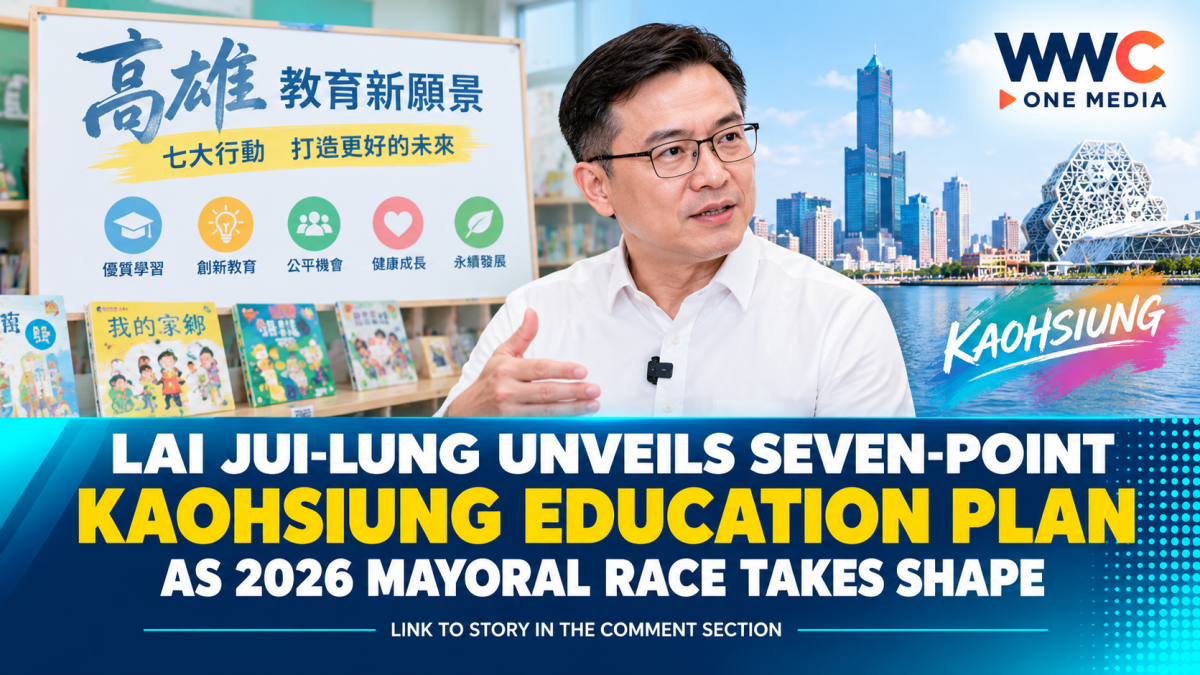
KAOHSIUNG — Democratic Progressive Party (DPP) Kaohsiung mayoral candidate Lai Jui-lung has unveiled a seven-point education platform focused on smaller classes, reduced teacher workloads, stronger student support and expanded international education.
The proposal, dubbed “Kaohsiung Education for the Future,” calls for gradually reducing class sizes and reviewing student-teacher ratios in preschools. It also proposes additional support for students with diverse learning needs, according to Taiwan News and CNA.
Smaller Classes and More Support Staff
Lai’s plan would seek to add counselors, social workers, special-education personnel and school safety staff to help schools respond to students’ academic, social and safety needs.
The platform also addresses school meals, proposing improvements in their safety, nutrition and quality.
For teachers, Lai has proposed reducing administrative responsibilities and gradually transferring non-teaching work to professional staff. Teachers holding administrative positions would also receive reduced teaching hours.
A proposed support center would provide assistance involving legal, psychological and mediation services for school-related disputes.
AI and Technology Enter the Classroom
Another major component of the proposal is the expanded use of technology in education.
Lai’s platform calls for age-appropriate artificial intelligence education, stronger digital-literacy programs and technology designed to reduce teachers’ administrative workload. Schools would also monitor students’ progress in core academic skills, according to Liberty Times coverage cited by Taiwan News.
The proposal would also encourage schools to build programs around their individual strengths and local characteristics, including areas such as reading, arts, sports, technology and marine education.
Bigger Push for Bilingual and International Education
Lai has also proposed doubling the bilingual-education budget without increasing teachers’ workloads.
The plan would expand partnerships between Kaohsiung schools and overseas institutions, create more opportunities for students to study abroad, and provide international training for teachers.
The proposal also calls for strengthening bilingual education in rural areas while continuing support for local languages.
Career Education Gets a Bigger Role
The platform extends beyond traditional classroom education.
Lai wants closer partnerships between schools and businesses, along with internships and employment opportunities. Students and residents would also have access to programs designed to develop additional professional skills and a second area of expertise.
A Public Dashboard to Track Progress
Lai has proposed holding education roundtables involving teachers, principals, parents, students, preschool representatives, special-education professionals and vocational educators.
He also wants to create a public dashboard that would regularly report progress on the seven commitments.
That proposal would give the public a way to track implementation if the platform is adopted, rather than relying solely on periodic campaign announcements.
What the Proposal Means for Kaohsiung Schools
Lai’s education platform brings together several issues facing schools: class sizes, teacher workload, student support, AI and digital education, bilingual learning, international opportunities and career preparation.
The proposals are campaign pledges, not yet implemented city policies. Their eventual scope would depend on funding, administrative decisions and the authority available to the Kaohsiung city government.
As the 2026 local elections approach, education is emerging as one of the policy areas candidates are using to outline their visions for Kaohsiung’s schools — with Lai’s seven-point plan putting teachers, technology and student support at the center of his campaign message.
WWC ONE MEDIA G,A