Punjab’s environmental authorities entered the 2026 smog season with a province-wide action plan covering agricultural burning, industrial emissions, transport pollution and air-quality surveillance. The plan, formally notified by the Punjab Environmental Protection Agency on July 5, places responsibility on multiple government departments rather than treating seasonal smoke as a problem that can be solved by extinguishing field fires alone. epd.punjab.gov.pk+1
The distinction matters for Lahore, where the provincial government’s own environmental assessment identifies vehicle emissions, industrial smoke, brick kilns, crop burning, dust and winter temperature inversions as contributors to poor air quality. epd.punjab.gov.pk
The wider public-interest question is whether enforcement against agricultural fires can work alongside sustained controls on the other sources of pollution. The government’s records show that Punjab has built a broader response system, but they also underline how much of the challenge extends beyond the fields.
Lahore smog: Crop burning is one part of a wider pollution problem
The Punjab State of Environment Report 2025 identifies several sources behind the province’s air-quality challenges. These include emissions from vehicles and industries, brick kilns, agricultural residue burning and dust.
That matters because eliminating one source does not automatically remove the others. Even if authorities prevent a number of crop fires, emissions from transport, industrial activity and construction-related dust still require separate enforcement.
The same report describes air pollution as a major environmental and public-health challenge, particularly in Lahore and other urban-industrial districts. It also identifies winter temperature inversions as a factor that can worsen the problem.
In practical terms, the challenge is not just preventing smoke from entering the air. It is also controlling the emissions already produced by the province’s urban, industrial and transport systems.
Punjab’s anti-smog plan puts several departments on the same task
The July 5, 2026 order, signed by Environmental Protection Agency Director General Dr. Imran Hamid Sheikh, notified the province’s Pre-Smog Action Plan for July to September 2026.
The plan assigns responsibilities to environmental officials and other government agencies. It calls for district anti-smog committees, coordination with agriculture, transport, health, police and local-government departments, and regular provincial preparedness meetings.
It also directs the agency to assess equipment used in field operations, including water bowsers, quick-response units, drones and vehicle-emissions testing equipment.
This structure reflects an important policy point: pollution enforcement depends on several institutions working together. Environmental officers can identify violations, but transport authorities, district administrations, agricultural officials and police also have roles in implementing the measures.
The order further requires regular air-quality bulletins and public-health advisories, with coordination involving the Health Department and education authorities. epd.punjab.gov.pk+2
The government’s records show that quick-response operations already existed
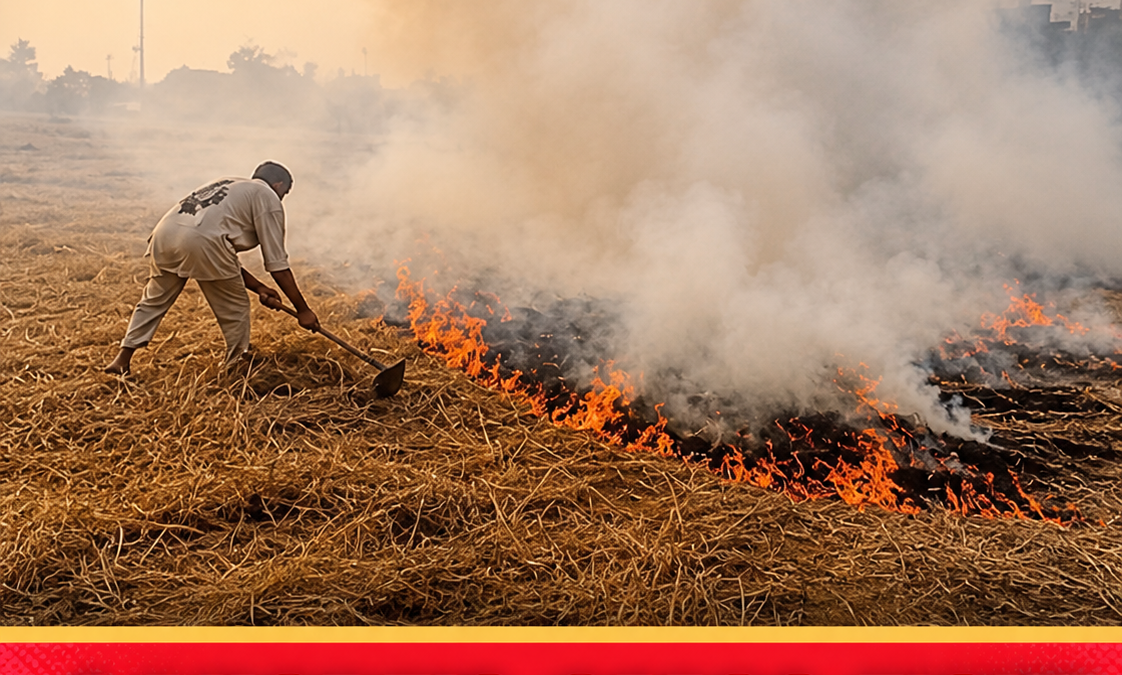
Punjab’s 2025 environmental report documents an operational system for responding to agricultural fires.
It says the Environmental Protection Agency used satellite and ground-based surveillance to monitor stubble burning, supported by 67 Quick Response Centres along motorway corridors. These centres were intended to provide firefighting capability in agricultural areas.
The report says the system covered 538 villages and 2.11 lakh acres of rice cultivation. It also describes an incident-reporting process that connected surveillance teams, the Environmental Protection Department helpline, automated calls and district administrations with nearby response centres.
When a report was verified, the nearest centre could mobilise water bowsers and firefighting personnel.
The document also reports that fire anomalies declined by 65% compared with 2024. That figure is the department’s reported result, not an independently established measurement of the province’s total reduction in agricultural burning. epd.punjab.gov.pk+1
This history is important because it places the current anti-smog campaign in context. Quick-response firefighting was already part of Punjab’s environmental enforcement system before the latest reports about new deployments.
Air-quality monitoring is another test of the crackdown
Enforcement is only one side of pollution control. Authorities also need reliable measurements to determine where air quality is deteriorating and whether interventions are making a difference.
The Punjab State of Environment Report 2025 says the province expanded its air-quality monitoring system to 41 stations across 18 districts. It describes the network as providing live public air-quality information.
The same report records a decrease in average provincial PM2.5 levels from 118 micrograms per cubic metre in 2024 to 78 micrograms per cubic metre in 2025, a reduction of nearly 33%.
For Lahore, it reports that the October-to-December average Air Quality Index improved by 18% to 19% during the same comparison.
These figures are encouraging, but they should be read carefully. They are annual results presented by the provincial environmental department, and they do not establish that every district experienced the same improvement or that the pollution problem has been resolved. epd.punjab.gov.pk
The value of continued monitoring is that it gives residents and decision-makers a way to assess conditions beyond individual enforcement announcements.
Farmers need alternatives as well as penalties
A policy that prohibits crop-residue burning must also address how farmers manage leftover material after harvest.
Punjab’s environmental report describes court-directed efforts to support mechanised alternatives, including the procurement and distribution of super seeders through the Agriculture Department.
These machines provide an alternative way to manage crop residue without relying on open-field burning. The report presents this as part of a wider approach in which enforcement is paired with practical agricultural solutions. epd.punjab.gov.pk
That is an important consideration for implementation. A ban can establish what is prohibited, and penalties can discourage violations, but farmers also need workable methods to prepare fields for the next crop.
If alternatives are too costly, unavailable or difficult to access, enforcement alone may not produce a lasting change in farming practices. This is analysis based on the policy design, not a claim that all farmers face identical circumstances.
Why the crackdown matters beyond Lahore
Air pollution is not only an urban inconvenience. It affects public spaces, transport, outdoor work and the ability of communities to carry out normal activities.
Punjab’s 2026 action plan recognises the need for public advisories covering masks, outdoor activity and school precautions during severe air-quality episodes. It also calls for regular bulletins and coordination with health authorities. epd.punjab.gov.pk
The issue has wider regional relevance. WWC ONE MEDIA has previously examined changing haze conditions in Malaysia, where unhealthy air readings spread across multiple monitoring areas.
The newsroom has also covered air-quality deterioration in Metro Cebu and the movement of haze across Philippine regions. These are separate pollution episodes, but they illustrate why monitoring, timely public information and controls on pollution sources matter across borders.
For Lahore, the central issue remains the effectiveness of local and provincial action. A successful response must address the full range of emissions identified in the government’s own environmental assessment.
What happens next
Punjab’s Pre-Smog Action Plan requires continued monitoring, inspections, public advisories and coordination among departments. Its implementation will be judged not only by the number of fires extinguished or violations recorded, but also by whether air-quality measurements improve and remain better over time.
The next important evidence will come from updated monitoring data, enforcement records and the province’s subsequent environmental reporting.
For residents, the government’s official monitoring network and public advisories remain important sources of current information. For policymakers, the test is whether crop-burning controls, industrial enforcement, transport regulation and agricultural alternatives can operate as one sustained programme.
The bigger challenge is clear: putting out a field fire may stop one source of smoke, but cleaning Lahore’s air requires action across the entire pollution system.
Frequently asked questions
1. What is causing Lahore’s smog?
Punjab’s environmental report identifies vehicle emissions, industrial smoke, brick kilns, stubble burning, dust and winter temperature inversions among the factors worsening air quality.
2. What is Punjab doing to control crop burning?
The province has used surveillance, quick-response centres, water bowsers and an incident-reporting system to detect and respond to agricultural fires. Its 2026 action plan also includes preparation and deployment of quick-response equipment.
3. How many quick-response centres did Punjab report?
The Punjab State of Environment Report 2025 records 67 Quick Response Centres along motorway corridors as part of its stubble-burning enforcement system.
4. Did Punjab’s air quality improve in 2025?
The provincial report says average PM2.5 levels declined from 118 micrograms per cubic metre in 2024 to 78 in 2025. It also reports an 18% to 19% improvement in Lahore’s October-to-December average AQI.
5. Are crop fires the only cause of Lahore’s smog?
No. The provincial environmental report identifies several contributors, including transport emissions, industrial pollution, brick kilns and dust, in addition to agricultural burning.