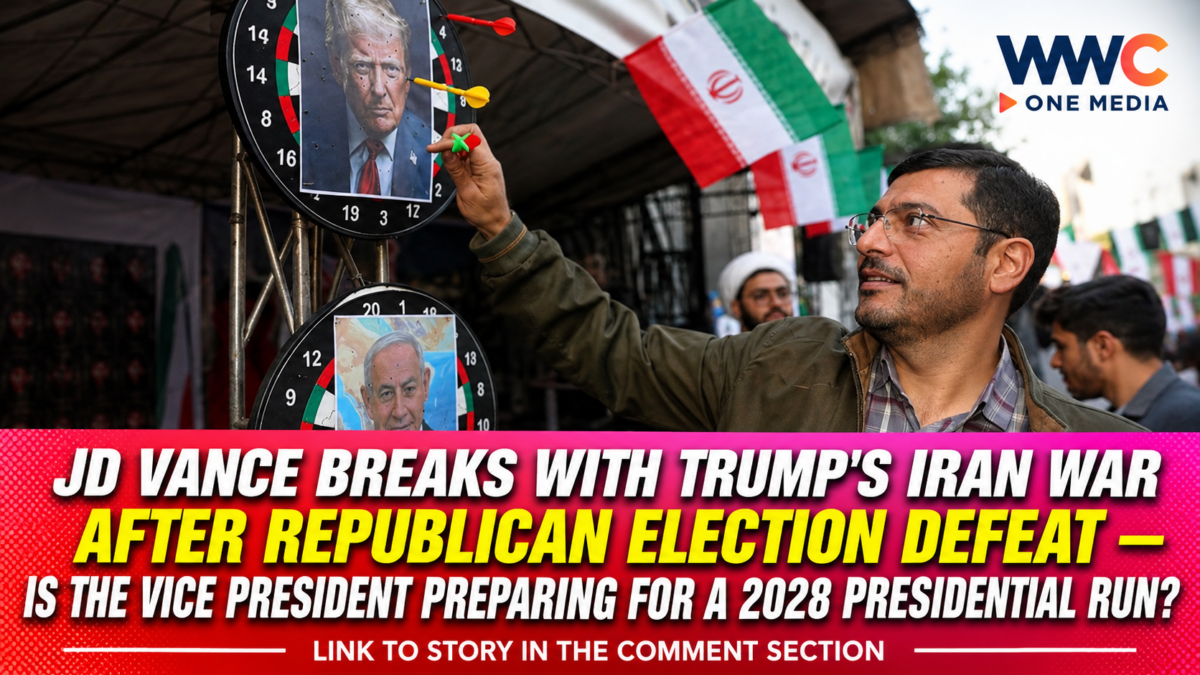
WASHINGTON — November 5, 2026 — US Vice President JD Vance has publicly distanced himself from President Donald Trump’s war against Iran, delivering one of the strongest political criticisms of the administration’s military campaign just one day after Republicans suffered a major defeat in the US midterm elections.
In a striking November 4 statement on social media platform X, Vance blamed the Iran war for the Republican Party’s electoral losses, arguing that the conflict had cost the party control of both chambers of Congress.
“The reason we lost is the war,” Vance wrote, questioning whether the military campaign had been worth sacrificing the Senate and the party’s political standing.
He also described his earlier recommendation to end the conflict as “sound advice.”
The comments have raised questions about a possible split between Vance and Trump over one of the administration’s most controversial foreign policy decisions. They have also intensified speculation about Vance’s political ambitions ahead of the 2028 presidential election.
However, Vance subsequently sought to play down suggestions of a major disagreement with the president.
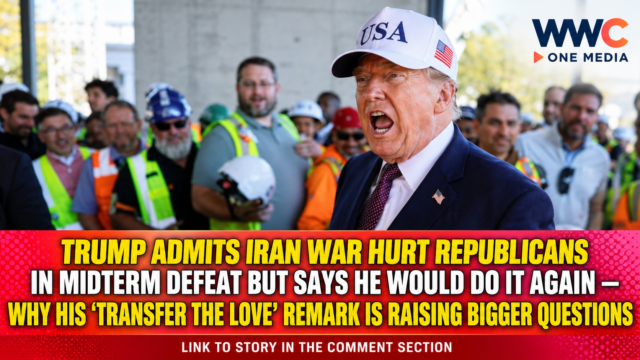
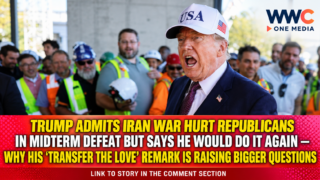
Trump, meanwhile, acknowledged that the Iran war contributed to Republican losses but defended his decision to launch the military campaign, insisting that the United States had prevented Iran from obtaining a nuclear weapon.
The exchange comes at a critical moment. Democrats have secured control of both the House of Representatives and the Senate, leaving Trump facing a more difficult political environment as his administration considers whether to resume major military operations against Iran.
JD Vance Blames Iran War for Republican Election Defeat
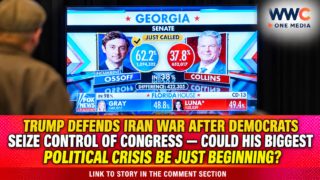
Vance’s comments followed the November 3 midterm elections, which delivered a sweeping setback for Trump’s Republican Party.
Democrats won control of both chambers of Congress, overturning the Republican majority and gaining ground in traditionally conservative areas.
The results reflected growing dissatisfaction among voters over several issues, including the cost of living, economic pressures, the administration’s performance and the prolonged conflict with Iran.
Vance argued that the war had become a major political liability for Republicans.
In his post on X, he challenged supporters of the military campaign to explain whether its objectives justified losing control of the Senate.
He also said that an earlier recommendation to bring the conflict to an end had been sound advice.
The remarks were particularly significant because Vance is one of the most prominent figures in the Trump administration and was previously involved in diplomatic efforts to end the fighting.
His public comments therefore represented more than ordinary post-election criticism. They highlighted the growing political cost of a conflict that has become increasingly unpopular among sections of the American electorate.
According to Reuters, some White House officials interpreted Vance’s statement as a foreign policy departure from Trump and an acknowledgment that the war had produced serious domestic economic consequences.
Trump Defends the War Despite Acknowledging Its Political Cost
Trump did not completely reject his vice president’s assessment.
Asked about Vance’s remarks on November 4, the president said he thought the comments were good and indicated that he understood his vice president’s position.
But Trump maintained that the military campaign had been necessary.
He argued that the United States had stopped Iran from obtaining a nuclear weapon and said he would have made the same decision again.
In an interview with the Wall Street Journal, Trump said: “I did the right thing. I would have done it again.”
The president also suggested that the Iran war was only one of several factors behind the Republican election defeat.
This difference in emphasis is important.
Vance publicly placed the conflict at the centre of the party’s losses, while Trump acknowledged its impact without expressing regret over the decision to launch the campaign.
The two leaders have therefore not announced a formal split, but their comments reveal different approaches to explaining the election outcome and defending the administration’s foreign policy.
Did Vance Just Begin Positioning Himself for the 2028 Presidential Election?
Vance’s statement has also fuelled speculation about his future political ambitions.
The vice president is widely viewed as a potential Republican presidential contender in 2028, although he has not formally announced a campaign.
A person familiar with the matter told Reuters that the comments could be interpreted as the beginning of his effort to establish a distinct political position ahead of the next presidential race.
Vance has previously built a reputation among conservative voters as a politician sceptical of prolonged American military involvement overseas.
Before the Iran conflict began, he had expressed reservations about foreign military interventions and warned against repeating the open-ended wars that consumed American resources in previous decades.
His position became more complicated after Trump launched the military campaign alongside Israel in February 2026.
Although Vance remained part of the administration, he was noticeably less enthusiastic in publicly defending the war than some other senior officials.
He had also been involved in unsuccessful efforts to negotiate an end to the fighting.
His latest remarks could allow him to appeal to voters who supported Trump’s promise to avoid prolonged overseas conflicts but became frustrated with the war against Iran.
However, Vance has not completely separated himself from the administration’s wider policies.
His post also addressed other political concerns, including the economy, immigration enforcement and the need for Republicans to understand why some voters who supported Trump in 2024 switched to Democrats in 2026.
The question is whether his criticism represents a genuine policy disagreement or an effort to prepare for a different political future.
Why the Iran War Became a Major Election Issue
The conflict has increasingly affected American voters through rising energy costs and concerns about the wider economy.
The US-Israeli military campaign against Iran began on February 28, 2026.
Trump initially presented the operation as a campaign that could quickly weaken Iran’s military capabilities and bring the conflict to an end.
The attacks inflicted substantial damage on Iranian military infrastructure and underground weapons facilities.
However, an April ceasefire failed to produce a comprehensive peace agreement.
The result was an extended confrontation that continued to affect international shipping and energy markets.
Iran subsequently threatened vessels travelling through the Strait of Hormuz, a strategically important maritime passage through which a significant share of the world’s oil supply normally moves.
The disruption contributed to higher energy prices and increased pressure on households and businesses.
For American voters already concerned about inflation and living expenses, the war became another source of economic frustration.
According to the Associated Press Voter Poll, approximately six in 10 voters believed the United States had made the wrong decision by taking military action against Iran.
However, the survey also showed that the war was not the only major issue influencing the election.
Around 34 per cent of House voters said the Iran war was crucial to their vote, compared with 49 per cent who identified the cost of living and 55 per cent who said government corruption was crucial.
These figures suggest that the conflict contributed to Republican difficulties, but it would be inaccurate to claim that it alone caused the party’s defeat.
The wider economic and political environment also played an important role.
Rising Gasoline Prices Added to Trump’s Political Problems
The economic consequences of the war have become increasingly difficult for the administration to ignore.
Disruptions around the Strait of Hormuz have affected international oil shipments and increased uncertainty in energy markets.
Higher crude prices can eventually translate into more expensive gasoline, diesel, transportation and other goods.
For American households, the pressure is especially noticeable when fuel costs rise alongside food, housing and healthcare expenses.
The AP Voter Poll found that voters were more likely to identify the cost of living as crucial to their congressional vote than the Iran war itself.
This distinction matters because the conflict’s economic consequences may have influenced voters who were not primarily motivated by foreign policy.
WWC One Media previously examined the financial burden of the military campaign in Trump’s Iran War Costs US Taxpayers US$47.1 Billion as Hormuz Crisis Drags On — But Could the Next Strike Send the Bill Even Higher?.
The report detailed the US Central Command estimate of approximately US$47.1 billion in direct military costs through October 16, 2026.
That figure includes weapons replacement, operational expenses and lost equipment. It does not represent the full economic cost of the conflict, including energy-market disruption and other indirect consequences.
The growing expense adds another challenge for an administration attempting to defend the military campaign while addressing voters’ concerns about affordability.
Trump Could Still Order Another Attack on Iran
Despite Vance’s criticism and the Republican election defeat, renewed military action remains a possibility.
Reuters reported that Trump was briefed by Admiral Brad Cooper, the head of US Central Command, on options for restarting combat operations.
The briefing reportedly took place before the midterm elections.
According to officials familiar with intelligence assessments, renewed strikes may not fundamentally change Iran’s negotiating position or necessarily lead to regime change.
Nevertheless, sources told Reuters that Trump could still decide to resume attacks.
One concern raised by officials is that the president may feel less constrained by domestic political considerations now that the midterm elections are over.
Some sources suggested that the administration could become more willing to pursue military action despite the election setback.
These assessments are based on people familiar with the deliberations and should not be interpreted as confirmation that a new offensive has been ordered.
Trump has not publicly announced a decision to restart a major military campaign.
The distinction is important: military options have been discussed, but the existence of those options does not mean an attack is inevitable.
For more background, WWC One Media reported on the uncertainty surrounding the next phase of the conflict in US Carries Out ‘Defensive’ Strikes on Iran’s Qeshm Island as Trump Talks Down Renewed War — But Is the Strait of Hormuz Heading Toward Another Escalation?.
The report examined limited US strikes on Iranian targets near the Strait of Hormuz and the possibility that further exchanges could undermine diplomatic efforts.
Iran and the US Remain Far Apart on a Peace Agreement
While Washington considers its military options, diplomatic efforts to end the conflict are continuing.
Qatar and other regional governments have been working to bring the United States and Iran closer to an agreement.
However, the two sides remain divided over several important issues.
These include:
- The future of the US naval blockade affecting Iranian ports.
- Restrictions on Iranian oil exports and other economic sanctions.
- The reopening and security of the Strait of Hormuz.
- The future of Iran’s enriched uranium stockpile.
- Guarantees concerning further military action.
Iran wants Washington to address its economic and maritime demands, while the United States is seeking assurances over Iran’s nuclear activities and regional security.
Vance has recently taken a more active role in diplomatic discussions with Tehran.
But Reuters reported that there was little indication Iran was prepared to accept Washington’s demand that it reduce its nuclear enrichment levels to zero.
The diplomatic challenge is therefore substantial.
Even if both governments want to avoid another prolonged military confrontation, they must still agree on conditions that neither side considers an unacceptable concession.
WWC One Media examined the continuing deadlock in Iran and US Remain Far Apart on Peace Deal as Trump Warns He Is Ready for More Strikes — Is Another War About to Begin?.
The report details the disagreements over sanctions, maritime restrictions, nuclear negotiations and the diplomatic efforts to prevent renewed fighting.
Pete Hegseth Could Face Greater Political Pressure
Vance’s comments have also raised questions about the political position of Defence Secretary Pete Hegseth.
Trump has previously described Hegseth as an early advocate of the military campaign against Iran.
However, Hegseth has faced criticism from lawmakers over the war and its management.
Reuters reported that the secretary’s political position could become more difficult following the Republican defeat, particularly as Democrats prepare to take control of congressional committees and increase oversight of the administration.
Some lawmakers have discussed seeking his impeachment, although no successful impeachment process has been established.
A Democratic-controlled Congress could investigate military decisions, spending, operational planning and the administration’s handling of the conflict.
It could also increase pressure on the Pentagon to provide more information about the war’s objectives and financial costs.
However, congressional oversight does not automatically mean that Hegseth will lose his position.
Any attempt to remove a cabinet official would face significant political and constitutional hurdles.
What Democratic Control of Congress Means for Trump
The midterm results represent a major change in Washington’s political balance.
With Democrats controlling both chambers, Trump will face greater opposition to parts of his legislative programme.
Democratic lawmakers are expected to focus on the economy, government accountability and investigations involving the administration.
They could also use their control of congressional committees to scrutinise the Iran war and the financial decisions surrounding it.
This does not mean Congress can automatically stop every military operation.
The president retains significant authority as commander-in-chief, although Congress has important constitutional powers involving military funding, oversight and legislation.
The new political environment could nevertheless make it harder for Trump to secure additional funding or political support for a prolonged conflict.
The administration may also face more difficult questions about whether the military campaign has achieved its stated objectives.
What Vance’s Remarks Could Mean for the Republican Party
The vice president’s public criticism comes at a moment when Republicans must decide how to respond to their electoral defeat.
Some party members may argue that the administration needs to focus more heavily on domestic economic concerns.
Others may continue defending Trump’s military strategy and insist that the security objectives justify the costs.
Vance’s position could become especially influential because he is viewed as a possible successor to Trump within the Republican Party.
If he decides to run in 2028, his ability to distinguish himself from the president without alienating Trump’s supporters could become a central political challenge.
He must also contend with potential rivals, including Secretary of State Marco Rubio, whose political ambitions have attracted attention.
Reuters reported that Rubio had remained publicly silent following the midterm elections.
The next two years could therefore become a period of internal competition as Republicans attempt to rebuild their political position.
Why the Fallout Matters Beyond the United States
The political dispute in Washington has implications far beyond American domestic politics.
The future of the Iran conflict affects international oil supplies, shipping routes and the stability of the wider Middle East.
The Strait of Hormuz is particularly important for Asian economies that rely heavily on energy imports.
Any renewed military escalation could increase shipping insurance costs, disrupt petroleum deliveries and place further pressure on international fuel prices.
For the Philippines, higher global oil prices can eventually affect gasoline and diesel costs, transportation, logistics and the prices of goods.
A diplomatic agreement could help reduce uncertainty, although a lasting return to normal energy markets would depend on the actual terms of any settlement and the restoration of dependable shipping.
The conflict is therefore not simply a disagreement between Trump and Vance. It is a geopolitical issue with consequences for international trade and household expenses around the world.
The Bottom Line: Vance’s Iran War Criticism Could Reshape Trump’s Political Future
JD Vance’s public criticism of the Iran war has exposed a significant political challenge for the Trump administration.
The vice president has blamed the conflict for Republican election losses and described his earlier recommendation to end the war as sound advice.
Trump has acknowledged the war’s political impact but continues to defend the decision to launch the military campaign.
Meanwhile, Democrats have taken control of both chambers of Congress, increasing pressure on the administration over military spending, foreign policy and the economy.
The possibility of renewed US strikes remains unresolved, while diplomatic efforts with Iran have yet to produce a comprehensive agreement.
For Vance, the political calculation may be even more complicated. He must balance loyalty to Trump with his own position on foreign military intervention and the possibility of a 2028 presidential campaign.
The biggest question is whether his criticism marks the beginning of a genuine foreign policy split within the administration — or the first major move in a political contest that could shape the Republican Party’s future.
And if Trump decides to escalate the Iran conflict despite the election setback, will Vance continue standing beside the president, or will he become one of the most prominent voices against the war?