NEW YORK, UNITED STATES / MANILA, PHILIPPINES — November 5, 2026 | WWC ONE MEDIA | US Politics, New York Elections and Global Affairs
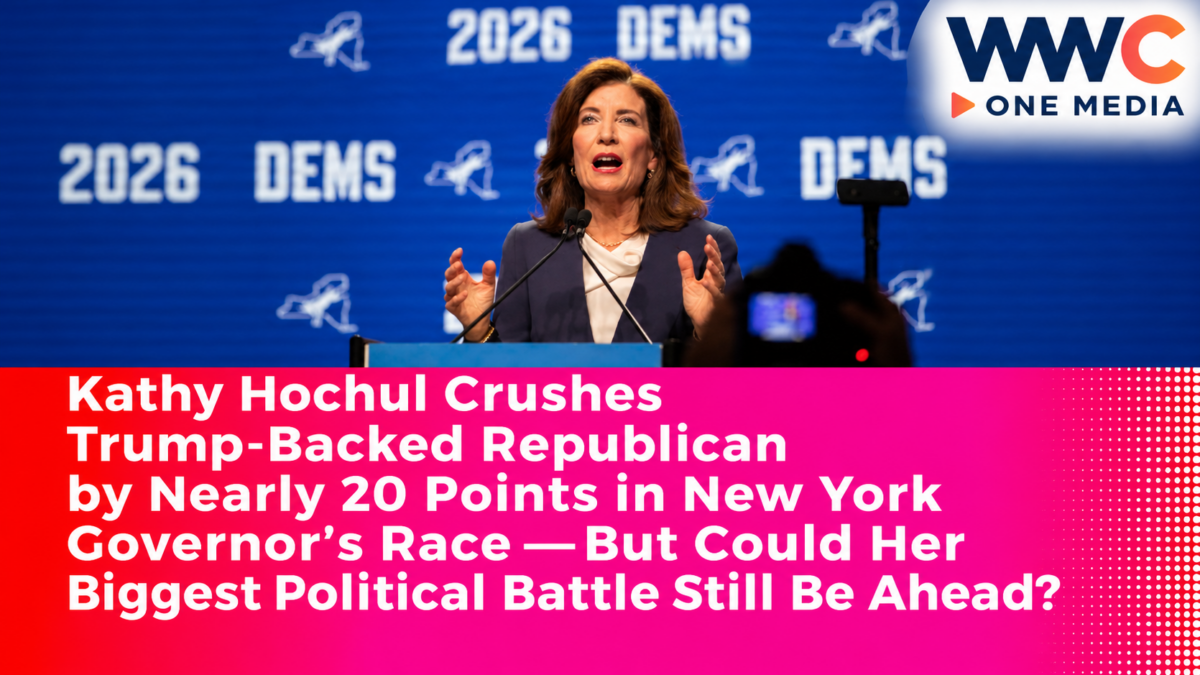
New York Governor Kathy Hochul has staged one of the most remarkable political comebacks of the 2026 US midterm elections, defeating Republican Bruce Blakeman by an overwhelming margin and transforming what was once a vulnerable governorship into a commanding Democratic victory.
Four years after narrowly defeating Republican Lee Zeldin, Hochul returned to voters with a different political strategy, a stronger alliance with New York City’s progressive movement and an aggressive campaign focused on affordability and opposition to President Donald Trump.
The results were decisive.
Preliminary figures from the New York State Board of Elections showed Hochul securing approximately 59.1% of the vote against Blakeman’s 39.7%, giving her a lead of roughly 1.15 million votes in the official count available November 4.
The margin represented an extraordinary improvement from her 6.4-percentage-point victory in 2022.
Even more striking, Hochul was narrowly leading in Nassau County—the political stronghold governed by her Republican opponent.
According to Bloomberg’s November 4 report, NY Governor Hochul Proves Her Mettle With Decisive Election Win, the victory represents a major political vindication for a governor who faced persistent doubts about her popularity, leadership and ability to energize Democratic voters.
But the landslide has created new expectations.
Progressive activists who helped drive turnout now want stronger action on taxes, housing and childcare. Meanwhile, New Yorkers continue to face expensive living costs and questions about energy policy.
The question is whether Hochul can turn her decisive election victory into lasting economic reforms—or whether the political coalition that helped her win could become her next major challenge.
Hochul Wins by Nearly 20 Points After Narrow 2022 Victory
Hochul’s victory on November 3 demonstrated a dramatic improvement in her political standing.
The Associated Press called the race for the incumbent governor shortly after polls closed.
By November 4, preliminary results showed Hochul with nearly 3.5 million votes against approximately 2.34 million for Blakeman.
Those totals remained unofficial and subject to additional ballot counting.
The scale of her victory contrasted sharply with the 2022 election, when she defeated Lee Zeldin by just 6.4 percentage points.
That earlier result had alarmed New York Democrats.
Several Republican congressional candidates won in the state during the same election cycle, contributing to Democratic losses in the House of Representatives.
Former House Speaker Nancy Pelosi publicly criticized Hochul’s performance.
The governor subsequently faced questions about whether she could win a second full term.
Four years later, those doubts have been significantly weakened.
Her 2026 victory has strengthened her political standing and demonstrated that she can assemble a broad statewide coalition.
Nassau County Delivers One of the Election’s Biggest Surprises
One of the most revealing results came from Long Island.
Blakeman entered the contest as Nassau County executive, giving him a strong political base in one of New York’s most important suburban areas.
But preliminary results showed Hochul narrowly ahead in his home county.
She also performed competitively in neighboring Suffolk County.
The results demonstrated how dramatically suburban voting patterns had shifted since 2022.
Republicans previously made gains on Long Island by emphasizing crime, immigration and public safety.
In 2026, Hochul’s campaign placed greater emphasis on everyday expenses, childcare and the economic consequences of federal policies.
The governor also relentlessly linked Blakeman to Trump.
The suburban results suggest that message resonated with enough voters to weaken Republican advantages.
However, the election does not establish that Long Island has permanently changed its political alignment.
Future contests will depend on candidates, turnout and economic conditions.
Hochul and Adrienne Adams Make New York Political History
Hochul’s victory also produced a significant milestone in women’s political leadership.
Her running mate, former New York City Council Speaker Adrienne Adams, is set to become the state’s first Black woman lieutenant governor.
Together, Hochul and Adams formed New York’s first successful all-woman gubernatorial ticket.
Hochul had already become the state’s first female governor in 2021 after Andrew Cuomo resigned.
She then became the first woman elected governor of New York in 2022.
The 2026 result extends that history by placing women in both of the state’s top executive positions.
Adams brings experience in New York City government and previously served as speaker of the City Council.
Their new partnership could influence the administration’s approach to housing, childcare and relations between Albany and New York City.
How Hochul Rebuilt Her Political Reputation
Hochul’s political recovery began well before Election Day.
After becoming governor following Cuomo’s resignation, she struggled with falling approval ratings and growing concerns over public safety.
Bloomberg reported that her net favorability reached negative 20 points in a Siena College poll during autumn 2024.
But her political position began improving after Trump returned to the White House.
Hochul increasingly presented herself as a pragmatic Democratic governor willing to challenge the president while negotiating with his administration when doing so benefited New York.
That positioning helped her appeal to voters dissatisfied with Trump’s policies without abandoning her more moderate political identity.
Her campaign also emphasized practical household concerns.
Those included electricity bills, housing affordability, childcare expenses and tax relief.
Rather than relying primarily on opposition to Republicans, Hochul sought to demonstrate how her administration could improve everyday life.
The approach formed an important part of her successful reelection strategy.
Zohran Mamdani Becomes a Key Ally in Hochul’s Victory
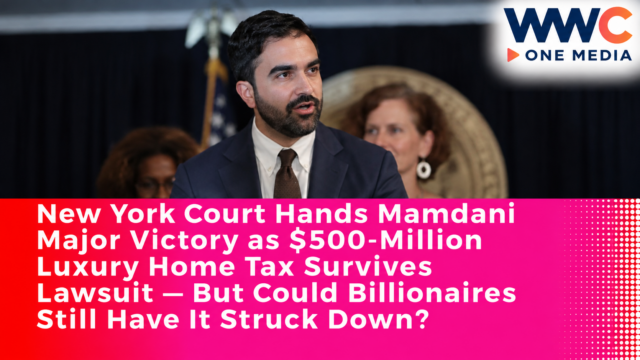
One of the most consequential developments was Hochul’s relationship with New York City Mayor Zohran Mamdani.
Mamdani emerged as a prominent progressive figure following his 2025 mayoral election victory.
His political movement emphasized affordability, universal childcare and reducing economic inequality.
Hochul, traditionally associated with the Democratic Party’s more moderate wing, developed a cooperative relationship with the mayor.
According to Bloomberg, she committed $1.2 billion toward universal childcare during the first week of Mamdani’s administration.
She also enacted a pied-à-terre tax through the state budget, an initiative welcomed by progressives seeking greater contributions from wealthy property owners.
In return, Mamdani campaigned actively for Hochul, helping mobilize voters in New York City.
The alliance enabled Hochul to appeal to progressive voters while maintaining support among moderates.
But cooperation has created expectations.
Mamdani’s supporters now want the governor to advance further tax and spending reforms.
Progressives Want More After Helping Deliver the Landslide
The Democratic Socialists of America and other progressive activists believe their organizing contributed to Hochul’s decisive victory.
Some are calling for additional taxes on wealthy individuals and expanded public services.
The demands could become especially important when Hochul presents her next state budget in early 2027.
The governor must decide how far she is willing to move toward the progressive agenda while preserving support among moderate Democrats, businesses and suburban voters.
Her relationship with Mamdani demonstrates the advantages of coalition-building.
But it also illustrates the difficulties of governing a party whose members have different economic priorities.
A tax proposal popular among progressives may face opposition from business organizations and some moderate lawmakers.
Likewise, ambitious new spending commitments require sustainable financing.
Hochul’s election margin gives her greater political authority, but it does not resolve those policy disagreements.
New York Democrats Score Major Congressional Victories
Hochul’s victory coincided with a broader Democratic resurgence across New York.
Democrat Cait Conley defeated Republican Representative Mike Lawler in the Hudson Valley, delivering an important congressional pickup.
Statewide Democrats also secured victories in the races for attorney general and comptroller.
The results formed part of a national election in which Democrats captured both chambers of Congress.
WWC ONE MEDIA previously examined that broader outcome in Democrats Capture Both Houses of Congress in Sweeping Midterm Victory — Trump Faces Major Political Setback With Two Years Left in Office.
The congressional shift creates a more challenging environment for Trump during the remaining two years of his presidency.
New York Democrats are also positioned to exercise substantial influence in Washington.
Hakeem Jeffries is seeking to become House Speaker, while Chuck Schumer expects to return as Senate majority leader.
Their positions remain subject to the relevant leadership elections.
Brad Lander’s Victory Shows Progressive Influence Is Expanding
New York’s progressive movement also gained influence through Brad Lander’s election to Congress.
Lander won New York’s 10th Congressional District after defeating Democratic incumbent Dan Goldman in the primary earlier in 2026.
WWC ONE MEDIA covered the result in Brad Lander Wins New York House Seat After Crushing Democratic Incumbent in Primary — But Could Mamdani’s Progressive Movement Reshape Congress?.
His victory illustrates the growing presence of progressive politicians in New York’s Democratic coalition.
For Hochul, this development carries both opportunities and risks.
Progressives can help mobilize enthusiastic voters.
But they may also demand policies that challenge the governor’s more moderate approach.
Maintaining cooperation between the two wings of the party could become essential to her next term.
Affordability Became the Election’s Defining Issue
Economic concerns were central to Hochul’s campaign.
New Yorkers have faced pressure from housing costs, utility bills and everyday expenses.
Hochul promoted initiatives intended to provide financial relief, including energy rebates, childcare support and housing development.
Local public-radio reporting found that her campaign invested approximately $30 million in advertising highlighting affordability measures and contrasting her policies with those of her Republican opponent.
Blakeman also campaigned on reducing costs.
He argued that lower taxes and utility bills would improve household finances and criticized Hochul’s record on crime and immigration.
But voters ultimately favored Hochul by a substantial margin.
The outcome suggests the Democratic message proved more persuasive during a national environment shaped by dissatisfaction with Trump’s administration.
WWC ONE MEDIA had previously examined the election’s major issues in US Midterms 2026: Six Things That Could Decide Control of Congress — Is Trump Facing a Political Turning Point?.
That analysis identified affordability, turnout, campaign spending and national political dissatisfaction as important factors.
The Governor’s Data Center Policy Faces a Major Test
Energy affordability will be one of Hochul’s most difficult issues.
Artificial intelligence and data-center development have increased concerns about electricity demand across the United States.
Large computing facilities require substantial power and infrastructure.
Supporters argue that these investments can create jobs, strengthen regional economies and support technological innovation.
Critics worry that electricity infrastructure costs could affect household bills.
Hochul has promoted restrictions on new data-center development while seeking to address New York’s energy requirements.
The policy debate will require balancing investment opportunities against consumer affordability and electricity reliability.
New York must also expand housing and transportation infrastructure while managing environmental goals.
That makes the governor’s next budget and regulatory decisions important for residents and businesses.
Trump’s Midterm Defeat Strengthens Hochul’s Political Position
Hochul’s victory occurred during a difficult election for Trump and the Republican Party.
Democrats made significant gains nationwide, fueled partly by concerns over living costs and dissatisfaction with administration policies.
WWC ONE MEDIA also examined Trump’s immediate response in Trump Showcases White House Ballroom After Republican Midterm Defeat — Is He Ignoring the Message Voters Just Sent?.
The coverage highlighted the contrast between the Republican electoral setback and the president’s emphasis on Washington construction projects.
For Hochul, opposition to Trump provided a unifying political message.
She could appeal to both moderates and progressives by positioning herself as a defender of New York’s interests.
But campaigning against the president is different from delivering results in state government.
Voters will now expect progress on housing, childcare, infrastructure and economic costs.
The governor’s ability to meet those expectations will help determine whether her expanded political support lasts.
Could Hochul’s Victory Reshape the Democratic Party Before 2028?
The result may also have implications for the Democratic Party’s national direction.
Hochul demonstrated that a moderate governor can cooperate with progressive leaders and win a commanding statewide victory.
That model could attract attention from Democratic strategists preparing for future campaigns.
However, New York’s political environment differs from that of competitive presidential swing states.
Democrats enjoy a substantial voter-registration advantage in the state.
The victory therefore cannot be treated as proof that the same campaign strategy would succeed everywhere.
Still, Hochul’s performance offers an example of how cooperation between political factions can strengthen turnout.
It also highlights the importance of focusing on affordability while maintaining a clear contrast with political opponents.
Whether that model influences the 2028 presidential race will depend on future economic conditions and the performance of Democratic leaders.
The Bigger Question: Can Kathy Hochul Deliver After Winning a Historic Mandate?
Kathy Hochul’s 2026 reelection has transformed her political standing.
Four years after winning by just 6.4 points, she defeated Bruce Blakeman by approximately 20 points.
She performed strongly across New York City and made important gains in suburban counties.
Her partnership with Zohran Mamdani helped bring progressive voters into her coalition.
And the election created a historic leadership team with Adrienne Adams as lieutenant governor.
The victory has strengthened Hochul’s authority and silenced many critics who previously questioned her political strength.
But the next four years may prove more demanding than the campaign.
New Yorkers still face significant housing, childcare and utility costs.
Progressives want more aggressive economic reforms.
Businesses and moderate lawmakers will expect fiscal discipline and policies that encourage investment.
The governor must balance those competing priorities while navigating political tensions with Washington.
As Kathy Hochul celebrates a landslide victory that has dramatically reshaped New York politics, one question could define her second full term: Will her alliance with progressives deliver lasting relief for struggling New Yorkers—or could disagreements over taxes, housing and energy eventually fracture the coalition that brought her back to power?