WASHINGTON, D.C. — Just hours after Republicans suffered a major defeat in the 2026 US midterm elections, President Donald Trump turned his first major post-election public appearance into a showcase of the White House’s ambitious ballroom construction project.
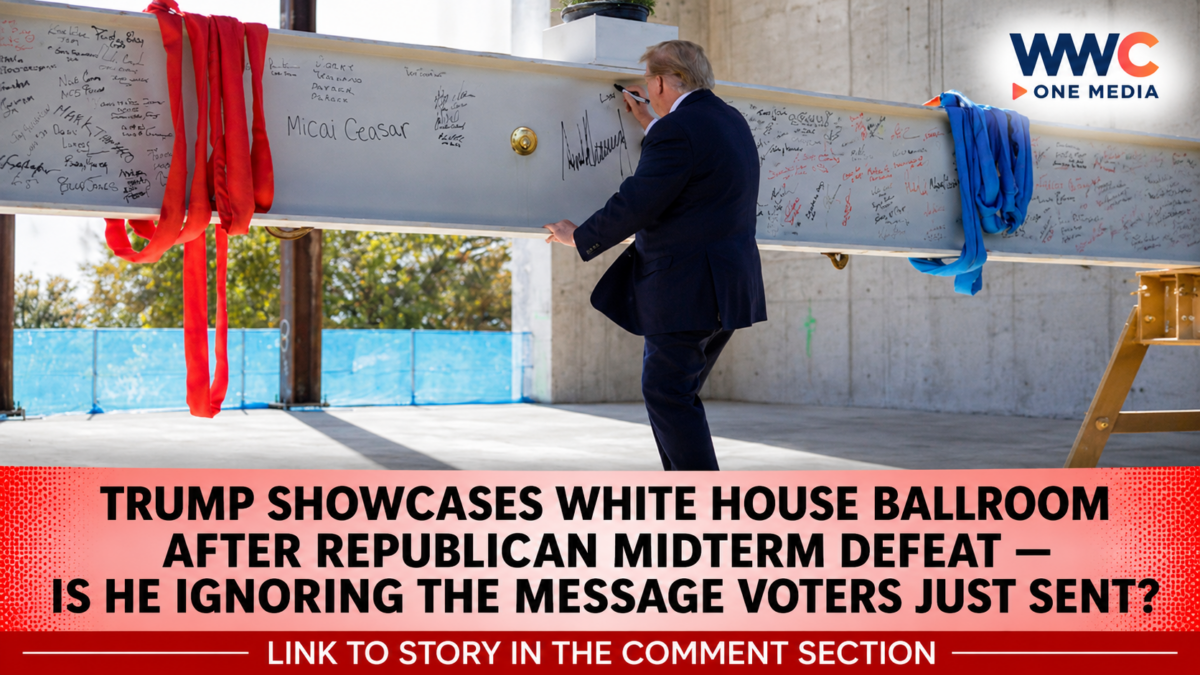
Instead of opening with an extensive discussion of the Republican losses, Trump invited reporters to the construction site on Wednesday, November 4, where workers were preparing to install what he described as the project’s final steel beam.
For nearly 20 minutes, the president discussed the ballroom’s architectural features, including its limestone pillars, planned Corinthian columns, chandeliers and marble floors.
The timing quickly attracted attention.
Democrats had just secured control of both the House of Representatives and the Senate, delivering a significant setback to Trump’s political agenda with two years remaining in his presidency.
The election results raised questions about voter dissatisfaction with the administration’s economic and foreign policies. Yet Trump’s first major appearance after the Republican losses focused heavily on a construction project he has repeatedly promoted as part of his plans to reshape Washington.
The contrast between the election outcome and the president’s chosen subject became a political story in its own right.
Trump Celebrates Ballroom Progress After Republicans Lose Congress
Trump’s November 4 appearance was centered on the East Wing ballroom, one of the most prominent construction projects associated with his second administration.
The president joined construction workers at the White House as crews raised what he called the final steel beam of the new structure.
He praised the planned architectural design, particularly the ballroom’s limestone columns, and described the Corinthian style as among the finest architectural designs.
Trump also invited reporters to imagine the completed interior, highlighting the planned chandeliers and marble floors.
He acknowledged criticism about the amount of attention he has devoted to construction and beautification projects in Washington, but defended the ballroom as an important addition to the White House.
He also described discussing the project as relaxing, saying he enjoys construction.
According to Reuters, the president’s remarks lasted nearly 20 minutes. The appearance followed a week in which Trump had also promoted other projects around the capital, including renovations to the Lincoln Memorial Reflecting Pool.
The ballroom event was particularly striking because it came immediately after Democrats secured control of both congressional chambers.
Rather than making the Republican defeat the central subject of his appearance, Trump used the occasion to celebrate progress on a project that has become closely associated with his personal vision for Washington.
Democrats Deliver a Major Midterm Setback to Trump
The November 3 midterm elections changed the balance of power in Washington.
Democrats won control of both the House and the Senate, ending the Republican Party’s control of Congress and creating a much more challenging political environment for the White House.
The results were especially significant because Democrats made gains in states and districts that had generally been considered favorable to Republicans.
The outcome also followed an unusually active campaign by Trump, who repeatedly encouraged voters to support Republican candidates and treated the midterms as an important test of his administration.
The president had urged supporters to view the election as a referendum on his leadership. That made the scale of the Republican losses particularly difficult to separate from his own political standing.
The Democratic victories do not remove Trump from office or automatically prevent him from pursuing his executive agenda. However, they give the opposition party greater control over congressional proceedings, investigations, legislative priorities and oversight.
The shift also means that Republicans will have to negotiate with a Democratic-controlled Congress on major policy questions.
For the administration, the political consequences could extend well beyond the immediate election results.
Why Voters Turned Against Republicans
Economic concerns were among the major issues shaping the election campaign.
American households have faced pressure from the cost of everyday necessities, including food, housing, transportation and energy.
The conflict involving the United States and Iran also became a major political issue, particularly as higher fuel prices added to concerns about household budgets.
Some Republican strategists had urged the administration to shift its attention toward reducing consumer costs rather than concentrating on expensive-looking prestige projects in Washington.
The Associated Press reported that concerns about living costs, corruption and Trump’s priorities contributed to the Republican losses.
An AP voter poll also found that approximately two-thirds of voters believed Trump was focused on the wrong issues.
These findings offer important context for understanding why the ballroom appearance attracted criticism. For voters worried about affordability, a presidential event focused on marble floors and elaborate architectural features could appear disconnected from their immediate concerns.
However, the election should not be reduced to one issue. Voters make decisions for different reasons, and the results reflected a combination of economic, political and foreign-policy concerns.
Trump Rejects Personal Responsibility for the Republican Defeat
Trump did not completely avoid questions about the election when reporters raised the subject.
He argued that Republicans would have performed better if he had personally been on the ballot.
The president also suggested that the enthusiasm surrounding his own rallies had not translated into the same level of support for Republican candidates.
His comments reflected an effort to distinguish his personal political standing from the performance of candidates he had supported.
That position could become a source of tension within the Republican Party.
Trump had been heavily involved in the campaign, publicly endorsing candidates and urging supporters to help Republicans maintain control of Congress.
The results therefore create difficult questions for party leaders about the effectiveness of the administration’s political strategy and how closely Republican candidates should align themselves with the president.
Some Republicans may continue to defend Trump’s leadership, while others could push for a stronger focus on local issues and the concerns of voters in their own states.
The party’s response could shape its direction ahead of the 2028 presidential election.
The Ballroom Is More Than a Construction Project
Trump’s ballroom has become one of the most politically debated parts of his broader effort to change the appearance and function of Washington.
The project involves a major transformation of the White House’s East Wing and has generated questions about its cost, financing, security requirements and impact on the historic presidential complex.
Trump has said the ballroom would be privately funded. However, the financing debate has become more complicated because congressional Republicans have also proposed substantial federal funding for White House security improvements.
A key distinction is important: proposals for public funding of security upgrades are not automatically the same as direct government funding for the ballroom’s construction.
FactCheck.org and PolitiFact examined the funding dispute earlier this year. Their reporting explained that a proposed $1-billion congressional allocation was described as funding for security adjustments and upgrades connected to the East Wing modernization project. The White House maintained that the ballroom itself was intended to be privately funded.
The distinction matters because the political argument is not simply about whether the ballroom is being built. It is also about how the project is financed, what public money may support, and whether the administration’s spending priorities reflect the concerns of ordinary Americans.
The election defeat has given those questions renewed political significance.
Could Democratic Control Put Trump’s Washington Projects Under Pressure?
Democratic control of Congress could make it more difficult for Trump to advance some of his broader plans for Washington.
The new congressional majority will have greater influence over federal spending debates, oversight and legislation affecting government projects.
The Washington Post reported that Democratic victories could create new challenges for Trump’s plans to reshape the capital, including the ballroom and other proposed monument projects.
Congressional scrutiny could focus on the legal authority for certain projects, the use of public resources and the role of federal review bodies.
However, a change in congressional control does not automatically stop construction.
The ballroom project has already advanced, and the administration may continue to rely on existing approvals and legal arguments to defend its plans. Any effort to halt or restrict the work could involve further legal and political disputes.
The new Congress could nevertheless make the process more contentious by examining funding arrangements, demanding information and challenging decisions through available legislative and legal channels.
The extent of its influence will depend on the details of the project, applicable laws and the administration’s response.
Trump’s First Post-Election Appearance Raises Questions About His Priorities
The timing of the ballroom event became almost as important as the construction update itself.
For months, Trump has regularly discussed his plans to beautify Washington, including changes to the Lincoln Memorial Reflecting Pool, a proposed triumphal arch, a helicopter landing pad and other projects.
His November 4 appearance continued that pattern at a moment when Republicans were confronting one of the most consequential electoral setbacks of his second term.
The Associated Press noted that Trump spent much of his public remarks discussing the ballroom rather than directly addressing the scale of the Republican losses.
Axios similarly described the appearance as a return to the president’s construction-focused public messaging after voters delivered a major political rebuke.
The White House, meanwhile, has defended the administration’s work on national landmarks, arguing that these projects do not distract from its economic and policy priorities.
That defense highlights the competing narratives now facing the administration.
Trump views the ballroom and other improvements as part of his effort to leave a visible mark on the nation’s capital. Critics see the emphasis on these projects as a possible sign that the administration is not sufficiently focused on the issues voters have placed at the top of their agenda.
The midterm results have made that disagreement harder to ignore.
What Happens Next for Trump and the Republican Party?
The immediate challenge for Trump is navigating a Congress controlled by Democrats.
The new majority will have greater power to set congressional priorities, conduct oversight hearings, investigate administration decisions and influence legislation.
Senate control will also give Democrats greater influence over confirmation proceedings for federal appointments.
That does not mean the president has lost his constitutional authority. Trump remains in office and retains executive powers, including the ability to veto legislation passed by Congress.
But the political environment has changed substantially.
The administration may face more difficult negotiations, increased scrutiny and a greater likelihood of legislative deadlock.
Republican lawmakers will also have to decide how to respond to the results. Some may remain closely aligned with Trump, while others could argue that the party needs to reconsider its campaign message and place greater emphasis on affordability and economic concerns.
For Democrats, controlling Congress brings its own responsibilities. Voters will expect the party to translate its election victories into meaningful action rather than relying entirely on opposition to Trump.
The coming months will reveal whether the new majority can turn its political advantage into a lasting legislative strategy.
The Bottom Line
Donald Trump chose to spotlight the White House ballroom construction project during his first major public appearance after Republicans lost control of both chambers of Congress in the November 3, 2026 midterm elections.
The president praised the project’s limestone pillars, planned Corinthian columns, chandeliers and marble floors, while Democrats celebrated a major electoral victory that will give them greater influence over the final two years of his presidency.
The timing has intensified questions about Trump’s priorities, particularly as Americans continue to express concerns about living costs, fuel prices and the consequences of the conflict with Iran.
The ballroom is not just an architectural project anymore. It has become part of a wider political debate over public priorities, government spending and the image Trump wants to leave behind in Washington.
Democrats now have the opportunity to challenge the administration through congressional oversight and legislative action, although their control does not automatically stop the ballroom’s construction or remove Trump from office.
For Republicans, the election results could trigger a difficult internal debate about the party’s future and its relationship with the president.
After suffering a major midterm defeat, should Trump shift his attention away from Washington’s construction projects and focus more heavily on the cost-of-living concerns that voters raised — or is the White House ballroom still a legacy project worth defending?