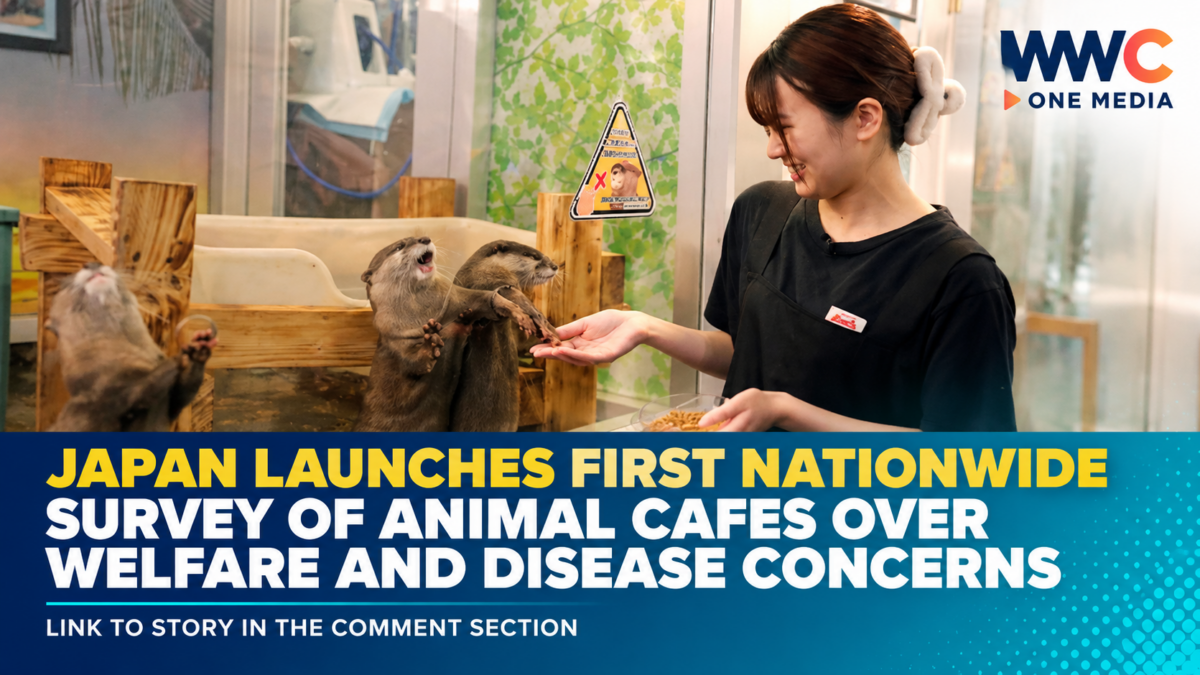
Japan has launched its first nationwide survey of animal cafes as authorities face growing concerns over animal welfare, hygiene and potential public health risks in the increasingly popular industry.
The Environment Ministry began the survey in September to gather information on the number of animal cafes, the species they keep, the conditions in which animals are housed and how customers interact with them. Cafes featuring both exotic and domesticated animals, including cats and dogs, will be covered.
Animal cafes have become popular attractions for both Japanese residents and international tourists, offering visitors the chance to interact closely with animals ranging from otters and owls to marmots and other unusual species. However, concerns have grown over whether some facilities provide adequate conditions for the animals.
Japan currently lacks specific standards covering animal cafes and the handling of many exotic species, according to Takuya Ishikawa, an Environment Ministry official. Animal welfare groups and government advisers have repeatedly raised concerns about possible problems within the sector.
The government also plans to launch a public awareness campaign about the risks associated with interacting with exotic animals. Officials acknowledged that more could have been done to inform visitors about potential health and safety concerns.
The push for greater oversight follows research examining animal cafes in Tokyo and Osaka. A separate study by WWF and Hokkaido University found that three-quarters of about 80 registered wildlife animal cafes in the two cities were also registered to sell animals.
Researchers who visited 25 cafes found more than 1,700 animals on display, with 27% classified as threatened species. More than 90% of the facilities displayed animals considered to pose a relatively high risk of injury through human contact.
Health concerns were also identified. Samples taken from four of the cafes tested positive for enterohemorrhagic E. coli, a type of bacteria that can cause serious gastrointestinal illness.
Some operators have welcomed the prospect of stronger oversight. Syaina Nozaki, manager of a rescue-focused animal cafe in Kamakura, said clearer regulations could help distinguish responsible facilities from operators that place greater emphasis on commercial interests.
Japan’s large pet market has also contributed to wider concerns about wildlife trade. A WWF report found that Japan was the world’s second-largest importer by value of live reptiles and mammals in 2024, highlighting potential risks involving wildlife trafficking, invasive species and zoonotic diseases.
The government will use the initial survey to build a clearer picture of the industry and its practices. Depending on the findings, authorities may consider conducting on-site inspections and examining whether additional measures are needed.
The survey marks a new stage in Japan’s approach to animal cafes, where the appeal of close encounters with animals is increasingly being weighed against questions about welfare, safety, hygiene and the conservation of exotic species.