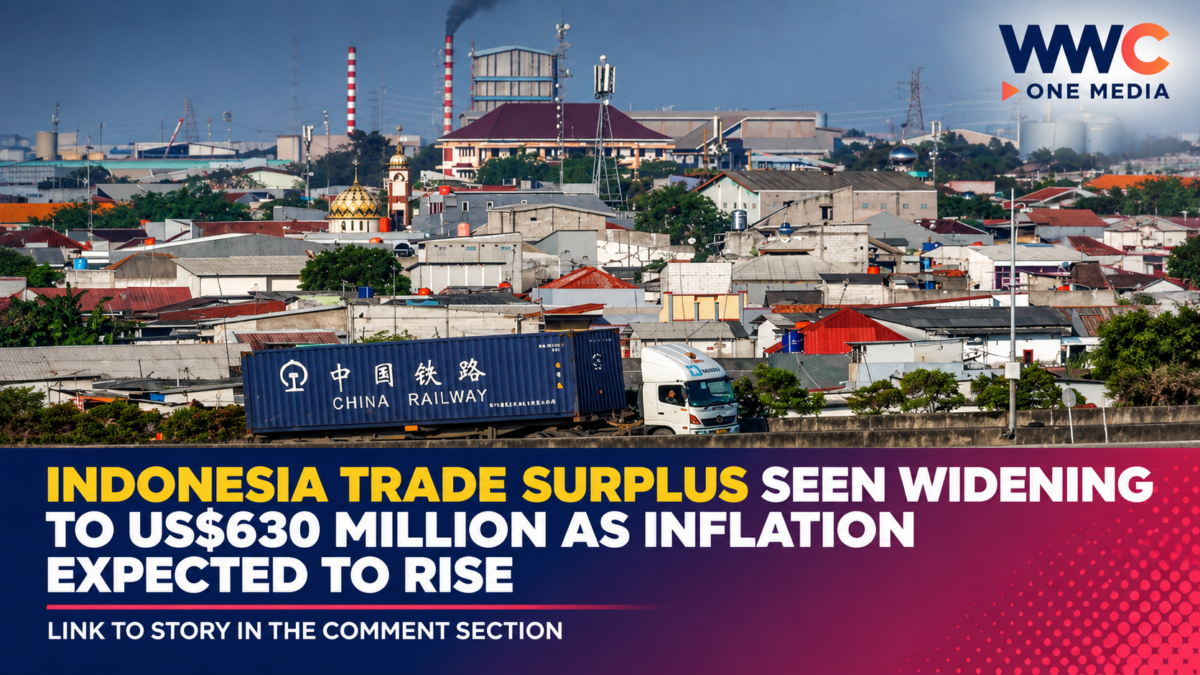
Indonesia’s trade surplus was expected to widen in August, while inflation was projected to increase slightly in September, according to a poll of economists conducted ahead of the release of official data.
The median estimate from 17 economists put the August trade surplus at about US$630 million, up from roughly US$130 million in July. The figures were based on a survey conducted from September 25 to 29, with Indonesia scheduled to release its trade and inflation data on October 1.
Economists expected exports to grow 4.30% year on year in August, slowing from 6.05% growth in July. At the same time, import growth was forecast to accelerate to 31.14%, compared with 27.02% in the previous month.
The projected surplus would represent a further improvement from July, when Indonesia recorded a surplus of about US$130 million. That result followed trade deficits in May and June, ending a surplus streak that had lasted for roughly six years.
The sharp increase in imports was expected to limit the size of the trade surplus despite continued export growth. Indonesia’s external balance has been closely watched as stronger imports reflect domestic demand and higher purchases of goods from overseas.
On inflation, a separate poll of 20 economists showed headline consumer price growth was expected to rise to 3.30% in September from 3.19% in August. Even with the projected increase, inflation was expected to remain within Bank Indonesia’s 1.5% to 3.5% target range.
Core inflation, which excludes some volatile and government-controlled prices, was forecast to remain broadly stable. The mean estimate was 2.91% for September, compared with 2.92% in August.
The trade figures will provide another indication of how Indonesia’s external sector is performing after the return to a surplus in July. Earlier data showed July exports rose about 6% year on year to US$26.22 billion, while imports increased 27% to US$26.09 billion.
Economists are also watching the combination of stronger import growth and rising inflation because both can influence the outlook for monetary policy. A trade surplus can support the external balance, while accelerating prices could affect the room available for further policy easing.
Indonesia’s latest economic data therefore come at a time when policymakers are balancing growth, domestic price pressures and external trade. The official August trade figures and September inflation data will determine whether the economy followed the forecasts outlined in the September economist surveys.