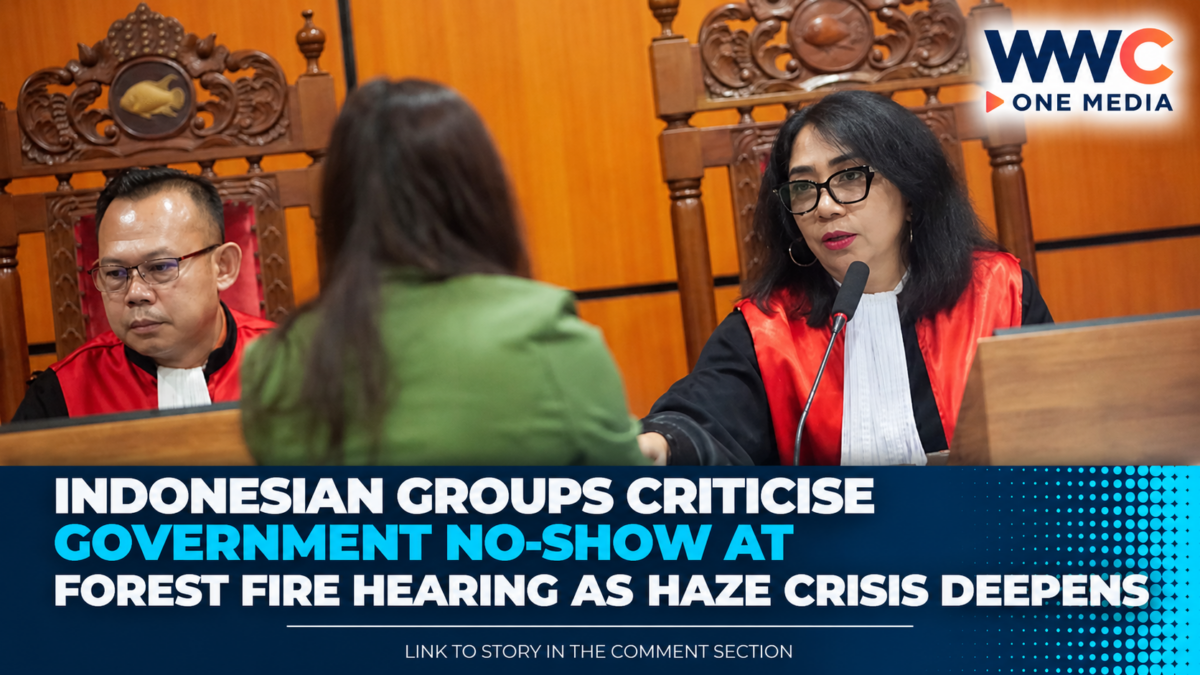
PONTIANAK, Indonesia — Indigenous and civil-society groups in Indonesia’s West Kalimantan have criticised the national government after no government representatives appeared at the first hearing of a class-action lawsuit over the province’s worsening forest-fire and haze crisis.
The Pontianak District Court adjourned the hearing on Wednesday (Oct. 7) until Oct. 21, with the proceedings unable to move forward because of the government’s absence. The lawsuit seeks to hold national and regional authorities responsible for allegedly failing to prevent and adequately respond to recurring forest and land fires.
The case comes as Indonesia experiences its most intense wildfire season in 11 years, with major fires affecting parts of Sumatra and Borneo. Authorities have warned that the fires could continue into November as unusually hot and dry conditions linked to a strong El Niño worsen the risk.
Plaintiffs accuse government of failing to act
The lawsuit was filed by several organisations and an individual from West Kalimantan.
The plaintiffs include the West Kalimantan chapter of the Indigenous Peoples Alliance of the Archipelago, the West Kalimantan branch of Catholic Youth, Perkumpulan Laman Punyung Indonesia, and Sisilius Rami, according to court documents.
They allege that the government failed to take adequate measures to prevent forest and land fires that recur almost every year, despite warnings about the conditions that can fuel them.
The plaintiffs are seeking greater government accountability over the fires and their effects on communities.
The allegations have not been established by the court, and the case remains at an early stage.
Indigenous representative criticises government absence
Yakobus Kumis, a plaintiff representing a Dayak indigenous group, expressed disappointment that representatives of the central government did not attend the hearing.
He accused the government of ignoring warnings before the fires intensified and called for the haze crisis to be classified as a national disaster.
The presidential office did not immediately respond to requests for comment on the lawsuit or its absence from the hearing.
The court’s decision to postpone proceedings means the parties are expected to return on Oct. 21, when the case can continue.
Fires worsen amid extreme dry conditions
The legal challenge comes against the backdrop of an unusually severe fire season.
Indonesia has been experiencing its most intense wildfires in more than a decade, particularly on Sumatra and Borneo, with prolonged dry weather creating conditions favourable for forest and peatland fires.
The government’s Forestry Ministry has reported a recent decline in high-confidence hotspots, but environmental groups have warned that hotspot numbers alone do not show whether the wider fire threat has disappeared.
Peat fires can burn underground for extended periods and may reignite even after surface hotspots decline. Environmental groups have therefore urged authorities to remain on high alert while dry conditions persist.
Haze spreads beyond Indonesia
The fires have consequences well beyond the areas where they are burning.
Smoke and haze from Indonesian fires have affected neighbouring countries, including Malaysia and Singapore, while parts of Indonesia have experienced deteriorating air quality and increased respiratory problems.
West Kalimantan has been among the areas particularly affected. Thick smoke previously disrupted flights in the province, while health concerns increased as the haze persisted.
The regional effects have added pressure on Indonesian authorities to contain fires and prevent them from spreading.
El Niño adds to the fire risk
Weather conditions are playing an important role in the current crisis.
Indonesia is experiencing an unusually strong El Niño, which has contributed to hotter and drier conditions and increased the vulnerability of forests and peatlands to fire.
Environmental groups have warned that degraded peatlands are particularly vulnerable because fires can spread beneath the surface.
Pantau Gambut said earlier this month that 16 million hectares of Indonesia’s 24 million hectares of peatland had become more vulnerable to fire because of ecosystem damage, including deforestation and depleted water tables. The group also said only a small portion of peatland damaged by fires between 2015 and 2019 had been restored.
The government, however, has said it remains on high alert and will continue efforts to contain fires, particularly those affecting peatlands.
Lawsuit adds pressure on President Prabowo’s government
The class action, filed in September, names President Prabowo Subianto and other authorities among the defendants.
The lawsuit reflects growing frustration among affected communities and environmental groups over recurring fires and haze, which have repeatedly caused health, environmental and economic problems in Indonesia and neighbouring countries.
The plaintiffs argue that authorities should have done more to prevent the fires and respond to warnings before the crisis worsened.
However, the government has not been found liable, and the lawsuit does not establish that national authorities caused the fires.
The court will ultimately have to consider the evidence and determine whether the defendants failed in their legal responsibilities.
Previous legal challenges have also focused on haze
The West Kalimantan case is not the first Indonesian lawsuit to challenge authorities over forest fires.
A separate lawsuit filed last year in South Sumatra was dismissed, according to Reuters. The outcome highlights the legal difficulties involved in establishing government responsibility for widespread fires involving multiple causes and actors.
Environmental organisations have nevertheless continued to push for stronger enforcement against companies and individuals accused of contributing to forest destruction and fires.
Government faces growing scrutiny
The no-show at Wednesday’s hearing has added another layer to the controversy surrounding Indonesia’s response to the current fire season.
For affected communities, the issue is not limited to the immediate smoke crisis. The plaintiffs argue that recurring fires should be addressed through stronger prevention, restoration and enforcement measures rather than treated as an annual emergency.
For the government, the challenge is to contain the fires while managing the wider environmental and public-health consequences and coordinating a response across Indonesia’s vast forest and peatland areas.
The next hearing on Oct. 21 will provide the court with another opportunity to begin examining the case.
For now, the lawsuit has placed Indonesia’s response to its recurring forest-fire crisis under renewed legal and public scrutiny — at a time when the fires are already affecting communities at home and sending haze across Southeast Asia.