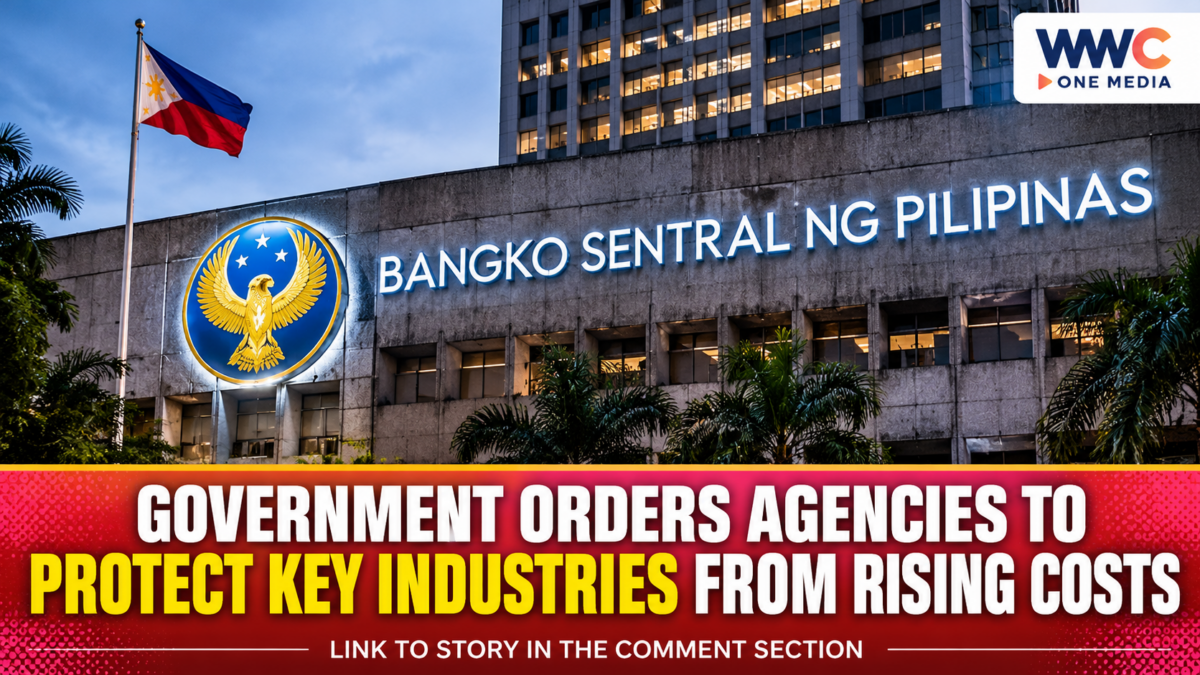
The Philippine government is tightening its response to rising fuel costs, inflation and climate-related risks, directing government agencies to protect vulnerable industries and households while keeping public spending under control.
The response puts agriculture, food production, transportation, energy and employment among the sectors requiring closer coordination as external economic pressures continue to affect businesses and consumers.
The challenge is balancing immediate assistance with the need to preserve government funds. Agencies must address the rising cost of essential goods and services without allowing emergency spending to weaken the country’s longer-term fiscal position.
Correction: The preliminary headline above suggested a new government order. The official records reviewed establish an existing government intervention framework, UPLIFT, and related budget measures. They do not establish a new blanket directive issued on Nov. 16 in response to the recommendations discussed in the news tip.
UPLIFT Measures Put Philippine Agencies to the Test as Inflation Rises and Economic Growth Slows
The Philippine government already has a coordinated programme intended to protect households, businesses and essential industries from the effects of rising energy costs. The challenge now is whether its existing interventions can provide enough support as inflation accelerates and economic growth loses momentum.
The government’s Unified Package for Livelihoods, Industry, Food, and Transport (UPLIFT), established under Executive Order No. 110 signed on March 24, 2026, provides the framework for coordinating assistance across affected sectors.
Its importance has increased as the Philippine Statistics Authority (PSA) reported October inflation of 7.8%, while economic growth slowed to 2.1% in the third quarter of 2026. Official Gazette+2
The policy challenge is straightforward but difficult: controlling inflation requires measures that address excessive demand and price expectations, while protecting economic activity requires improving the actual availability and movement of goods, energy and essential services.
UPLIFT Connects Government Agencies Under One Framework
Executive Order No. 110 established UPLIFT as a whole-of-government response to disruptions in global energy supply and their effects on the domestic economy.
Rather than relying on a single agency, the framework brings together government interventions involving fuel supply, electricity, food security, transportation, livelihoods and assistance to vulnerable households.
The Department of Budget and Management (DBM) also launched a UPLIFT transparency platform to consolidate information about government programmes and their implementation.
Its six pillars cover saving lives, ensuring sufficient fuel supply, assisting sectors in need, keeping food prices within reach, ensuring electricity supply and helping commuters.
This structure matters because an increase in fuel prices can affect several industries simultaneously. Higher transport expenses can increase distribution costs, while more expensive electricity can affect factories, cold-storage facilities and commercial establishments. Department of Budget and Management+1
The framework therefore provides a basis for coordinating responses instead of treating each economic problem as an isolated concern.
Farmers and Food Producers Need More Than Financial Assistance
Agriculture is among the sectors most exposed to the country’s current economic and environmental challenges.
The PSA reported that agriculture, forestry and fishing contracted by 4.8% year-on-year in the third quarter of 2026.
That decline is significant because agricultural production affects food availability, rural employment and the income of farming communities.
The government has already identified several interventions under UPLIFT, including additional agricultural inputs, fertilizer support and assistance for farmers’ fuel requirements.
During an August 28 Senate briefing, DBM Acting Secretary Kim Robert C. De Leon said the government had started preparing for El Niño by providing additional support to the Department of Agriculture.
He also discussed possible irrigation assistance, including the exploration of solar-powered irrigation projects through the National Irrigation Administration.
These measures are particularly relevant as prolonged dry conditions threaten agricultural production. Department of Budget and Management+1
The potential consequences of these conditions are explored in our previous report on Central Visayas’ projected ₱490-million agricultural losses under a worst-case El Niño scenario.
For the agricultural sector, the effectiveness of government assistance will depend on whether farmers receive the resources they need before production disruptions become more severe.
Transport Costs Remain a Major Inflation Problem
Transportation is another major pressure point.
The PSA recorded transport inflation of 20.1% in October, compared with 14.6% in September.
Housing, water, electricity, gas and other fuels also recorded 9.3% inflation, up from 8.4% in the previous month.
These figures show how rising operating expenses can affect businesses and households beyond the immediate cost of fuel.
For delivery companies, public utility vehicle operators and agricultural distributors, higher fuel expenses can reduce earnings or force adjustments to service prices.
The government has responded through UPLIFT-related assistance, including fuel subsidies and support for agricultural delivery logistics.
The Department of Economy, Planning, and Development has also identified stronger food production and logistics as important parts of the response to higher energy costs. Philippine Statistics Authority+1
The issue deserves attention because transportation connects nearly every major economic sector.
Even when agricultural production remains sufficient, expensive or inefficient distribution can increase the cost of bringing products from farms and manufacturing facilities to consumers.
Our earlier coverage of the Philippines’ worsening inflation pressures from food, fuel and labour costs examined how these expenses can combine to affect household purchasing power.
Household Assistance Provides a Direct Safety Net
UPLIFT also includes direct financial assistance for qualified low-income households.
The Department of Social Welfare and Development (DSWD) divided the programme’s beneficiaries into three groups.
Group 1 covers 4Ps and Walang Gutom Program beneficiaries, who receive a one-time ₱2,000 grant.
Group 2 covers poor and near-poor households identified through the 2024 Community-Based Monitoring System. Group 3 covers qualified low-income Social Security System members with monthly salary credits not exceeding ₱20,000.
Groups 2 and 3 are eligible for ₱2,000 monthly assistance for six months, from July to December 2026, equivalent to ₱12,000 in total. DSWD+1
In an update dated Nov. 12, the DSWD reported that more than ₱894.77 million in financial assistance had been provided to farmers affected by El Niño through its UPLIFT Emergency Cash Transfer component.
The agency also reported that the programme was intended to help protect vulnerable households against rising prices and essential service costs. DSWD
These payments can provide temporary financial relief, particularly for families with limited savings.
However, cash assistance alone cannot permanently address shortages, expensive logistics or weak agricultural productivity.
That is why household support must work alongside improvements in production, transportation and supply distribution.
The Government Must Balance Assistance With Fiscal Discipline
The other major challenge is finding enough funding to sustain these interventions.
The DBM issued National Budget Circular No. 602 on April 23, 2026, providing guidelines for identifying savings from unobligated allotments under the FY 2026 General Appropriations Act.
The circular directed covered entities to realise savings of at least 20% from non-essential or non-priority operating expenses, including travel, training, meetings, office supplies and utilities.
National Budget Circular No. 603, issued on May 4, 2026, provided additional guidelines involving unobligated allotments from FY 2025 continuing appropriations to support UPLIFT-related programmes. Department of Budget and Management+1
These measures illustrate the government’s attempt to redirect available resources towards priority interventions while controlling unnecessary expenditure.
The DBM’s Nov. 9 Circular Letter No. 2026-15 also reiterated the importance of prudent spending, particularly as the country faces energy pressures and a very strong El Niño episode.
The circular reminded agency heads to ensure that public funds are used efficiently and that year-end celebrations remain simple and modest. Department of Budget and Management
For the government, the challenge is not simply to spend more. It is to ensure that available funding reaches programmes capable of addressing the country’s most pressing economic vulnerabilities.
Can Supply-Side Measures Help Prevent a Deeper Economic Slowdown?
The latest economic figures highlight why monetary policy cannot carry the entire burden of stabilisation.
The BSP raised its target reverse repurchase rate by 50 basis points to 5.50% on Nov. 11, 2026.
Higher interest rates can help contain inflation expectations and moderate demand, but they cannot directly increase agricultural harvests, remove transport bottlenecks or create additional electricity supply.
Those challenges require action from agencies responsible for agriculture, infrastructure, energy and transportation. Bangko Sentral ng Pilipinas+1
The economic stakes are considerable.
Household final consumption expenditure grew by just 2.4% in the third quarter, while gross capital formation declined by 0.2%.
These figures suggest that both household spending and investment activity remain important areas of concern.
The government’s ability to improve supply conditions while maintaining targeted financial assistance could therefore influence how effectively the economy absorbs further external shocks. Philippine Statistics Authority
Our previous report on October’s 7.8% inflation and the slowdown in Philippine economic growth provides further context on the pressures confronting consumers and businesses.
What Happens Next?
The effectiveness of UPLIFT will depend on implementation, coordination and the availability of funding.
The next priorities include ensuring that agricultural assistance reaches farmers on time, improving transport and food distribution, maintaining adequate energy supplies and delivering financial assistance to qualified households.
Government agencies must also demonstrate that the programmes are producing measurable results rather than simply announcing additional interventions.
For businesses, reliable supply chains and manageable operating costs will be important in maintaining production and employment.
For households, the immediate concern remains whether food, transportation, electricity and other essential expenses can become more affordable.
The Philippines already has a government framework for addressing these challenges. The bigger question is whether its implementation can keep pace with the economic pressures facing the country.
Frequently Asked Questions
1. What is the UPLIFT programme in the Philippines?
UPLIFT stands for Unified Package for Livelihoods, Industry, Food, and Transport. It is a whole-of-government response framework established through Executive Order No. 110 on March 24, 2026.
2. Which sectors benefit from UPLIFT?
The programme covers vulnerable households, agriculture, industry, food production, transportation, energy and other sectors affected by economic disruptions.
3. How much financial assistance can qualified households receive?
Qualified Group 1 beneficiaries receive a one-time ₱2,000 grant. Qualified Group 2 and Group 3 beneficiaries can receive ₱2,000 monthly for six months, or ₱12,000 in total.
4. Why are supply-side interventions important?
They address practical economic constraints such as agricultural production, fuel availability, electricity supply, transportation expenses and food distribution.
5. Can government assistance bring down inflation?
Targeted assistance can help protect household purchasing power, while improvements in production and distribution can ease certain supply pressures. However, these measures do not guarantee lower inflation, which also depends on international prices, currency movements and domestic economic conditions.