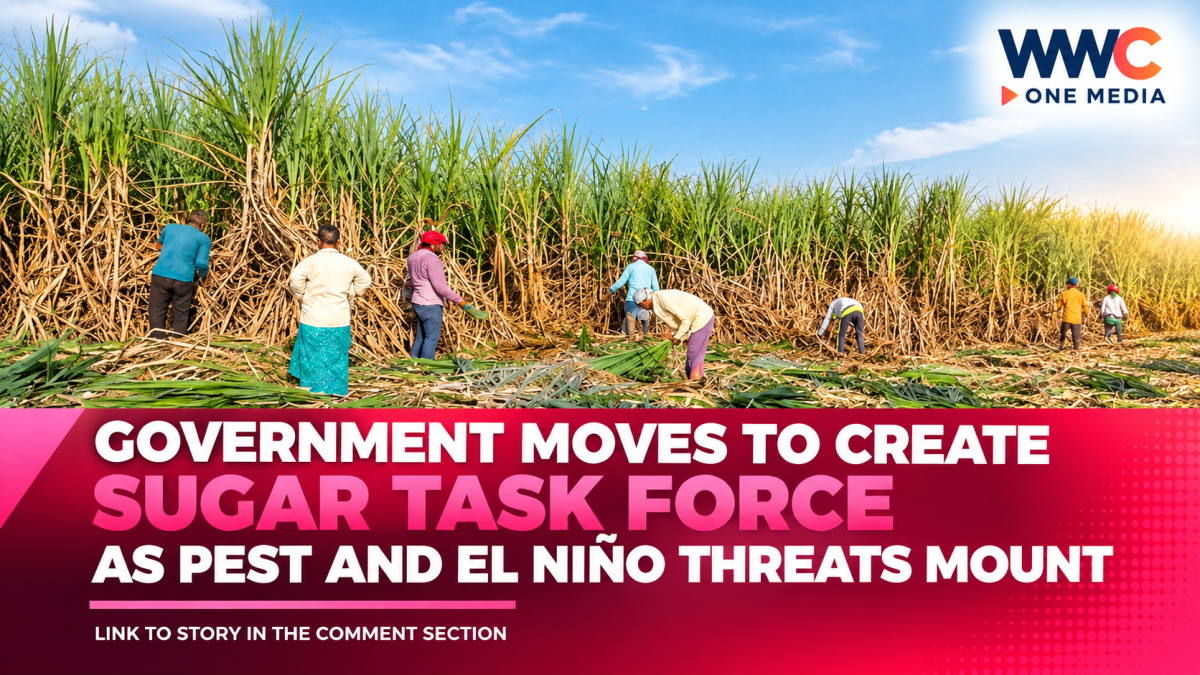
The Philippine government is moving to establish a National Task Force for Sugar Pests and Disasters as the local sugar industry faces growing threats from crop-damaging pests, insufficient rainfall and the expected effects of a strong El Niño.
The Sugar Regulatory Administration (SRA) and the Department of Agriculture (DA) have finalized a proposal seeking the creation of the task force, which would coordinate government action and consolidate information on threats affecting sugarcane production. The proposal has been submitted to the Office of the President for consideration.
SRA Administrator Pablo Luis Azcona said the task force is intended to eliminate fragmented responses and provide farmers with reliable information, particularly as the red-striped soft scale insect (RSSI) continues to threaten sugarcane farms.
RSSI is a sap-sucking pest that can severely damage sugarcane plants and reduce their sugar content. Government data earlier this year showed tens of thousands of hectares had been affected, particularly in Negros Island and other major sugar-producing areas.
The proposed task force would be responsible for strategic planning, pest containment and disaster response. It would also coordinate the deployment of technology and technical expertise, including drones, artificial intelligence and remote-sensing tools to improve monitoring and intervention.
Weather conditions are adding another challenge. Officials have warned that insufficient rainfall has already affected sugarcane growth, while the anticipated El Niño could intensify drought conditions and further reduce yields. The SRA has projected sugar production of about 1.66 million metric tons for the coming crop year, with weather-related factors accounting for much of the expected decline.
The government has already deployed measures against RSSI, including chemical spraying, drone operations, biological-control research and financial assistance for affected farmers. More than P400 million in assistance has been released to affected farmers and workers, with about 20,000 farmers and 20,000 workers identified as eligible beneficiaries.
The Department of Agriculture has also been working with local governments and industry groups to expand pest monitoring and treatment. Earlier efforts included funding for chemicals and drone spraying, while authorities have been developing longer-term biological controls to reduce dependence on emergency chemical interventions.
Under the proposed structure, the DA would chair the national task force, while the SRA would serve as vice chair. Other government agencies, including the Department of Social Welfare and Development, Department of Labor and Employment, Department of the Interior and Local Government, and the Bureau of Fire Protection, are expected to participate alongside representatives of sugar farmers, millers, refiners and other industry groups.
The push for a centralized response comes as the government tries to protect sugar production, farmer incomes and domestic supply from simultaneous pest and weather risks. Officials are hoping the task force can be established before the peak of the expected El Niño, allowing a coordinated action plan to be in place before conditions become more difficult.