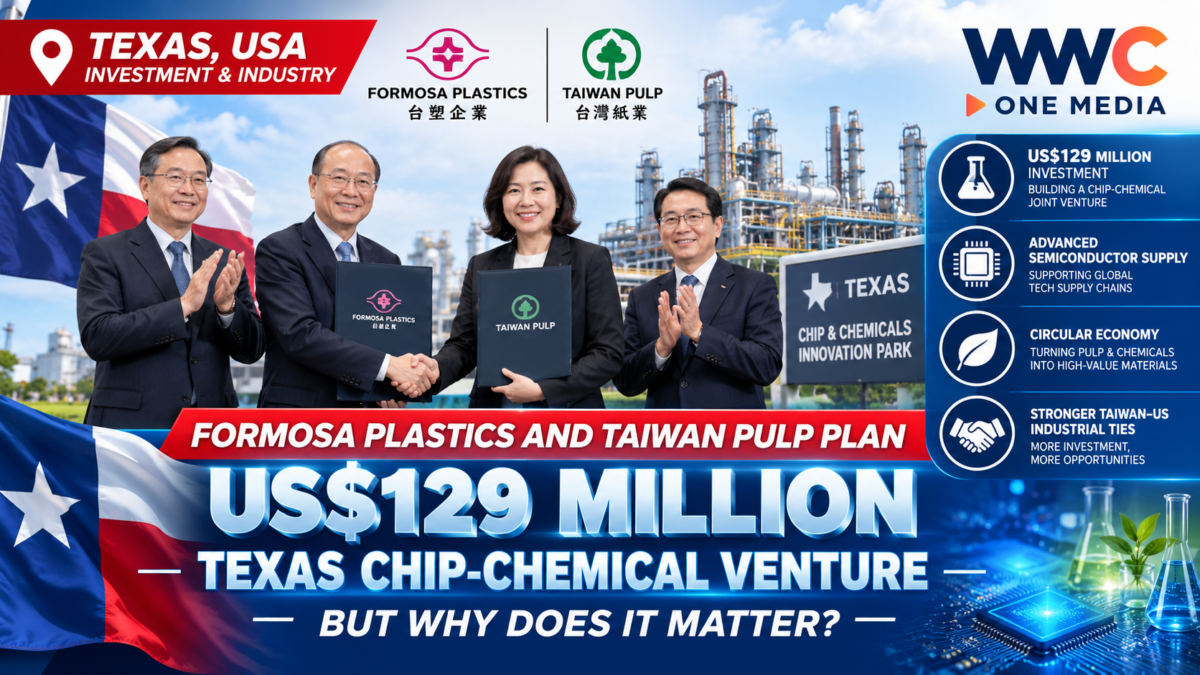
TAIPEI — Taiwan’s semiconductor supply chain is taking another step into the United States as Formosa Plastics Corp. and Taiwan Pulp & Paper Corp. prepare to establish a joint venture producing electronic-grade hydrochloric acid in Texas.
The planned project carries an estimated investment of US$129 million (NT$4.1 billion) and is designed to supply high-purity chemicals needed in semiconductor manufacturing closer to expanding U.S. chip-production facilities.
New Texas Facility Targets Semiconductor Demand
The companies plan to establish FTA Tech LLC, which will build a production facility at Formosa Plastics’ existing complex in Texas.
The facility will produce hydrochloric acid that can undergo further purification for use in semiconductor manufacturing.
Production is scheduled to begin in December 2028, according to Taiwan News’ report citing CTEE.
The project is aimed at developing a more localized supply chain as semiconductor manufacturers continue expanding production capacity in the United States.
Who Will Own the New Venture?
The ownership structure gives Taiwan Pulp & Paper a 50% stake in FTA Tech.
Formosa Plastics and its U.S. subsidiary will each hold 25%.
The joint venture is expected to have capital of approximately US$38.1 million, while the total investment in the project is estimated at US$129 million.
The arrangement gives the companies a direct position in a U.S.-based semiconductor materials operation while leveraging Formosa Plastics’ existing Texas infrastructure.
Why Hydrochloric Acid Matters to Chipmakers
Hydrochloric acid is among the high-purity chemicals used during semiconductor production.
In chip manufacturing, specialized chemicals are used in processes including wafer cleaning and etching. Other important semiconductor chemicals include hydrofluoric acid, sulfuric acid and hydrogen peroxide.
For chipmakers, maintaining reliable access to high-purity materials is an important part of the manufacturing supply chain.
That makes chemical production an increasingly significant part of the broader semiconductor ecosystem — even though these materials receive far less attention than the chips themselves.
US Demand Is Expected to Keep Growing
Formosa Plastics estimates that U.S. demand for electronic-grade hydrochloric acid could grow at a compound annual rate of approximately 9.5% between 2026 and 2035.
That projected growth is a major factor behind the decision to establish production capacity in the United States.
As American semiconductor manufacturing expands, demand is also expected to increase for the specialized materials and chemicals required to keep fabrication plants operating.
Taiwan Expands Its Semiconductor-Materials Footprint
The Texas project is part of a broader push by Formosa Plastics into semiconductor-related materials.
The company has been working with Taiwanese specialty-chemical companies on semiconductor materials and has partnered with Chung Hwa Chemical Industrial Works to develop electronic-grade sulfuric acid production in Taiwan.
That strategy reflects a broader shift in the semiconductor industry, where supply-chain security increasingly extends beyond chip fabrication to the chemicals, equipment and materials needed throughout the manufacturing process.
A New Link Between Taiwan and the US Chip Supply Chain
The planned Texas facility will not manufacture semiconductors themselves.
Instead, it will target a critical supporting layer of the industry: high-purity chemical supplies.
If the project proceeds according to schedule, FTA Tech is expected to begin production in late 2028, giving the companies a larger presence in the U.S. semiconductor-materials market.
For Taiwan’s industrial giants, the move represents another step toward following the semiconductor supply chain overseas.
And as U.S. chip production expands, the question is no longer only who will make the chips — but also who will supply the specialized materials needed to make them.
WWC ONE MEDIA G,A