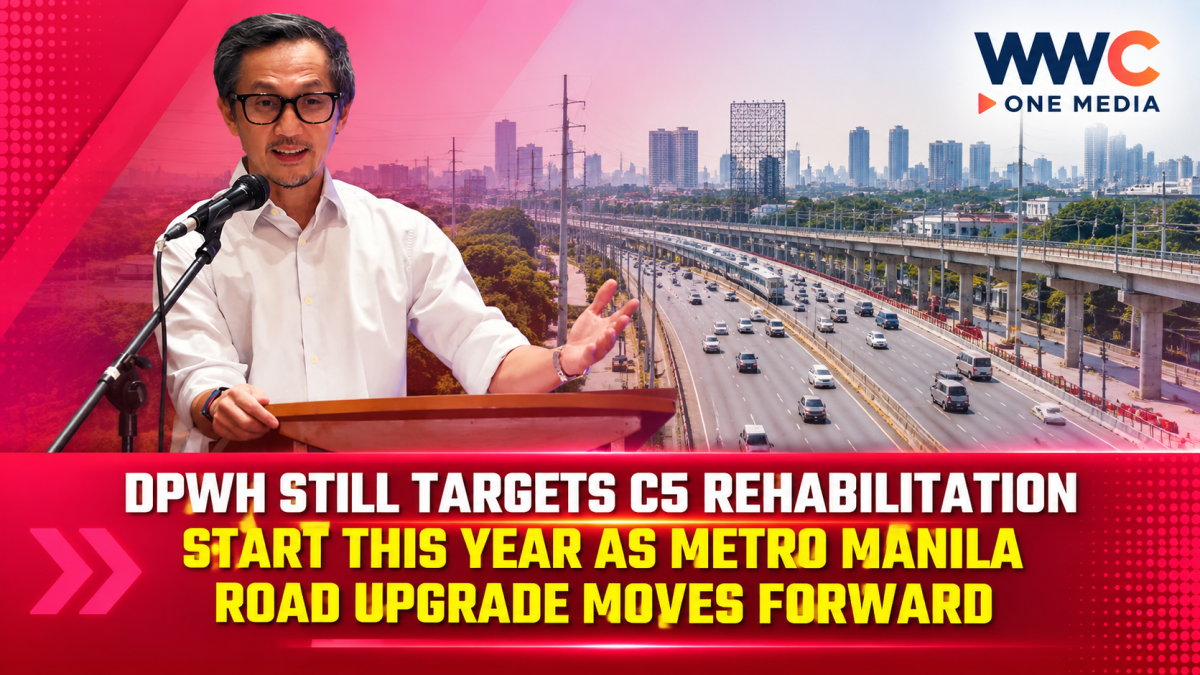
MANILA — The Department of Public Works and Highways is still targeting the start of rehabilitation work on Metro Manila’s C5 Road before the end of 2026, with officials saying the project is moving toward the bidding stage despite earlier delays.
Public Works Secretary Vince Dizon said the C5 project is already being prepared and that bidding will begin soon, keeping the department’s target of starting rehabilitation work within the year.
The project covers C5, one of Metro Manila’s major north-south road corridors, serving areas including Pasig, Taguig, Quezon City and Las Piñas. The road is an important route for commuters, commercial traffic and freight moving across the eastern and southern parts of the capital region.
Earlier in 2026, the DPWH had targeted completing the rehabilitation design during the first quarter, with C5 identified as one of the department’s priority road projects following the continuing rehabilitation of EDSA.
The latest timetable indicates that the project has moved beyond the initial design phase, although the department is still assessing the overall cost of upgrading the road. The immediate focus is on preparing the procurement process and eventually awarding the rehabilitation contracts.
The C5 rehabilitation is also being considered alongside drainage improvements. The DPWH has ordered the redesign and enlargement of drainage inlets along major Metro Manila roads, including C5, particularly in flood-prone areas where undersized inlets can slow the movement of floodwater. Officials said work on some C5 drainage improvements in Pasig City was already underway in August.
The drainage component is significant because sections of Metro Manila’s major roads have experienced flooding during periods of heavy rainfall. The DPWH has said road repairs, drainage improvements and pumping capacity need to be addressed together because prolonged exposure to floodwater can accelerate road deterioration.
The department is simultaneously handling several other major rehabilitation and infrastructure projects nationwide. These include continued work on EDSA, the Maharlika Highway and major bridges and roads affected by deterioration or severe weather.
The government’s infrastructure program is also facing increased scrutiny over project planning and budget documentation. During deliberations on the proposed 2027 DPWH budget, lawmakers flagged thousands of projects for issues including missing coordinates, duplicate entries, overlapping projects and unspecified scopes. The department said many of the flagged details were contained in supporting documents but omitted from project titles, while a smaller group of projects was set for further validation.
For motorists and commuters, the eventual rehabilitation of C5 could mean road improvements but may also bring construction-related disruptions once major works begin. The extent and timing of those impacts will depend on the final project design, contract packages and construction schedule.
The project also comes as Metro Manila continues to deal with congestion, deteriorating road surfaces and flooding pressures. Upgrading the physical road network while improving drainage could therefore affect both daily mobility and the durability of the corridor.
For now, the DPWH’s stated objective remains to get C5 rehabilitation underway before the end of 2026. The next major steps are the completion of cost assessments, bidding and contract awards before substantial rehabilitation work can begin.
The bigger issue now is whether the project can move through procurement quickly enough for the long-awaited C5 rehabilitation to actually begin within the department’s 2026 target.