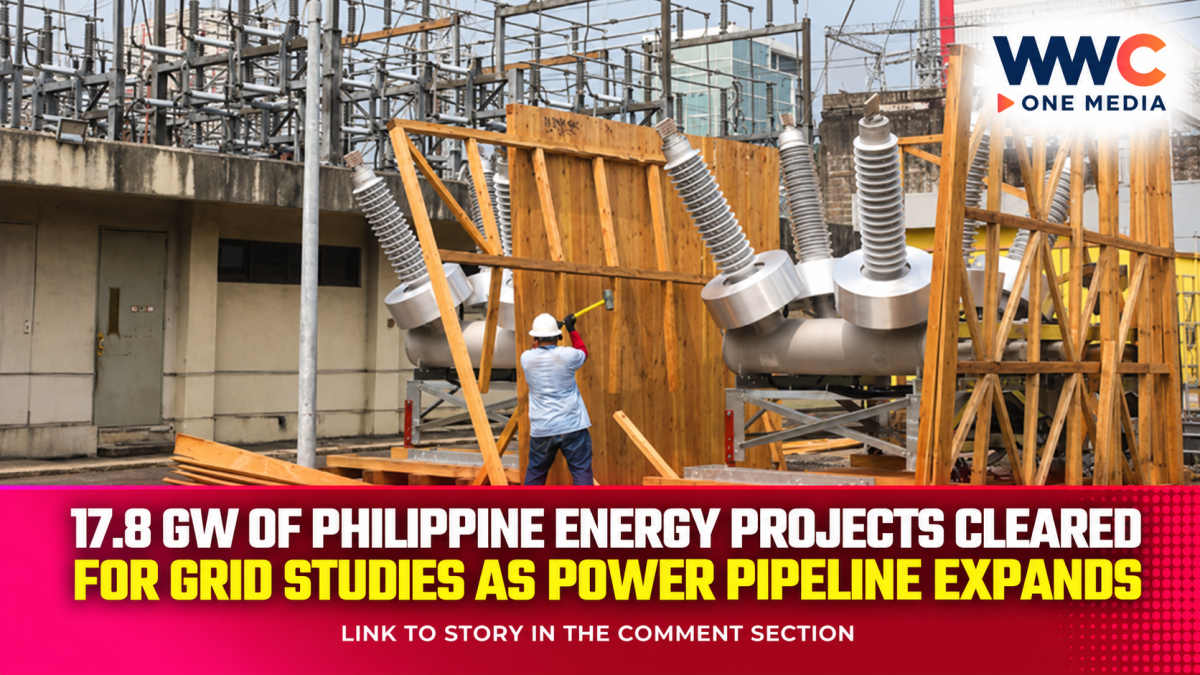
MANILA — Energy projects with a combined potential capacity of more than 17.8 gigawatts (GW) were endorsed for system impact studies during the first half of 2026, highlighting the rapid expansion of the Philippines’ power-generation pipeline as developers seek connections to the national grid.
Data from the Department of Energy showed that 137 projects received endorsements for system impact studies from January to June. More than half of those projects — 85 — were battery energy storage systems, reflecting the growing role of storage as the country adds more renewable generation.
The project pipeline also includes 18 wind developments, 16 solar projects paired with battery storage, eight hydropower projects, one waste-to-energy facility and three biomass projects. Three coal-fired projects, two diesel-fired facilities and one natural gas-fired project were also endorsed for grid assessments.
A system impact study determines whether the electricity grid can accommodate a proposed new connection and identifies upgrades that may be necessary before a project can proceed. These can include additional transmission lines, transformers, substations and other grid infrastructure.
The large number of projects entering the study process illustrates both the investment interest in Philippine power generation and the growing importance of transmission planning. Projects can be developed relatively quickly on paper, but their ability to deliver electricity depends partly on whether the grid has sufficient capacity in the locations where generation is being built.
The National Grid Corp. of the Philippines has stressed that generation and transmission development need to move together. New power plants must be located and scheduled in coordination with transmission expansion so electricity can be delivered to consumers once projects become operational.
The heavy representation of battery storage projects is particularly notable. Battery energy storage systems can help balance fluctuations from solar and wind generation, provide grid-support services and shift electricity availability across different periods of the day.
The expansion of storage is occurring alongside a broader increase in renewable-energy development. Wind, solar, hydro and biomass projects make up a substantial portion of the projects seeking grid assessments, reflecting continued investment in technologies that can expand the country’s electricity supply while supporting its renewable-energy targets.
However, receiving an endorsement for a system impact study does not mean a project has already been approved for construction or guaranteed a grid connection. Developers must still complete the required studies, secure permits and approvals, arrange financing and meet other technical and regulatory requirements before projects can become operating power facilities.
The scale of the pipeline also highlights the pressure that could fall on the country’s transmission network. If multiple large projects move forward in the same areas, additional transmission capacity may be needed to prevent congestion and ensure that new generation can reach demand centers.
That issue is particularly important as electricity demand grows and the Philippines continues to develop renewable projects in areas that may be far from major population and industrial centers.
For the power sector, the 17.8-GW pipeline signals substantial potential new capacity, but the ultimate contribution to electricity supply will depend on how many projects successfully move through grid studies, permitting, financing and construction.
The bigger challenge now is ensuring that transmission infrastructure develops fast enough to connect the growing number of generation and storage projects seeking access to the Philippine grid.