Southeast Asian leaders and United Nations Secretary-General António Guterres have reaffirmed their organisations’ partnership during the 16th ASEAN-United Nations Summit in Manila, placing regional cooperation, international stability and sustainable development back at the centre of the diplomatic agenda.
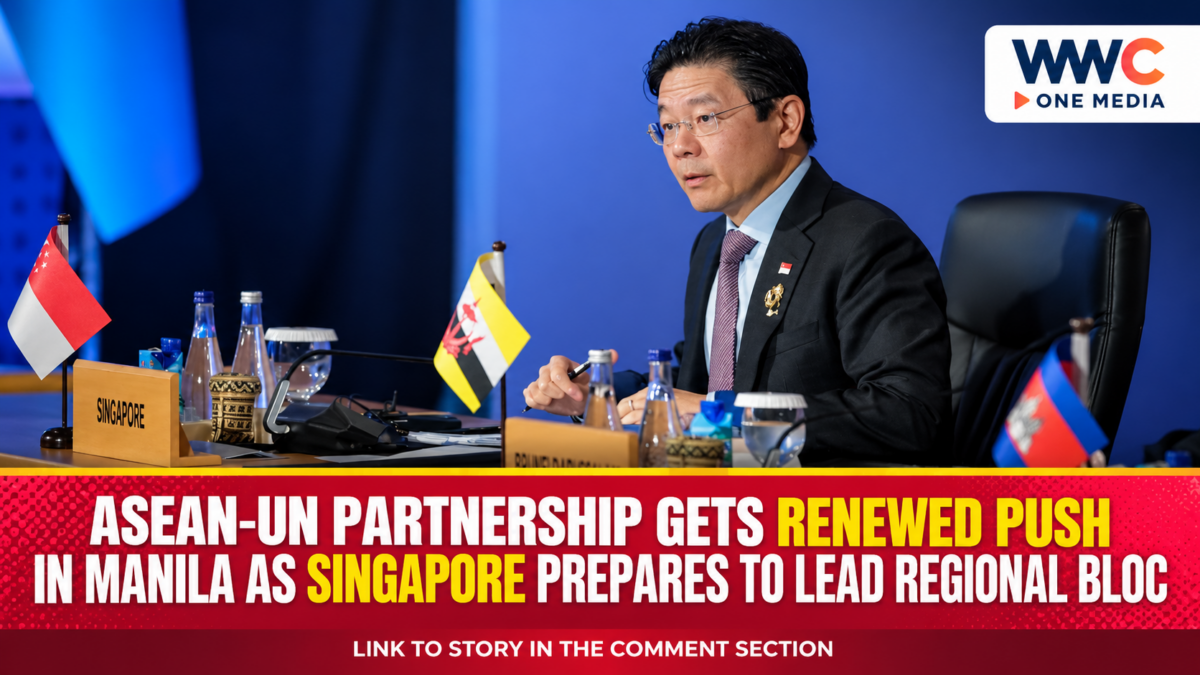
The November 16 meeting also comes as Singapore prepares to assume the ASEAN chairmanship in 2027, giving Prime Minister Lawrence Wong an important role in carrying forward regional cooperation after the Philippines completes its year as chair.
The summit’s outcome highlights a continuing effort to strengthen cooperation between ASEAN and the United Nations through an established five-year action plan and the bloc’s longer-term development vision.
ASEAN and UN Leaders Reaffirm Their Comprehensive Partnership
The 16th ASEAN-UN Summit brought together the leaders of ASEAN member states, Guterres and ASEAN Secretary-General Dr. Kao Kim Hourn in Manila.
In its November 16 announcement, the ASEAN Secretariat said the leaders reaffirmed the importance of the ASEAN-UN Comprehensive Partnership in promoting peace, security, stability and sustainable development.
They also welcomed progress in implementing the ASEAN-UN Plan of Action for 2026–2030.
The plan provides an established framework for cooperation between the two organisations. Its implementation is intended to support shared priorities across the ASEAN Community and strengthen the relationship between Southeast Asia and the wider international system.
For the Philippines, hosting the meeting places Manila at the centre of discussions involving regional governments and the world’s largest intergovernmental organisation.
The outcome is particularly relevant at a time when regional challenges increasingly cross national borders, requiring governments to coordinate their responses rather than rely exclusively on individual national policies.
Why the ASEAN-UN Partnership Matters Beyond Diplomacy
ASEAN and the United Nations operate through different institutional structures, but their cooperation provides a platform for addressing issues that no single government can resolve independently.
Their partnership covers areas connected to peace and security, sustainable development and broader international cooperation.
The ASEAN Secretariat identifies the United Nations as one of the organisation’s established international partners under its external relations framework.
This relationship is also consistent with ASEAN’s wider commitment to maintaining constructive ties with regional and international organisations.
The practical importance of the partnership lies in implementation. Statements of cooperation establish common direction, but progress depends on whether governments and institutions translate those commitments into programmes, resources and measurable results.
The ASEAN-UN Plan of Action 2026–2030 therefore gives the relationship a defined period for advancing agreed priorities.
For Southeast Asian countries, cooperation through multilateral institutions can also create additional channels for technical assistance, policy coordination and international engagement.
Singapore’s Incoming Chairmanship Adds a New Dimension
The Manila meeting carries added significance for Singapore because the country is preparing to take over ASEAN’s rotating chairmanship in 2027.
Singapore Prime Minister Lawrence Wong attended the 49th ASEAN Summit and related meetings from November 15 to 17, following an official announcement by Singapore’s government.
The country’s leadership will inherit an agenda that includes regional integration, economic resilience, external partnerships and the implementation of ASEAN’s long-term community objectives.
In his March 26 address at the Bo’ao Forum for Asia, Wong discussed the need to strengthen global institutions, including the United Nations and the World Trade Organization.
He also explained Singapore’s position that more flexible cooperation arrangements can complement established multilateral institutions rather than replace them.
That earlier policy position provides useful context for Singapore’s approaching ASEAN leadership. It shows why the relationship between regional cooperation and wider international institutions is relevant to the country’s diplomatic priorities.
However, the ASEAN Secretariat’s November 16 announcement does not attribute a separate policy commitment or individual statement to Wong at the ASEAN-UN meeting itself.
ASEAN 2045 Provides the Longer-Term Direction
The summit also linked the ASEAN-UN partnership to ASEAN 2045: Our Shared Future.
This long-term framework gives the regional bloc a broader development direction beyond individual chairmanship years.
The distinction matters because ASEAN’s rotating chairmanship changes annually, while many of the region’s most important challenges require sustained cooperation across multiple administrations.
Economic development, regional stability, climate resilience and institutional capacity cannot be achieved through a single summit or one year’s programme.
The ASEAN-UN Plan of Action for 2026–2030 offers a more immediate framework for cooperation, while ASEAN 2045 establishes the longer-term regional ambition.
Together, the two frameworks provide continuity between current programmes and future regional objectives.
For readers following the Philippines’ chairmanship, WWC’s coverage of the ASEAN summit’s economic priorities and the inflation challenge facing the region examines another important dimension of the same regional agenda.
Guterres Attends His Final ASEAN-UN Summit
The November 16 gathering also marked Guterres’ final ASEAN-UN Summit as Secretary-General of the United Nations.
The ASEAN Secretariat formally acknowledged his support for the Comprehensive Partnership throughout his tenure.
His participation provides a point of continuity in the relationship between the two organisations, particularly as the 2026–2030 action plan moves into implementation.
The United Nations has a broad international mandate, while ASEAN’s work is centred on regional cooperation among Southeast Asian countries. Their partnership creates an institutional connection between regional priorities and wider international efforts.
The meeting also reflects the importance of maintaining dialogue between regional organisations and global institutions during periods of international uncertainty.
For ASEAN, the challenge is to preserve its ability to work collectively while maintaining constructive relations with external partners.
What Happens Next
The 49th ASEAN Summit and related meetings continue through November 17, when the Philippines is scheduled to hand over the ASEAN chairmanship to Singapore.
The transition will move responsibility for the next chairmanship year to the Singapore government.
The next important developments will be the implementation of the ASEAN-UN Plan of Action 2026–2030, the continuation of ASEAN’s external partnerships and the translation of the summit’s commitments into practical cooperation.
For the Philippines, the meeting represents part of its concluding diplomatic programme as ASEAN chair in 2026.
For Singapore, it marks the beginning of a new phase of regional leadership.
Ultimately, the strength of the ASEAN-UN partnership will be measured not only by the language adopted at leaders’ meetings, but by the programmes, cooperation and results that follow.
Frequently Asked Questions
1. What happened at the 16th ASEAN-UN Summit?
ASEAN leaders and UN Secretary-General António Guterres reaffirmed the ASEAN-UN Comprehensive Partnership and welcomed progress under the 2026–2030 Plan of Action.
2. Where was the 16th ASEAN-UN Summit held?
The summit took place in Manila, Philippines, on November 16, 2026.
3. What is the ASEAN-UN Plan of Action 2026–2030?
It is a cooperation framework intended to advance shared priorities between ASEAN and the United Nations during the 2026–2030 period.
4. Why is Lawrence Wong involved in the summit?
Singapore Prime Minister Lawrence Wong attended the 49th ASEAN Summit and related meetings as Singapore prepares to assume the ASEAN chairmanship in 2027.
5. When will Singapore take over the ASEAN chairmanship?
The Philippines is scheduled to hand over the chairmanship to Singapore during the closing activities of the 49th ASEAN Summit on November 17, 2026.