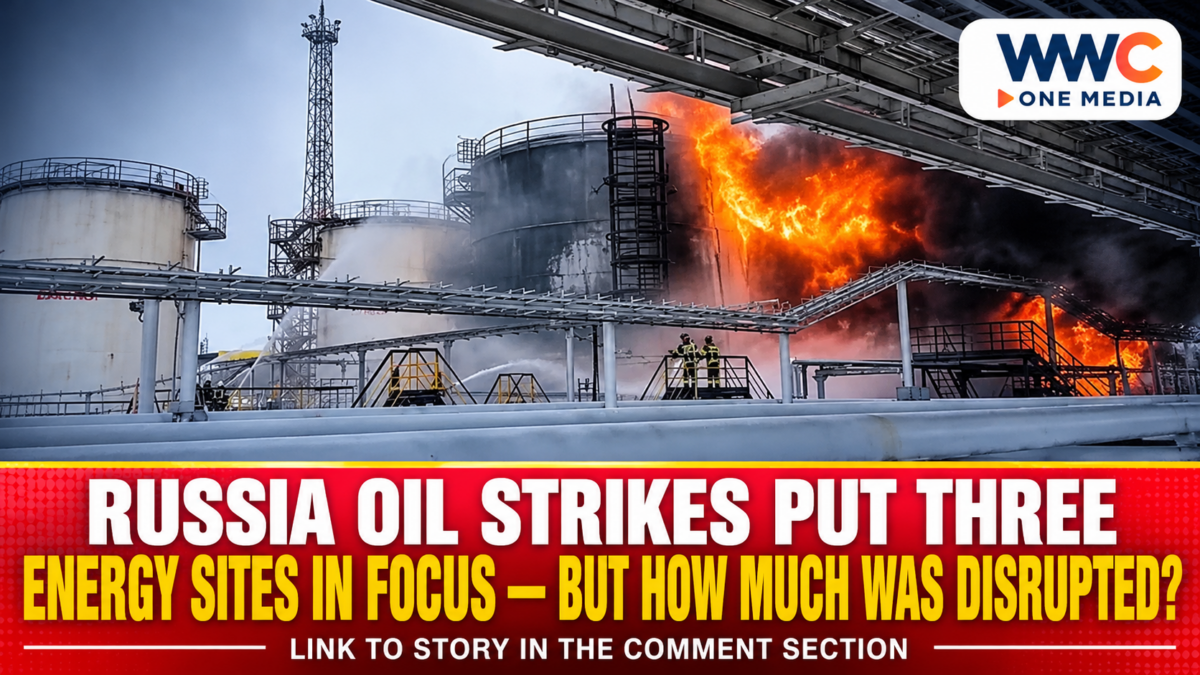
Ukraine’s military command said its forces struck three Russian oil-sector facilities overnight on November 28, 2026, naming a refinery in Rostov Oblast and two pipeline-related stations in Samara Oblast and Bashkortostan. The reported targets include infrastructure connected to the movement and processing of crude oil, but the full extent of damage and any effect on export volumes remain unconfirmed.
The Russia oil strikes place attention on an important part of the country’s energy system: facilities that handle crude before it reaches customers or refineries. Yet a reported hit, a fire at a site and a measurable interruption to oil exports are three different things. The available public record does not establish that the attacks caused a sustained shutdown of the wider network.
Three facilities named in Ukraine’s military statement
In a statement published on November 28, the General Staff of the Armed Forces of Ukraine identified the Samara linear production and dispatching station near Prosvet, the Nurlino station in Bashkortostan and the Novoshakhtinsk Oil Refinery in Rostov Oblast.
The Ukrainian command said a fire broke out in the tank farm at the Samara station. It described the facility as a major Transneft hub where the Urals export blend is formed, adding that up to half of Russia’s oil exports pass through the station. That percentage is the Ukrainian military’s description of the facility’s importance; the statement did not provide an independent measurement of the volume affected by this particular strike.
The same statement said the Nurlino station forms part of the Transneft trunk oil pipeline system and moves significant volumes of Russian oil through major pipelines. It placed the facility more than 1,200 kilometres from Ukraine’s border.
The third named target was the Novoshakhtinsk Oil Refinery. The General Staff described it as having the capacity to process up to 7.5 million tonnes of oil annually. It reported explosions and a fire in the area of the facility, while saying the extent of damage was still being assessed.
These descriptions establish what Ukraine says it targeted. They do not, on their own, confirm the precise condition of equipment, the duration of any outage or the quantity of oil that may have been delayed.
Why the Samara and Nurlino stations matter
A refinery and an oil dispatch station perform different functions. A refinery processes crude into products such as gasoline, diesel and other petroleum materials. A pipeline dispatch station, by contrast, helps move crude through a transport network and may also provide storage, blending and pumping functions.
That distinction matters when assessing the possible consequences of an attack. Damage to a refinery can affect processing capacity at the affected plant. Damage to a pipeline station could interfere with the movement, storage or blending of crude, depending on which equipment is affected and whether alternative routes or operating arrangements are available.
The Ukrainian statement identified the Samara station as a location where the Urals export blend is formed. It did not disclose how much crude was being handled at the time of the attack, whether pumping operations stopped, or whether shipments were delayed.
The statement also did not provide a detailed damage assessment for Nurlino. Without information about affected equipment, repair requirements and operating status, it would be premature to calculate the station’s contribution to any reduction in Russian exports.
Novoshakhtinsk faces another reported attack
The Novoshakhtinsk refinery was also named in an earlier Ukrainian Security Service statement dated November 23. That statement said the Security Service, working with Ukraine’s Defence Intelligence, had struck production facilities at the refinery.
The agency listed a bitumen unit, columns associated with the AVT-2.5 unit, a reboiler furnace and a tank farm among the facilities it said were hit. It reported that a fire broke out on the refinery grounds.
The November 28 General Staff statement described another strike on the refinery, five days after the earlier announcement. It reported explosions and a fire in the area but did not specify which processing units or storage facilities were affected in the later incident.
The two statements indicate that the refinery was named in Ukrainian accounts of attacks on separate dates. They do not establish the plant’s current operating status, the amount of capacity offline or whether any earlier damage had been repaired before the latest reported strike.
The distinction is important because the stated annual processing capacity of 7.5 million tonnes is not the same as actual production. A facility’s nameplate capacity does not reveal how much crude it was processing immediately before an attack or how much output may have been lost.
What the claims mean for oil markets and energy security
The attacks raise questions about the resilience of Russia’s oil infrastructure, but their wider market significance cannot be measured from the available damage information alone. Traders and analysts would need evidence of prolonged outages, changes in pipeline flows, refinery utilisation, export schedules or shipping volumes before drawing firm conclusions about supply.
Oil prices are influenced by several factors, including production decisions, inventories, refinery operations, transport costs, demand and geopolitical risk. A strike on a single facility can attract market attention without necessarily creating a lasting shortage. The effect depends on the site’s role, the extent of damage and how quickly operators can restore or reroute operations.
For Philippine readers, the wider issue is the exposure of fuel-importing economies to international petroleum disruptions. WWC has examined how changes in global oil supply can affect Philippine fuel-price expectations. It has also reported on the Philippines’ efforts to secure access to petroleum reserves held abroad, as well as regional cooperation intended to strengthen energy security.
Those developments provide context, not evidence that the November 28 strikes have affected Philippine fuel supply or domestic pump prices. Any such connection would require additional information about international trade flows, prices and the country’s actual procurement arrangements.
The limits of the available damage assessment
The Ukrainian military’s statement is a primary record of what its command says it struck and what it reported at the time. It is not an independent inspection of the three facilities. The public material reviewed for this report does not establish the extent of physical damage through a separate technical assessment, nor does it provide verified figures for lost production or disrupted exports.
The General Staff itself said the scale of damage was being clarified. That qualification should remain central to coverage until more detailed information becomes available.
It is also important not to treat the three locations as interchangeable. The Samara and Nurlino sites are described as pipeline dispatch infrastructure, while Novoshakhtinsk is a refinery. The operational consequences of damage at each location would depend on the equipment affected and the role it performs within the wider network.
What happens next
The next meaningful indicators will be confirmation of each facility’s operating status, details of any repairs, and evidence of changes in crude flows or refinery output. Further official statements may clarify the damage, but claims from either side of the conflict should be assessed according to what they actually establish.
For now, the November 28 announcement identifies three important oil-sector targets and reports fires or explosions at two of the named locations. It does not yet provide enough information to quantify lost capacity or establish a sustained interruption to Russian oil exports.
Frequently asked questions
Which Russian oil facilities did Ukraine say it struck on November 28?
Ukraine’s General Staff named the Samara linear production and dispatching station in Samara Oblast, the Nurlino station in Bashkortostan and the Novoshakhtinsk Oil Refinery in Rostov Oblast.
Did the strikes stop Russian oil exports?
The available statement does not confirm that Russian oil exports stopped. It describes the Samara station as an important export-related hub but does not quantify any interruption to shipments.
How much oil can the Novoshakhtinsk refinery process?
The Ukrainian General Staff described the refinery as having annual processing capacity of up to 7.5 million tonnes. That figure is a stated capacity, not a confirmed measure of current output.
Was Novoshakhtinsk hit before November 28?
The Security Service of Ukraine published a statement on November 23 saying it had struck production facilities at the refinery in cooperation with Ukraine’s Defence Intelligence. The General Staff then reported another strike on the facility on November 28.
Will the attacks increase fuel prices in the Philippines?
There is not enough evidence to establish that. Philippine fuel prices depend on international crude and refined-product markets, exchange rates, taxes, freight and local pricing decisions. The reported strikes do not by themselves prove a change in Philippine fuel costs.