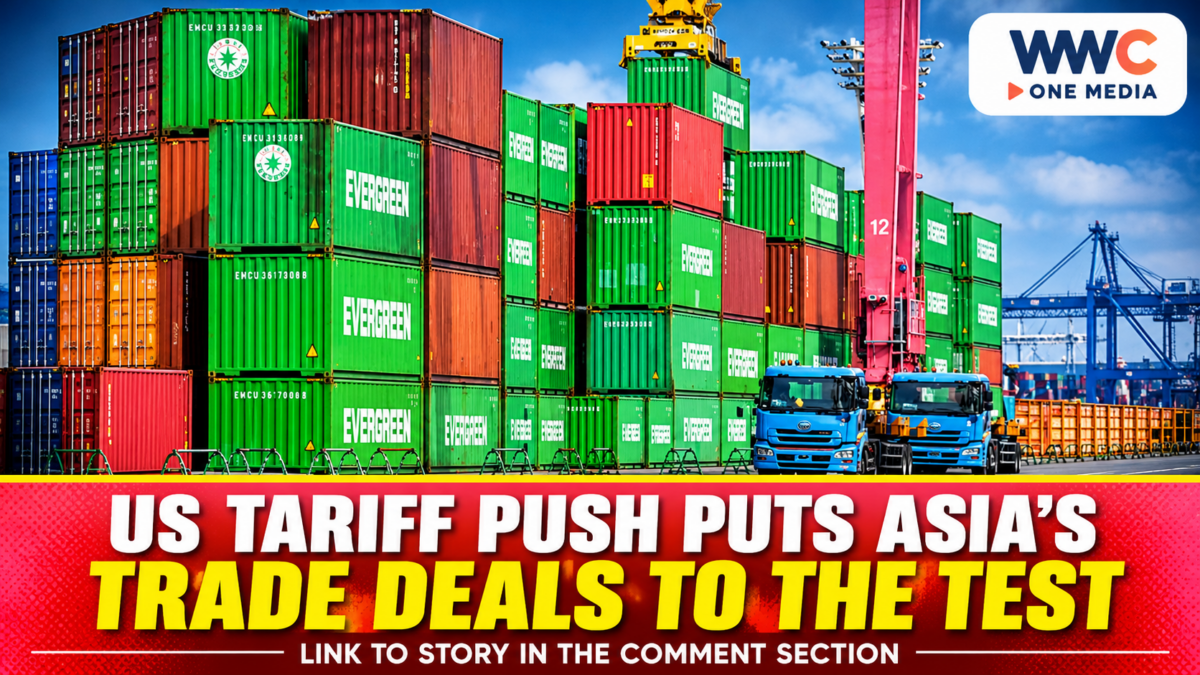
WASHINGTON, Nov. 27, 2026 — US President Donald Trump’s administration has proposed a fresh round of tariffs targeting 14 major trading partners, putting trade agreements across Asia under renewed pressure as governments try to protect export access to the American market.
The proposals follow investigations into what Washington describes as structural excess manufacturing capacity and production in major economies. The US Trade Representative (USTR) has determined that industrial policies in 14 economies burden or restrict US commerce and has proposed additional import duties under Section 301 of the Trade Act of 1974.
But the proposed rates are not final, and they do not affect every trading partner in the same way. Existing agreements, government commitments, product exemptions and ongoing negotiations could determine how much importers eventually pay.
For exporters in Asia, the immediate concern is whether Washington will preserve negotiated tariff arrangements or use the new investigation to seek further concessions.
Fourteen Economies Face New US Trade Pressure
The USTR announced its determinations on Nov. 25, covering China, the European Union, Singapore, Switzerland, Indonesia, Malaysia, Cambodia, Thailand, South Korea, Vietnam, Taiwan, Bangladesh, Japan and India.
The investigations began on March 11, 2026, and initially covered 16 economies. Mexico and Norway were included in the original investigation, but the November announcement said determinations had not been made for those two economies at that time.
Washington’s central argument is that certain industrial strategies, production incentives, financial support and other government policies contribute to manufacturing capacity that exceeds market demand. The administration argues that these practices disadvantage American producers, reduce opportunities for US exports and threaten domestic manufacturing.
China’s case covers a broad range of industries, including steel, batteries, automotive products, semiconductors, telecommunications, solar equipment and consumer electronics. The US assessment also identifies industrial support, state-owned enterprise practices and other policies as concerns.
These are US government findings and allegations under its trade law. They should not be mistaken for a finding accepted by every government targeted by the investigation.
The Philippines is not among the 14 economies covered by the November determinations.
Proposed Tariff Rates Differ Across Asia
The proposed rates show why the new action could have different consequences for regional exporters.
The USTR proposed tariffs of up to 15% for Taiwan, Japan, South Korea, Switzerland and the European Union, calculated without stacking the relevant most-favoured-nation (MFN) duties and existing Section 301 tariffs.
Several Southeast Asian economies face proposals of up to 18%. These include Indonesia, Malaysia, Thailand and Cambodia, while Bangladesh is also in the 18% category.
China and Singapore face proposals of up to 20%, with certain existing duties accounted for under the relevant provisions.
India faces a proposed rate of up to 25%, although the USTR said it would consider an adjustment to 17% if India reached a qualifying reciprocal trade agreement with the United States.
Vietnam faces one of the highest proposed rates, at up to 35%. The USTR said it would consider an adjustment to 20% if Vietnam reached an agreement addressing the findings of the investigation.
These figures are proposed tariff ceilings and possible adjustments, not a final list of duties already collected at US ports. Product-specific exemptions and the treatment of other existing tariffs also matter.
Taiwan Seeks to Protect Its 15% Arrangement
Taiwan is among the economies seeking to preserve a negotiated tariff position.
Vice Premier Cheng Li-chiun said on Nov. 26 that Taipei was confident the final US action would retain the 15% non-stacking arrangement secured through earlier negotiations.
Taiwan’s government said the proposed rate would not be added to the relevant MFN duties or the existing Section 301 tariff related to forced-labour import restrictions. The government also said the proposed treatment placed Taiwan in the same lowest-rate category as Japan, South Korea, the European Union and Switzerland.
The Taiwan-US arrangements include an investment memorandum of understanding and an Agreement on Reciprocal Trade. Taipei says these agreements provide a basis for protecting its industrial competitiveness as Washington reviews its tariff framework.
Taiwan also identified product exemptions in the new investigation, including agricultural and industrial goods. The government said it would continue discussions with Washington to preserve the negotiated terms.
The position is significant for an economy whose exports include semiconductors, information and communications technology products, machinery and other manufactured goods.
Vietnam, India and China Face Different Negotiating Risks
Vietnam’s proposed 35% rate places it under substantial pressure to complete trade negotiations with Washington. The USTR has left open the possibility of a 20% rate if a qualifying agreement is reached.
The US-Vietnam framework announced in October 2025 already provided for a 20% reciprocal tariff rate on Vietnamese-origin goods, alongside preferential market access for US exports to Vietnam. The new proposal makes the status and implementation of those commitments particularly important.
India faces a different challenge. The USTR proposed a rate of up to 25%, with a possible adjustment to 17% if a qualifying reciprocal trade agreement is reached. India and the United States announced a framework for an interim trade agreement in February 2026, but the November proposal shows that further negotiations and commitments remain relevant to the final tariff outcome.
China’s proposed rate is up to 20% under the current arrangements identified by Washington. The USTR’s proposal also accounts for the existing tariff framework and specified product categories. The consequences could change if the broader US-China trade truce or related commitments break down.
For manufacturers, these differences could influence sourcing decisions, investment plans and the relative competitiveness of suppliers in different countries. A company exporting similar products from Vietnam, Malaysia or Taiwan may face different tariff conditions depending on the final measures and the product’s eligibility for exemptions.
What the New Tariffs Could Mean for Regional Trade
The proposals arrive as Asian economies seek to strengthen trade relationships and diversify supply chains.
Governments and companies have increasingly focused on reducing exposure to sudden policy changes, improving customs cooperation and securing more predictable access to major markets. The latest tariff initiative adds another reason for exporters to examine where they manufacture, where they source components and how their products qualify under trade agreements.
The debate also connects with wider regional efforts to improve commercial links. WWC’s coverage of ASEAN, CPTPP and EU trade cooperation examines how economies are pursuing closer trade and supply-chain coordination while Washington considers new restrictions.
The tariff proposals should also be understood in the context of the wider US trade agenda. Earlier coverage of Washington’s tariff discussions with the Philippines and the official record of US-Philippine trade arrangements illustrates why negotiated terms, legal instruments and implementation dates matter more than political announcements alone.
The distinction between a proposal and an implemented tariff is especially important for companies calculating export costs. As explored in WWC’s report on the latest Section 301 tariff proposals, the final product coverage, exemptions and customs rules will determine the actual consequences for businesses.
What Happens Next
The next stage is public consultation and hearings.
The USTR set Jan. 5, 2027, as the deadline for written comments and requests to appear at hearings. The hearings are scheduled to begin on Jan. 25, 2027, and may continue as necessary.
The agency will consider submissions before issuing its final action. Until that process is completed, businesses should not treat the proposed rates as final tariff obligations.
For governments across Asia, the coming weeks will test whether existing agreements and policy commitments are sufficient to preserve negotiated access to the US market.
For exporters, the more immediate task is to assess product-level exposure, verify applicable exemptions and monitor official customs announcements.
The central question is no longer simply which economies face the highest proposed rates. It is whether Washington’s final decisions will reinforce existing trade agreements—or make access to the American market more dependent on further negotiations.
Frequently Asked Questions
Which economies are targeted by the new US tariff proposals?
The 14 economies are China, the European Union, Singapore, Switzerland, Indonesia, Malaysia, Cambodia, Thailand, South Korea, Vietnam, Taiwan, Bangladesh, Japan and India.
Have the proposed tariffs taken effect?
No. The November 25 announcement contains proposed actions under Section 301. Public comments and hearings must take place before the USTR issues its final action.
Which Asian economy faces the highest proposed rate?
Vietnam faces a proposed rate of up to 35%, with a possible adjustment to 20% if it reaches a qualifying agreement with the United States.
What tariff rate is proposed for Taiwan?
The USTR proposed a rate of up to 15%, without stacking the relevant MFN duties and existing Section 301 tariffs, subject to exemptions and the final outcome of the process.
Is the Philippines included in the new investigation?
No. The Philippines was not among the 16 economies initially investigated in March 2026 and was not included in the 14 determinations announced on Nov. 25.
When will the United States hold hearings?
The USTR scheduled hearings to begin on Jan. 25, 2027. Written comments and requests to appear are due Jan. 5, 2027.