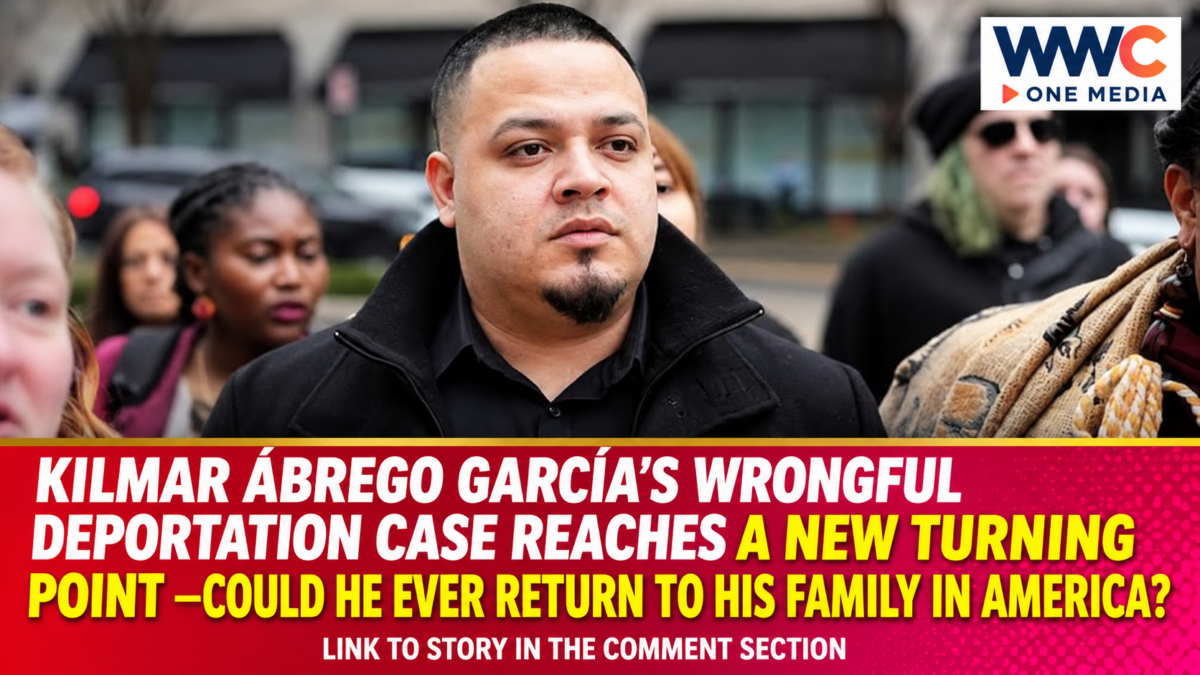
WASHINGTON, UNITED STATES — The prolonged immigration battle involving Salvadoran national Kilmar Armando Ábrego García has reached another significant judicial milestone after a federal court in Maryland ordered the closure of his habeas corpus case on Nov. 25, 2026.
US District Judge Paula Xinis dissolved the injunctions previously imposed in the proceedings and dismissed outstanding motions and remaining claims as moot.
The decision follows more than a year of legal controversy surrounding Ábrego García’s wrongful removal to El Salvador, which prompted intervention by the United States Supreme Court in April 2025.
His latest departure from the United States raises questions about immigration enforcement, the protection of individual rights and the legal obstacles that could determine whether he can eventually return to America.
Kilmar Ábrego García’s deportation violated an existing protection order
The controversy began on March 15, 2025, when American immigration authorities removed Ábrego García from the United States to El Salvador.
He was subsequently detained at El Salvador’s Center for Terrorism Confinement, commonly known as CECOT.
However, an existing withholding order prohibited his removal to that country.
The American government acknowledged before the Supreme Court that the deportation was unlawful and resulted from an administrative error.
The underlying immigration protection dated back to 2019, when an immigration judge determined that Ábrego García faced a substantial risk of persecution in El Salvador.
The case consequently became more than a dispute over immigration status. It raised fundamental questions about the government’s responsibility to comply with existing judicial protections when exercising its immigration enforcement powers.
The vulnerability of individuals navigating foreign legal and administrative systems is also reflected in WWC ONE MEDIA’s coverage of nearly 240 migrant workers in Singapore who experienced prolonged salary delays.
Although the legal circumstances differ significantly, both situations illustrate the importance of accessible institutional remedies when individuals encounter administrative or legal difficulties.
How the US Supreme Court intervened
On April 4, 2025, the US District Court for the District of Maryland issued an order directing the federal government to facilitate and effectuate Ábrego García’s return.
The government subsequently sought emergency relief from the Supreme Court.
On April 10, the country’s highest court granted the government’s application in part and denied it in part.
The Supreme Court determined that the government was required to facilitate Ábrego García’s release from Salvadoran custody and ensure his immigration case was handled as though the wrongful removal had not occurred.
However, it also directed the lower court to clarify the scope of its instructions, particularly considering the executive branch’s authority over foreign affairs.
This distinction is legally important.
The Supreme Court did not grant Ábrego García permanent residency, citizenship or unrestricted protection against every possible future removal proceeding.
Instead, its intervention addressed the consequences of the unlawful removal and the government’s responsibility to restore the appropriate legal process.
Maryland court closes immigration proceedings
The latest development came on Nov. 25, 2026, when Judge Paula Xinis ordered the closure of Ábrego García’s federal habeas corpus case.
The court dissolved its previously imposed injunctions, denied six outstanding motions as moot and dismissed the remaining claims on the same procedural basis.
It also directed that an earlier order dated Nov. 20 be unsealed.
A finding of mootness generally means that a dispute no longer presents a live controversy requiring the requested judicial remedy.
It does not necessarily mean that every allegation made by either party has been accepted or rejected on its merits.
Similarly, closing this particular federal case does not establish that every separate legal proceeding involving Ábrego García has concluded.
For immigration authorities and legal observers, the distinction is important because different judicial proceedings can involve separate claims, remedies and legal consequences.
Does leaving the United States independently prevent a deportation record?
American immigration law distinguishes between the physical circumstances of an individual’s departure and its formal legal classification.
Under Section 1101(g) of Title 8 of the United States Code, an individual who leaves the country while subject to a deportation or removal order can legally be considered removed, regardless of how transportation was arranged or financed.
Consequently, purchasing a commercial airline ticket or travelling without immigration officers does not automatically eliminate the legal consequences of an existing removal order.
The precise implications depend on the relevant immigration decisions and applicable statutory provisions.
This distinction matters when considering whether an individual could subsequently apply for admission to the United States.
Immigration authorities must assess the circumstances of previous departures, existing orders and other applicable eligibility requirements.
The importance of distinguishing regulatory findings from individual circumstances is also evident in Singapore’s legal proceedings concerning an allegedly unauthorised dormitory housing 173 migrant workers.
Could Ábrego García eventually return to America?
The possibility of returning to the United States involves a separate legal question from the earlier wrongful deportation.
Section 1182 of Title 8 establishes various grounds under which individuals may be considered inadmissible to the United States.
These provisions include restrictions associated with previous removal orders and other immigration circumstances.
Certain statutory exceptions and permissions may be available, depending on the individual’s legal situation.
However, establishing whether Ábrego García qualifies for any particular immigration remedy would require a detailed examination of his complete immigration record.
His earlier Supreme Court victory should not be interpreted as guaranteeing future admission.
Likewise, the closure of his Maryland habeas corpus case does not independently establish that returning to the United States will be permanently impossible.
Any future application would have to be assessed under the immigration laws and administrative requirements applicable at that time.
Why cross-border cooperation remains important
The case highlights the intersection between domestic immigration enforcement and international relations.
When individuals are removed from one jurisdiction to another, authorities must consider applicable legal protections, the receiving country’s requirements and the responsibilities established under relevant immigration decisions.
International cooperation also plays an important role in protecting vulnerable individuals from exploitation and ensuring appropriate legal procedures.
Similar cross-border coordination challenges arise in ASEAN’s efforts to address transnational criminal networks and deceptive recruitment.
These are different policy areas, but both demonstrate why international coordination must operate alongside domestic legal safeguards.
What happens next for Ábrego García?
Maryland Senator Chris Van Hollen publicly welcomed Ábrego García’s departure on Nov. 24, describing his ability to travel to a country of his choosing as a victory for due process.
That assessment represents the senator’s political and legal interpretation of the development rather than a new judicial determination.
The next important questions concern Ábrego García’s immigration status outside the United States, the consequences of his departure and whether any future applications for admission will be pursued.
The Maryland court’s November decision closes an important chapter of the litigation.
However, the broader debate surrounding immigration enforcement and compliance with judicial protections remains relevant.
Ultimately, Ábrego García’s experience demonstrates why the lawful exercise of immigration powers must be distinguished from the government’s ability to physically remove someone from its territory.
Frequently asked questions
Why was Kilmar Ábrego García’s original deportation unlawful?
An existing immigration withholding order prohibited his removal to El Salvador. The American government acknowledged before the Supreme Court that his March 15, 2025, removal violated that protection.
What did the US Supreme Court decide?
On April 10, 2025, the Supreme Court determined that the government was required to facilitate his release from Salvadoran custody and restore the appropriate legal process.
What happened to his Maryland court case?
On Nov. 25, 2026, Judge Paula Xinis dissolved existing injunctions, dismissed outstanding claims and motions as moot and directed the closure of the case.
Does an independent departure prevent a removal record?
Not necessarily. American immigration law provides circumstances in which leaving the United States while subject to a removal order constitutes removal regardless of how the journey was arranged.
Can Ábrego García legally return to the United States?
His future eligibility remains dependent on his individual immigration history, applicable admission restrictions and any available legal remedies. A return is not guaranteed.
Legal disclaimer: This article provides general information about immigration law and specific judicial proceedings. It does not constitute personalised legal advice.