HANOI — November 26, 2026. Lithuania’s KN Energies has signed a non-binding term sheet with Vietnam-based Stavian Gas that could give the European terminal operator a minority stake in a company developing an LNG supply station in Khanh Hoa Province.
The proposed investment concerns Stavian Gas Khanh Hoa JSC, developer of the Du Long Industrial Park Central Gas Supply and Filling Station. The transaction is not yet completed: due diligence, definitive agreements and corporate approvals remain outstanding.
The proposed Vietnam LNG project matters because it is designed to deliver regasified liquefied natural gas to industrial users, including customers without access to pipeline gas. If completed to its stated design, the station would add a small-scale distribution link between imported LNG and factories in Vietnam’s south-central region.
But the announcement does not establish a final investment decision, construction timetable, financing package or binding supply contracts.
A proposed minority investment, not a completed acquisition
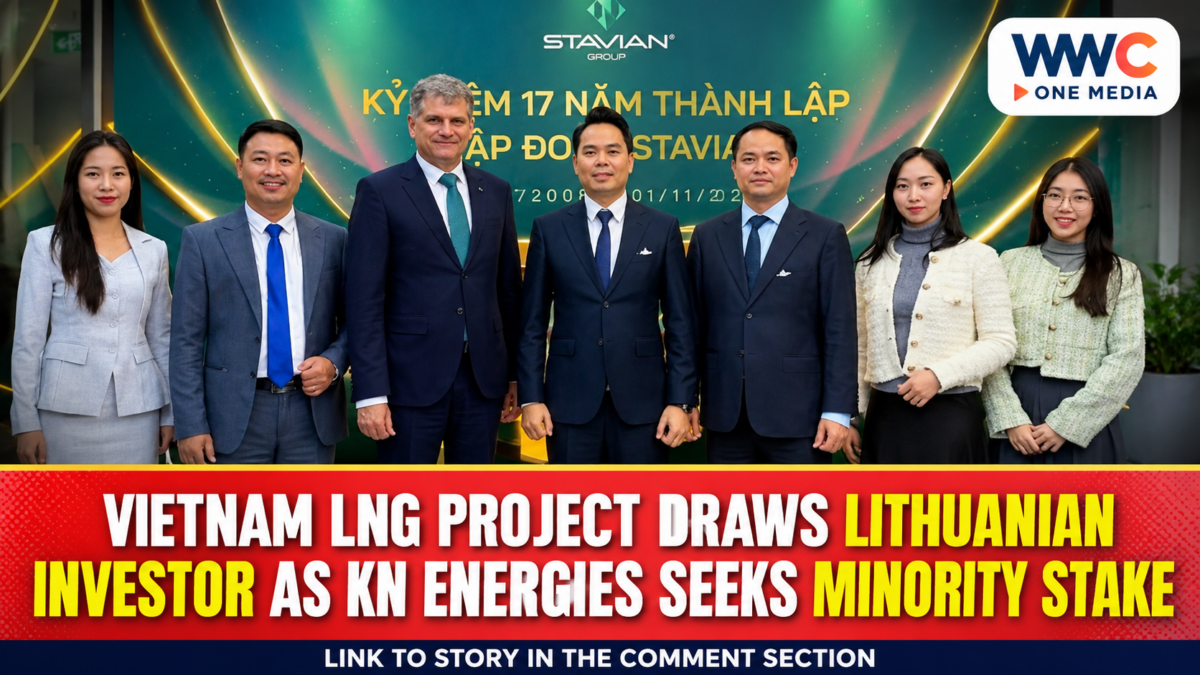
The term sheet was signed in Hanoi on November 25 by KN Energies and Stavian Gas, a member of Stavian Group.
Under its terms, KN Energies would invest through a subsidiary and acquire a minority stake in Stavian Gas Khanh Hoa JSC.
The company described the document as non-binding and made the proposed transaction conditional on further checks and approvals. This distinction matters because a term sheet outlines the direction of a proposed commercial arrangement. It does not constitute a completed share purchase or prove that project financing and construction contracts are already secured.
Neither the proposed ownership percentage nor the financial value of the investment was disclosed. The parties also did not announce a final construction start date or commercial-operation date. KN Energies
How the Du Long LNG station is designed to work
The planned facility is located in Du Long Industrial Park in Khanh Hoa Province. Its stated functions are to receive, store and regasify LNG before supplying gas to industrial customers.
The delivery model is particularly important. Customers without access to pipeline gas would receive LNG through trucks and ISO containers.
This is a form of small-scale LNG distribution. Instead of depending entirely on fixed pipeline networks, specialised containers transport the fuel to industrial users.
The project is planned in three phases and is expected to reach a design capacity of 54,600 tonnes of LNG annually, equivalent to approximately 72 million standard cubic metres of natural gas.
That figure represents the facility’s planned capacity once developed. It does not mean the station is already operating or that its entire output has been contracted.
For industrial parks, this type of infrastructure can expand the range of available fuel options. Its commercial value, however, will depend on actual customer demand, delivered LNG prices, transport costs, supply reliability and the ability to secure long-term customers. KN Energies
What KN Energies and Stavian Gas bring to the partnership
KN Energies is expected to participate as an investor and co-developer.
The company has operated Lithuania’s Klaipėda LNG terminal since 2014 and also runs its LNG reloading station. Its announcement reported that 1,834 LNG trucks were loaded at the facility in 2025.
Beyond Lithuania, the operator has worked on floating storage and regasification unit (FSRU) terminals in Germany, Poland, Italy, Croatia and Brazil.
That experience is relevant to a development combining LNG handling, storage, regasification and road-based distribution.
Stavian Gas, meanwhile, is identified as the project’s sponsor and developer. Its responsibilities include project development, local permitting, commercial operations, customer acquisition and LNG supply.
The proposed arrangement therefore combines KN Energies’ international infrastructure experience with Stavian Gas’ local development and commercial responsibilities.
However, the announcement does not establish that KN Energies will supply all the LNG or that Stavian Gas has already secured every prospective industrial customer. KN Energies
Vietnam’s LNG ambitions move toward commercial partnerships
The proposed investment follows earlier energy cooperation between Lithuania and Vietnam.
In June 2025, the Lithuanian Ministry of Energy announced that the two countries had signed a memorandum of understanding focused on LNG infrastructure, floating terminals, supply chains and the exchange of technical experience.
The ministry also identified KN Energies as an operator interested in opportunities in Vietnam’s LNG terminal management market.
The November 2026 term sheet represents a further commercial step in that relationship. However, the earlier government memorandum should not be interpreted as a guarantee that this particular project would proceed. Lietuvos Respublikos energetikos ministerija
Vietnam’s broader infrastructure development has attracted attention from international investors and energy companies.
WWC ONE MEDIA has previously examined Vietnam’s major energy and infrastructure investment opportunities, including the importance of turning regional energy commitments into functioning infrastructure.
The Philippine market offers another useful comparison. Proposed LNG investments in Aurora demonstrate how developers can announce ambitious capacity targets while still facing feasibility, financing and regulatory requirements.
Likewise, major fuel and pipeline infrastructure proposals illustrate why investment commitments should be distinguished from completed facilities.
These developments involve different markets, but the underlying business question is similar: can proposed energy infrastructure secure financing, customers and the necessary approvals to become operational?
The commercial and environmental questions remain
The Du Long project is presented as an alternative source of energy for industrial customers currently relying on coal and fuel oil.
Natural gas generally produces less carbon dioxide than coal when burned to generate an equivalent amount of energy. However, LNG remains a fossil fuel, and its overall environmental impact also depends on methane leakage, liquefaction, shipping, regasification and final consumption.
From an investment perspective, the immediate challenge is commercial execution.
A facility may have a stated capacity, but it still needs customers willing to purchase gas at prices that cover LNG procurement, storage, regasification, transportation and operating expenses.
The development must also complete the required permitting, engineering and construction processes.
For industrial customers, reliable supply and competitive delivered prices will be as important as the availability of the infrastructure itself.
The proposed partnership could strengthen Vietnam’s industrial gas distribution network, but its eventual contribution will depend on whether the planned investment advances beyond the initial agreement.
What happens next
The immediate milestones are due diligence, negotiation and signing of definitive agreements, and the required corporate approvals.
Further disclosures will be needed to establish the size of KN Energies’ proposed stake, the investment amount, project financing, construction schedule, customer commitments and expected commercial-operation date.
Until those steps are completed, the transaction should be treated as a proposed minority investment and development partnership—not a completed acquisition or an operating LNG station.
For Vietnam’s industrial energy market, the more important milestone will not simply be the signing of another agreement. It will be the conversion of that agreement into infrastructure capable of delivering dependable gas supplies to actual customers.
Frequently asked questions
1. What is the Du Long Central LNG Station?
It is a planned LNG receiving, storage and regasification facility in Du Long Industrial Park, Khanh Hoa Province, Vietnam, intended to supply industrial customers.
2. Which Lithuanian company is investing in Vietnam?
KN Energies, an international LNG and liquid energy terminal operator headquartered in Lithuania, has signed a non-binding term sheet proposing a minority investment.
3. How much LNG can the proposed station handle?
Its planned design capacity is 54,600 tonnes of LNG annually, equivalent to approximately 72 million standard cubic metres of natural gas.
4. Has KN Energies completed its acquisition?
No. The proposed transaction remains subject to due diligence, definitive agreements and corporate approvals.
5. When will the Du Long LNG station begin operations?
The November 25 announcement did not provide a confirmed construction completion or commercial-operation date.