
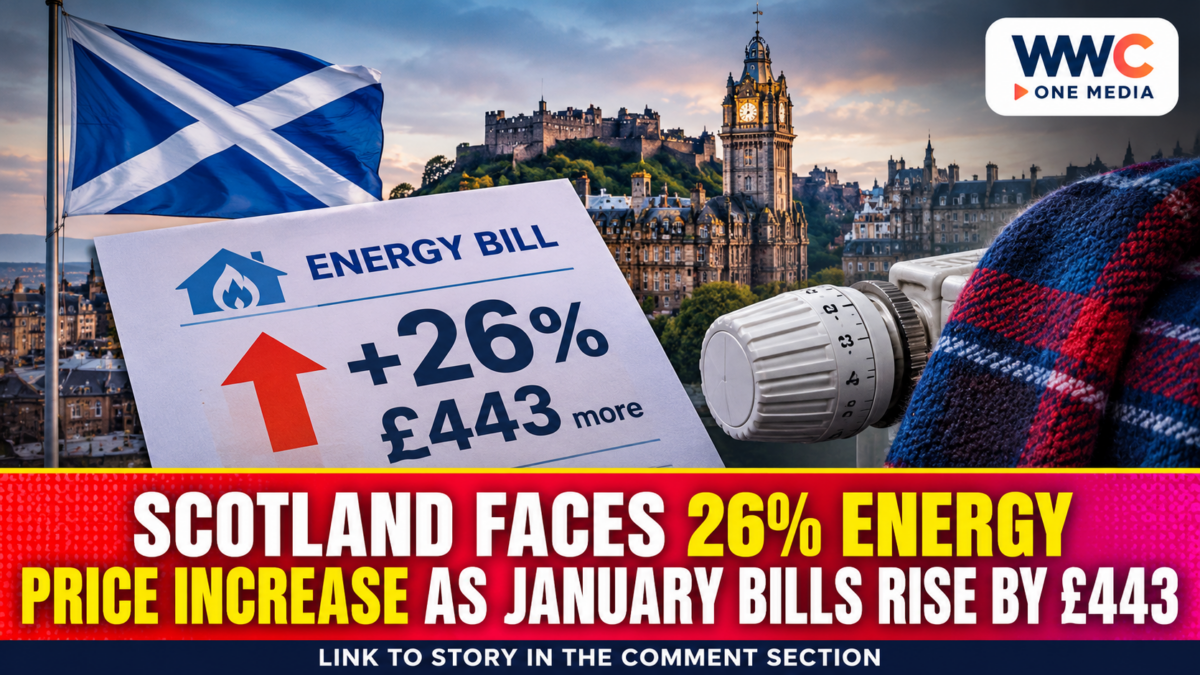
Scottish households are preparing for another increase in energy costs after the UK’s energy regulator confirmed a 26% rise in the energy price cap beginning January 1, 2027, increasing the typical annualised household figure from £1,723 to £2,166.
The adjustment, announced on November 25, will remain in effect until March 31, 2027, placing additional pressure on households heading into the coldest part of winter.
The increase is particularly significant because it comes as households continue to manage elevated living expenses and uncertainty in international energy markets. Although the revised cap does not mean every household will pay the same amount, it establishes higher maximum rates for millions of customers on default energy tariffs.
For Scotland, the announcement also raises questions about the affordability of heating, the adequacy of existing household assistance and the ability of consumers to absorb another increase in essential spending.
Why the energy price cap is increasing
The energy price cap is a regulatory mechanism that limits the unit rates and daily standing charges energy suppliers can impose on customers using default tariffs.
It is not a fixed ceiling on an individual’s total bill. Actual expenditure depends on electricity and gas consumption, payment arrangements, meter type and regional rates.
The new level will apply across England, Scotland and Wales from January through March 2027.
The regulator attributed the increase to continued conflict in the Middle East, which has pushed international wholesale gas prices higher.
Its November 25 announcement also disclosed that gas prices have roughly tripled since the conflict began. Under the new cap, gas bills are increasing by 33% compared with the October–December period, while electricity bills are increasing by 19%. Ofgem+1
This difference reflects the continuing role of gas in electricity generation, even as renewable energy sources account for a growing share of the electricity mix.
The development illustrates how international instability can reach household budgets through energy markets, even when the disruption occurs far from the communities ultimately paying the bills.
What the £2,166 figure means for Scottish households
The £2,166 figure represents an annualised estimate for a typical household using gas and electricity and paying through Direct Debit.
It is not a demand for every household to pay £2,166 during the first three months of 2027.
The actual price cap period covers January 1 to March 31. The annualised figure simply illustrates what the rates would represent over a full year if maintained.
Ofgem’s published figures show the following changes:
| Energy charge | October–December 2026 | January–March 2027 |
|---|---|---|
| Electricity per kWh | 26.32p | 32.69p |
| Electricity standing charge | 54.83p/day | 54.77p/day |
| Gas per kWh | 7.97p | 10.96p |
| Gas standing charge | 29.68p/day | 29.65p/day |
Ofgem
These figures show that the largest adjustments are in the unit rates rather than the daily standing charges.
Consequently, households that consume more energy could experience a greater increase in their actual expenditure.
Customers on fixed-price contracts are generally protected from this particular price-cap adjustment while their existing agreements remain in place.
Ofgem estimates that approximately 20 million households on standard variable tariffs are affected, while around 10 million households on fixed tariffs will not be affected by the increase while their agreements remain active. Ofgem
Scotland’s heating challenge goes beyond electricity
Scotland’s energy affordability problem cannot be understood through electricity and natural gas prices alone.
Some households, particularly those in rural and off-grid communities, depend on heating oil and liquefied petroleum gas (LPG).
These households can face a different set of pressures because they are not necessarily covered by the same pricing arrangements that apply to conventional gas and electricity customers.
The Scottish Government extended its Scottish Emergency Heating Oil Scheme into winter, allowing eligible low-income households and people experiencing financial hardship to continue seeking assistance.
In its September 25 announcement, the government reported that more than 6,700 payments had already been made through the programme. gov.scot
The programme also encourages households to contact Home Energy Scotland for guidance on energy efficiency, heating improvements and available financial assistance.
This distinction matters because a higher electricity price cap does not automatically determine the price of heating oil or LPG.
The different heating arrangements mean that assistance must account for the actual energy sources households use.
The wider economic consequences of expensive energy
Energy prices influence more than household heating budgets.
Electricity and gas are essential inputs for manufacturing, food production, transport-related operations, retail businesses and commercial property.
When energy costs increase, companies may have to decide whether to absorb the additional expense, improve efficiency or adjust the prices of their products and services.
For smaller businesses operating with limited financial flexibility, even a sustained increase in operating expenses can complicate budgeting and investment decisions.
This is also why energy affordability remains an important issue beyond the United Kingdom.
In the Philippines, WWC ONE MEDIA has previously examined how higher electricity and fuel costs contribute to inflation pressures.
Separate coverage has explored the effect of regulatory electricity charges on Filipino consumers.
WWC has also reported on electricity market interventions and the challenge of controlling power costs.
Although these developments involve different regulatory systems, they demonstrate a common economic concern: electricity affordability affects households, businesses and the broader cost of living.
Government assistance faces an important test
Alongside the price-cap announcement, Ofgem disclosed that approximately 20 million households would receive £100 towards their energy bills beginning in January.
This assistance is intended to provide some relief as the higher rates take effect. However, the announcement does not mean the price increase has been cancelled or that every household’s additional expenditure will be fully covered. Ofgem
The regulator has also reminded energy suppliers of their responsibility to identify customers experiencing payment difficulties and provide appropriate support.
This includes making repayment arrangements affordable and sustainable.
Ofgem has encouraged customers struggling with their bills to contact their suppliers rather than allow payment problems to accumulate.
The effectiveness of these measures will depend on how easily eligible households can access assistance and whether the support is sufficient relative to their actual energy consumption.
What happens next
The new price cap takes effect on January 1, 2027, and remains applicable through March 31.
Households should review their current tariff arrangements, understand their consumption and contact their suppliers if they anticipate difficulty paying their bills.
The next scheduled announcement on the energy price cap is February 23, 2027, when Ofgem is expected to publish the level for April through June.
That review will provide another indication of whether international wholesale energy costs are easing or continuing to place pressure on household budgets.
For Scotland, the immediate challenge is clear: maintaining access to affordable heating while the cost of supplying energy remains exposed to international developments.
The coming winter will test not only household financial resilience but also the effectiveness of the support systems intended to protect consumers.
Frequently asked questions
1. When will energy prices increase in Scotland?
The new energy price cap takes effect on January 1, 2027, and runs until March 31, 2027.
2. How much will the typical annualised energy bill increase?
The typical annualised figure will rise from £1,723 to £2,166, an increase of £443 or approximately 26%.
3. Will every Scottish household pay £2,166?
No. The figure is an annualised estimate for typical consumption. Actual bills depend on energy usage, tariff arrangements, meter type and location.
4. Are customers on fixed energy tariffs affected?
Customers on fixed-price tariffs are generally not affected by this particular increase while their existing fixed-price agreements remain active.
5. What assistance is available to Scottish households?
Ofgem announced £100 towards energy bills for approximately 20 million households from January. Separately, eligible households experiencing heating oil or LPG hardship can seek assistance through the Scottish Emergency Heating Oil Scheme.










