WASHINGTON, United States — Congressional scrutiny of the Trump administration’s involvement in Nvidia’s leadership crisis is intensifying after Democratic lawmakers formally requested an explanation of the circumstances surrounding Jensen Huang’s return as chief executive of the artificial intelligence chipmaker.
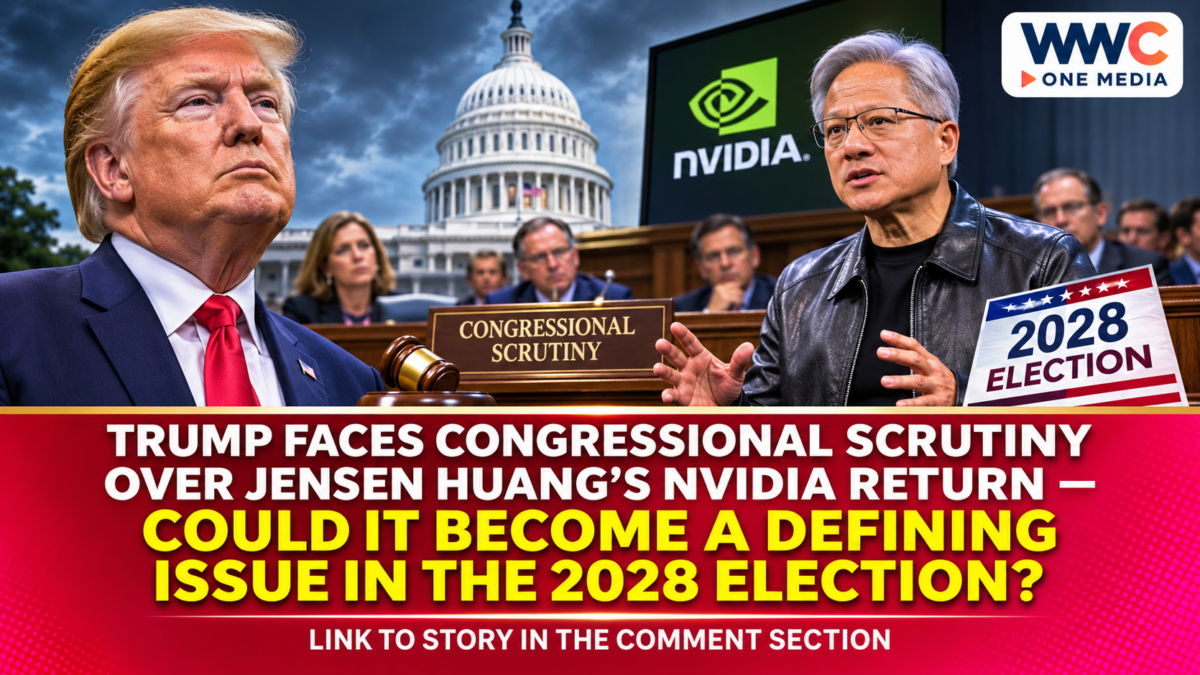
On November 24, 2026, four senior House Democrats sent President Donald Trump a letter seeking information about communications between administration officials and Nvidia’s board, alongside questions concerning national security safeguards.
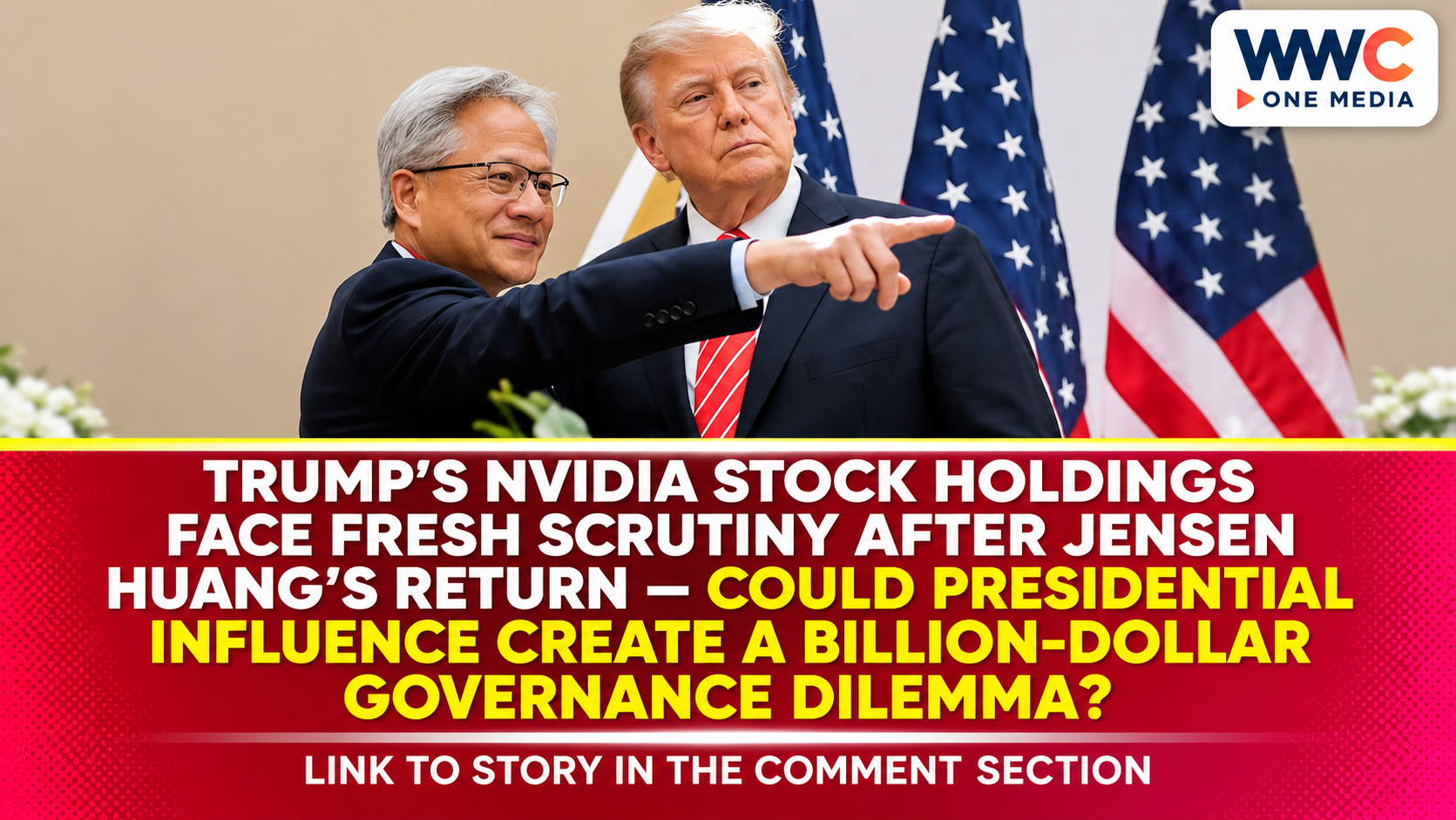
The congressional action follows Nvidia’s announcement that its directors unanimously reinstated Huang after receiving input from senior levels of the US government.
While the company’s decision restores leadership continuity, it also raises a wider political question concerning the relationship between Washington and America’s most influential technology businesses.
Could government involvement in corporate leadership decisions become a significant accountability issue ahead of the 2028 presidential election?
Trump Nvidia Congressional Scrutiny: Democrats Demand Answers
The November 24 letter was signed by four Democratic ranking members representing influential committees in the US House of Representatives.
| Lawmaker | Congressional committee |
|---|---|
| Frank Pallone Jr. | Energy and Commerce |
| Jamie Raskin | Judiciary |
| Gregory Meeks | Foreign Affairs |
| Robert Garcia | Oversight and Government Reform |
The lawmakers requested responses by December 8, including records of communications involving the administration and Nvidia’s directors.
Their questions address the government’s knowledge of potential security concerns, actions taken to protect national interests and the circumstances surrounding Huang’s reinstatement.
They also sought clarification regarding his involvement in the President’s Council of Advisors on Science and Technology.
The letter represents a formal congressional oversight initiative rather than a judicial determination that Trump, Huang or Nvidia engaged in unlawful conduct.
That distinction remains essential as the controversy becomes increasingly intertwined with American politics.
Nvidia Confirms US Government Input in Leadership Decision
Nvidia’s regulatory filing establishes November 22 as the effective date of Huang’s reinstatement as president, chief executive officer and board director.
The company announced the decision publicly on November 23.
Nvidia’s accompanying statement confirms that directors received input from senior US government officials during their deliberations.
The board expressed confidence that Huang’s reinstatement did not pose a national security risk.
However, the available corporate announcement does not disclose the complete contents of those government communications or independently establish the degree of influence exercised by individual administration officials.
The distinction between reinstating a corporate executive and completing an investigation has previously been examined in WWC ONE MEDIA’s coverage of Nvidia’s restoration of Jensen Huang and its continuing compliance responsibilities.
For Nvidia’s shareholders, the leadership decision may provide operational continuity.
For congressional investigators, the process leading to that decision remains a separate matter requiring examination.
Why the Nvidia Controversy Could Become a 2028 Election Issue
The political significance of the controversy extends beyond the personal circumstances surrounding Nvidia’s chief executive.
It raises broader questions about corporate independence, executive influence and the treatment of strategically important businesses.
Democratic lawmakers could use the congressional inquiry to examine whether the administration applied appropriate standards when communicating with Nvidia’s board.
Supporters of government involvement, meanwhile, could argue that maintaining stable leadership at a strategically important technology company serves legitimate economic and national security interests.
These competing perspectives reflect an important policy debate.
Should governments actively support the leadership stability of businesses considered essential to national competitiveness, or should corporate directors operate without direct political involvement?
The answer may depend on the circumstances, the transparency of government communications and whether decisions remain consistent with applicable legal and regulatory requirements.
As the United States approaches the next presidential election cycle, the controversy could contribute to a broader debate about the relationship between political authority and corporate power.
However, there is insufficient evidence to determine how the issue will influence voters in 2028.
Nvidia’s US$115.8 Billion Quarter Explains the Economic Stakes
The political attention surrounding Nvidia comes against the backdrop of extraordinary commercial growth.
On November 17, the company announced financial results for the third quarter of fiscal 2027, which ended October 25, 2026.
| Financial indicator | Reported result |
|---|---|
| Quarterly revenue | US$115.8 billion |
| Annual revenue growth | 103% |
| Quarterly revenue growth | 20% |
| Data centre revenue | US$107.6 billion |
| Annual data centre revenue growth | 110% |
| GAAP gross margin | 74.8% |
| GAAP diluted earnings per share | US$2.70 |
Data centre operations accounted for approximately 93% of total quarterly revenue.
The figures illustrate Nvidia’s substantial commercial exposure to artificial intelligence infrastructure development.
For Washington, the company’s economic importance creates a complicated policy environment in which industrial competitiveness, national security and corporate accountability intersect.
Nevertheless, strong financial performance does not independently establish that government involvement in a particular corporate decision was appropriate.
Likewise, congressional scrutiny does not invalidate the company’s reported financial achievements.
The economic risks associated with Nvidia’s expanding commercial relationships have also been examined in WWC ONE MEDIA’s analysis of its AI infrastructure financing guarantees.
National Security and AI Export Controls Remain Central Concerns
Nvidia’s leadership controversy is unfolding alongside continuing examination of US semiconductor export controls.
The Senate Committee on Banking, Housing, and Urban Affairs has scheduled a public hearing for December 3, 2026.
The hearing, titled Protecting America’s AI Advantage: Oversight of U.S. Export Controls, lists Huang as its scheduled witness.
The proceedings could provide an opportunity for lawmakers to examine the relationship between semiconductor exports, technological competitiveness and national security.
Further context concerning Nvidia’s congressional scrutiny and upcoming Senate hearing has previously been examined by WWC ONE MEDIA.
For businesses operating across the Asia-Pacific semiconductor ecosystem, the debate has potential commercial implications.
Changes in American export-control requirements could influence market access, investment decisions and international supply-chain planning.
However, the scheduled hearing does not establish that new restrictions will necessarily be introduced.
Its significance will depend on the evidence presented and any subsequent legislative or regulatory decisions.
Nvidia’s Independent Investigation Is Still Ongoing
Despite restoring Huang to his executive responsibilities, Nvidia has not announced the conclusion of its independent investigation.
A committee consisting exclusively of independent directors has retained independent legal counsel to examine previously disclosed foreign-intelligence concerns.
The company also announced additional board-level oversight of national security and trade compliance risks.
Nvidia intends to establish a chief compliance officer position responsible for overseeing compliance across the organisation.
These measures could strengthen corporate accountability if implemented effectively.
However, establishing new oversight structures is not equivalent to demonstrating that every outstanding concern has been resolved.
For investors, regulators and lawmakers, the eventual findings and the company’s response will be more informative than the leadership announcement alone.
What Happens Next for Trump, Nvidia and Congress?
Two important dates now stand out in the developing controversy.
Huang is scheduled to appear before the Senate Banking Committee on December 3, while House Democratic committee leaders have requested presidential responses by December 8.
The proceedings concern related but distinct matters: semiconductor export oversight and the administration’s role in Nvidia’s leadership decision.
Future disclosures could clarify the government’s involvement, the basis for its security assessments and the effectiveness of Nvidia’s internal safeguards.
The controversy presents a broader test of how the United States manages relationships with economically significant technology companies.
Protecting industrial competitiveness and ensuring corporate accountability need not be mutually exclusive objectives.
Whether the Nvidia controversy becomes a lasting political issue in 2028 will depend on subsequent evidence, policy decisions and public reaction.
For now, the immediate question is whether Washington and Nvidia can provide sufficient transparency to resolve the outstanding concerns.
Frequently Asked Questions
Why are House Democrats questioning Trump over Nvidia?
Four Democratic committee leaders requested information about the administration’s communications with Nvidia’s board and its handling of national security concerns surrounding Jensen Huang.
When was Jensen Huang reinstated as Nvidia CEO?
His reinstatement took effect on November 22, 2026, and was publicly announced on November 23.
Has Nvidia completed its independent investigation?
No. The company’s November 23 announcement confirms that the independent investigation will continue.
When will Jensen Huang testify before the US Senate?
Huang is scheduled to appear before the Senate Banking Committee on December 3, 2026, at 10 a.m. Washington time.
Could the Nvidia controversy affect the 2028 US presidential election?
It could become part of a broader debate over corporate influence, national security and government accountability. Its actual electoral impact remains unknown.