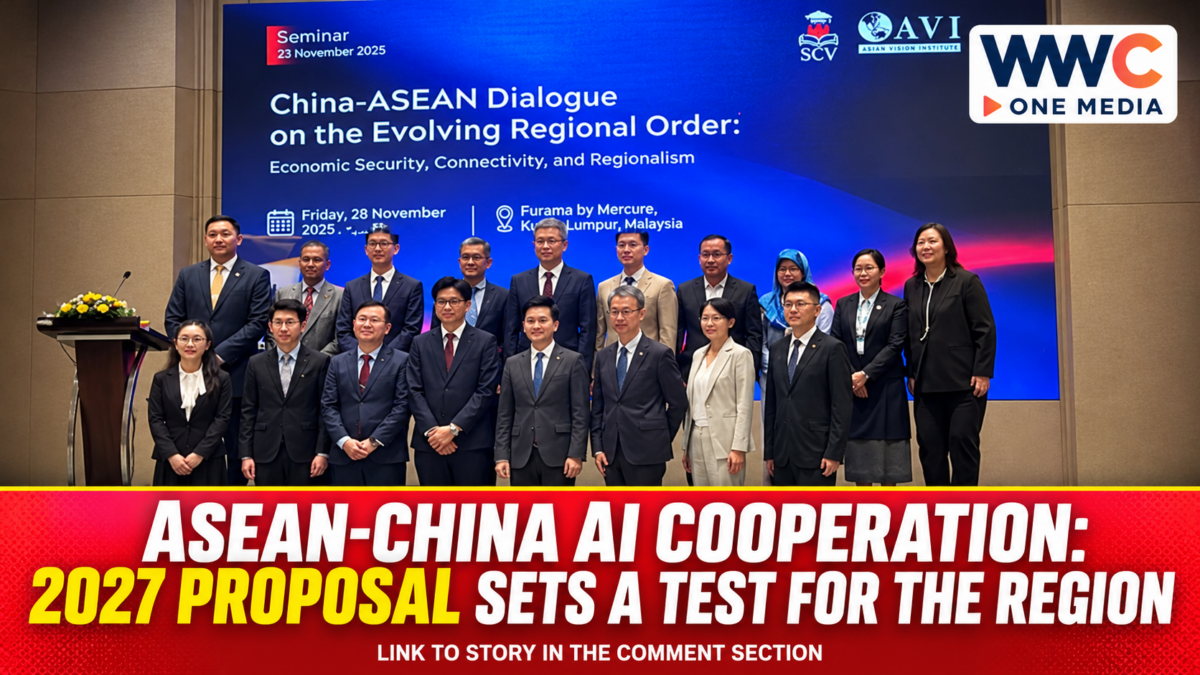
ASEAN member states and China have welcomed a proposal to designate 2027 as the ASEAN-China Year of AI Cooperation, placing artificial intelligence more firmly on the region’s diplomatic and economic agenda. The proposal appears in a joint statement adopted at the 29th ASEAN-China Summit in Manila on November 16, 2026.
The statement goes beyond a general expression of interest in technology. It identifies cooperation on AI safety and governance, technical capacity-building, digital skills, cybersecurity and the digital transformation of micro, small and medium-sized enterprises (MSMEs). For Southeast Asian economies, the challenge will be turning those commitments into practical opportunities without weakening safeguards over data, security and responsible use.
ASEAN-China AI cooperation moves from dialogue to implementation
The proposed 2027 designation is part of a wider effort to deepen the ASEAN-China Comprehensive Strategic Partnership. The joint statement recognises artificial intelligence as an area where both sides intend to expand cooperation, while also acknowledging the importance of national policies and regulations.
Its wording is important. ASEAN and China welcomed China’s proposal to designate 2027 as the cooperation year; the statement does not itself announce a detailed calendar of activities, a regional funding allocation or binding targets for AI adoption.
That distinction separates a political commitment from its eventual implementation. A designated cooperation year can provide a framework for meetings, exchanges, technical programmes and joint projects. Its value, however, will depend on what governments, institutions and businesses actually deliver.
The broader partnership already has a five-year implementation framework. The ASEAN-China Plan of Action for 2026–2030 includes a dedicated section on digital and artificial intelligence cooperation. It calls for policy dialogue on AI governance, research and capacity-building, stronger digital infrastructure and cooperation on technology security.
The proposed 2027 year would therefore build on an existing programme rather than start regional AI cooperation from zero.
What the joint statement actually puts on the table
The November 16 statement identifies several areas for closer cooperation.
These include technical support for AI adoption, practical applications of the technology, digital connectivity, cybersecurity, digital skills, responsible AI and the digital transformation of smaller businesses. It also calls for cooperation to narrow the digital and AI divide, particularly in ASEAN member states requiring greater support.
The document recognises China’s efforts to establish three regional initiatives: the ASEAN-China AI Application Cooperation Centre, the ASEAN-China AI Collaborative Innovation Centre and the ASEAN-China AI Industry Innovation Centre.
It also welcomes China’s effort to initiate and establish the World Artificial Intelligence Cooperation Organisation, or WAICO. The statement says interested ASEAN member states have joined or are considering joining the organisation.
These references establish that the partnership is not limited to diplomatic discussions. It includes institutional and technical initiatives intended to support cooperation. However, the statement does not provide a full operating plan, funding details or measurable deliverables for each centre.
For businesses and universities, those details will matter more than the names of the institutions. They will determine whether cooperation results in accessible training, research partnerships, technical assistance or opportunities to test AI applications.
AI governance remains part of the agreement
The joint statement does not treat faster AI adoption as the only objective. It specifically includes AI safety and governance, with development to proceed in line with each side’s national policies and regulations and the ASEAN Guide on AI Governance and Ethics where applicable.
That reference is significant because AI systems can affect personal information, employment decisions, financial services, public administration and the reliability of information people receive.
ASEAN’s 2024 AI governance guide provides voluntary recommendations for organisations designing, developing and deploying AI systems. It promotes alignment across regional frameworks and encourages organisations to assess risks and manage AI responsibly.
In practical terms, regional cooperation will need to address questions such as how organisations handle personal data, how automated decisions are explained, how cybersecurity risks are managed and who remains accountable when an AI system produces harmful or inaccurate results.
The governance issue is not a reason to stop innovation. It is part of making adoption more reliable. Businesses that use AI without clear oversight may create new operational and reputational risks even when the technology improves productivity.
What the proposal could mean for Philippine businesses
The Philippines is part of the ASEAN-wide framework, so the proposed cooperation year could create opportunities for local companies, universities and technology professionals if programmes become accessible across member states.
For smaller businesses, practical applications could include customer support, document processing, inventory management, product research and digital marketing. But access to tools is only one part of adoption. Enterprises also need workers who can use them, reliable internet and computing infrastructure, secure data practices and the ability to check AI-generated output.
WWC has examined the local readiness question in its report on the Philippines’ position in global digital and AI competitiveness. The issue is not simply whether businesses can obtain AI tools, but whether they have the skills and infrastructure to use them effectively.
Regional digital integration is another part of the picture. The ASEAN Digital Economy Framework Agreement, signed in Manila in November 2026, covers areas including digital trade, cross-border data flows, electronic payments and cybersecurity. WWC’s report on the ASEAN digital pact and its potential implications for Filipino businesses examines how shared digital rules could support regional commerce.
The AI cooperation proposal and the digital economy framework are separate initiatives, but they point toward a common regional challenge: making digital systems more connected while maintaining trust and security.
The infrastructure and skills gap cannot be ignored
AI development depends on more than software. It requires computing capacity, data infrastructure, electricity, cybersecurity and people with the technical skills to build, operate and evaluate systems.
That makes cooperation on digital connectivity and capacity-building particularly relevant to countries seeking to expand their technology industries.
The Philippines also needs to consider whether local infrastructure can support more demanding AI workloads. WWC has previously examined the role of domestic data centres, fibre networks and cloud services in its report on Converge’s digital infrastructure expansion and the growth of AI demand.
The regional statement does not promise that China or ASEAN will finance specific Philippine data centres, provide free AI systems or guarantee new technology jobs. Those outcomes would require separate projects, agreements and investment decisions.
For Philippine policymakers, the opportunity is to connect regional cooperation with domestic priorities: digital skills, research capacity, cybersecurity, infrastructure and support for smaller enterprises.
What happens next
The next stage will be the development of activities under the 2026–2030 ASEAN-China action plan and the annual digital cooperation work programme referenced in the joint statement.
Governments and relevant sectoral bodies will need to translate the broad commitments into specific programmes, timelines and responsibilities. Businesses, universities and training institutions will need clear information about participation, eligibility and available support.
The proposed 2027 cooperation year gives ASEAN and China a visible platform for advancing AI collaboration. But the real measure will not be the number of conferences or announcements. It will be whether cooperation improves technical capability, expands access to useful applications, supports responsible innovation and helps narrow differences in digital readiness across the region.
For the Philippines, the opportunity is substantial, but it is not automatic. The country will need to build the skills, infrastructure and governance capacity to turn regional commitments into practical gains.
Frequently asked questions
What is the ASEAN-China Year of AI Cooperation?
It is China’s proposal to designate 2027 as a year for closer cooperation between ASEAN and China on artificial intelligence. ASEAN and China welcomed the proposal in their November 16, 2026 joint statement.
Has ASEAN officially declared 2027 the AI cooperation year?
The joint statement welcomes China’s proposal to designate 2027 for this purpose. It does not provide a detailed programme or implementation calendar for the proposed year.
What areas will ASEAN and China focus on?
The joint statement identifies AI safety and governance, technical cooperation, AI adoption, digital skills, cybersecurity, digital connectivity and the digital transformation of MSMEs.
What could the proposal mean for Philippine businesses?
It could create opportunities for technical cooperation, training, research and AI adoption. Actual benefits will depend on future programmes, eligibility rules, infrastructure and implementation.
Does the agreement require ASEAN countries to use Chinese AI systems?
The joint statement does not require ASEAN member states or businesses to adopt Chinese AI products. It refers to cooperation in line with each side’s national policies and regulations and the ASEAN AI governance guide where applicable.