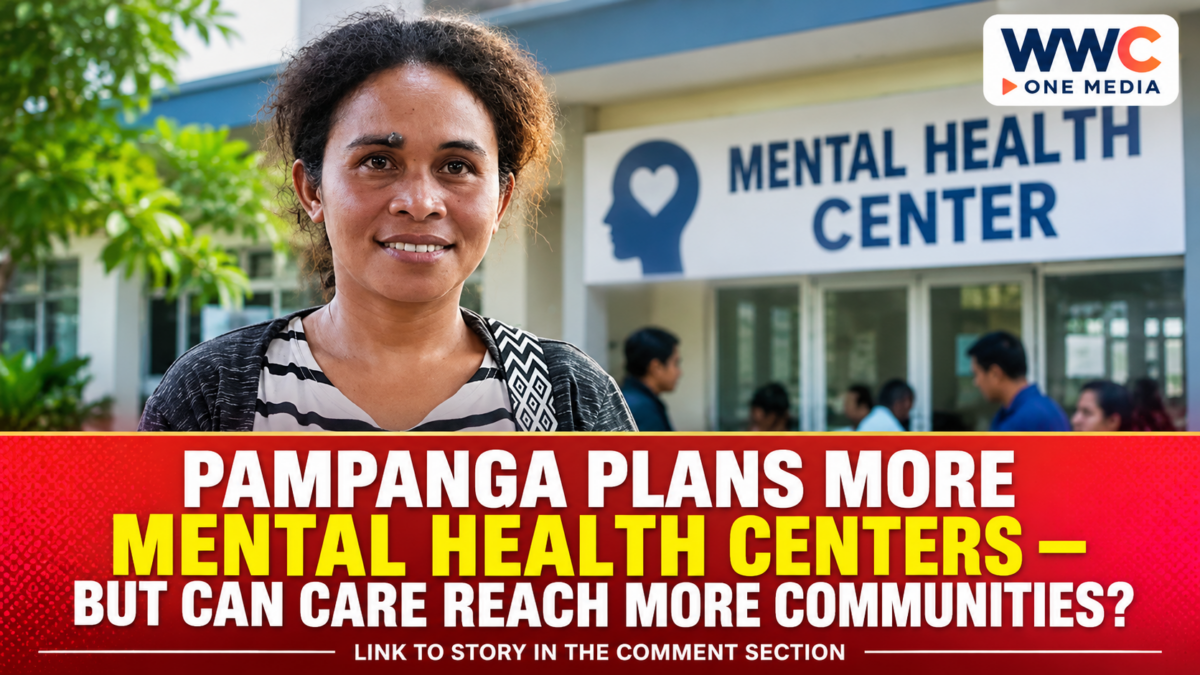
CITY OF SAN FERNANDO, Pampanga — The provincial government is planning to expand its mental-health care network beyond the Provincial Care and Counseling Center in San Fernando, with additional district-based facilities proposed for Pampanga’s second and fourth districts.
The plan follows the opening of the provincial center in June 2026, as local and national health agencies continue efforts to make counseling, psychiatric services and other forms of support more accessible to communities.
The expansion matters because access to mental-health care involves more than establishing a facility. Residents also need clear referral channels, trained health workers, available treatment and consistent follow-up—particularly in communities far from specialized services.
Pampanga mental health services look beyond the provincial center
The Provincial Care and Counseling Center was inaugurated on June 30, 2026, in Barangay Sindalan, City of San Fernando. It was established through cooperation between the provincial government and national agencies, including the Department of Health, Department of Social Welfare and Development, Department of Education and Department of Labor and Employment.
The center is designed to provide several forms of assistance in one location. Its services include psychiatric consultations, psychotherapy and counseling, social-welfare support, legal assistance and livelihood-related interventions.
The arrangement brings together services that are often handled by separate government offices. For residents seeking help, this can provide a more coordinated starting point for assessment, referral and support.
Pampanga State University also took part in the center’s establishment, reflecting the role educational institutions can play in connecting young people and families with available services.
The center is not limited to one type of intervention. Its structure recognizes that people experiencing mental-health concerns may also need social assistance, protection or support within their families and communities.
Why the proposed district rollout matters
In September, Governor Lilia Pineda discussed establishing additional care centers in the province’s second and fourth districts to complement the existing facility in San Fernando.
The proposed rollout is intended to bring services closer to residents who may find it difficult to travel to the provincial capital. The governor also identified students referred by the Department of Education as an initial priority for intervention.
The proposal is significant because geographic access can affect whether people seek help in the first place. A service may exist at the provincial level, but distance, transportation costs, limited information and referral requirements can still make it difficult for families to use.
District-based facilities could help address some of those barriers if they are supported by qualified personnel, reliable referral arrangements and sufficient resources.
However, the September announcement describes a plan. It does not establish that the additional district centers have already opened or that they are currently accepting clients.
That distinction is important for residents who may be looking for an operating facility. Until the provincial government announces confirmed locations and opening arrangements, the existing San Fernando center remains the facility identified in the public information reviewed for this report.
DOH Central Luzon focuses on training and treatment access
Expanding facilities is only one part of improving mental-health services. Frontline health workers also need the skills to recognize concerns, provide initial support and determine when a patient requires specialized care.
The Department of Health Central Luzon Center for Health Development has described its use of the Mental Health Gap Action Programme, which trains doctors, nurses and rural health-unit personnel to identify, assess and manage common mental-health conditions.
The approach is intended to strengthen the role of local health facilities in early intervention and appropriate referrals. It also supports efforts to make mental-health care part of primary healthcare rather than treating it as a service available only through specialized institutions.
The regional health office has also discussed improving access to mental-health medicines in selected health centers. This is relevant because treatment continuity can depend on whether patients can obtain prescribed medicines and return for follow-up care.
For Pampanga, coordination between provincial facilities and local health units could help connect residents to different levels of care. A district center, for example, would be more useful if it had established referral links with hospitals and qualified health professionals.
The challenge is continuity, not just the number of facilities
The expansion proposal raises a broader question: how will the province ensure that residents receive sustained care after their first consultation?
A counseling session or initial assessment may be an important first step, but some individuals need continued appointments, medication monitoring, specialist referrals or assistance from social-welfare offices.
The provincial center’s multi-agency structure provides a foundation for coordinated support. Still, the effectiveness of the approach will depend on implementation, staffing, funding and the ability of participating agencies to maintain services over time.
The public will also need practical information: where to seek help, which residents can access the services, what documents or referrals are required, and whether consultations are free or subject to specific conditions.
These details can make the difference between a program that exists on paper and one that people can actually use.
WWC has previously examined the national challenge of training more health workers for mental-health care. The issue is relevant at the provincial level because additional facilities need qualified people to operate them and provide appropriate care.
Demand for accessible support is also part of a wider national conversation. WWC’s report on the increase in calls to the NCMH crisis hotline examined the importance of services that people can reach when they need assistance.
Other local initiatives have highlighted the role of community participation. In Iloilo, youth frontliners were mobilized to help address suicide risks, illustrating a different approach to connecting young people with support and prevention efforts.
What happens next
The next measurable step for Pampanga is to clarify the implementation of its proposed second- and fourth-district centers.
Residents would benefit from an official announcement identifying the planned locations, construction or operational timelines, staffing arrangements, available services and referral procedures.
The province could also strengthen public communication by explaining how families can access the existing Provincial Care and Counseling Center and which partner offices handle specific concerns.
For the DOH and local health facilities, continued training and reliable access to treatment remain important parts of the wider service network.
Pampanga has established a provincial facility and announced plans to extend its reach. Whether that becomes a dependable province-wide support system will depend on how consistently the plans are carried out and how easily residents can access care.
Frequently asked questions
1. Where is Pampanga’s Provincial Care and Counseling Center?
The center was inaugurated in Barangay Sindalan, City of San Fernando, Pampanga, on June 30, 2026.
2. What services does the Pampanga care center provide?
The center’s identified services include psychiatric consultations, psychotherapy and counseling, social-welfare assistance, legal support and livelihood-related interventions through participating agencies.
3. Will Pampanga open more mental-health centers?
Governor Lilia Pineda announced plans to establish additional care centers in the province’s second and fourth districts. The announcement reviewed for this report does not confirm that those additional facilities are already operating.
4. How can families seek mental-health assistance in Pampanga?
The provincial information on the center identifies referrals through school counselors, mental-health offices in public and private higher education institutions, and barangay social workers. Families should confirm current procedures and availability with the provincial government or the center before visiting.
5. What is the DOH doing to improve mental-health care in Central Luzon?
The DOH Central Luzon Center for Health Development has described training programs for doctors, nurses and rural health-unit personnel, alongside efforts to improve access to treatment and medicines in selected health centers.