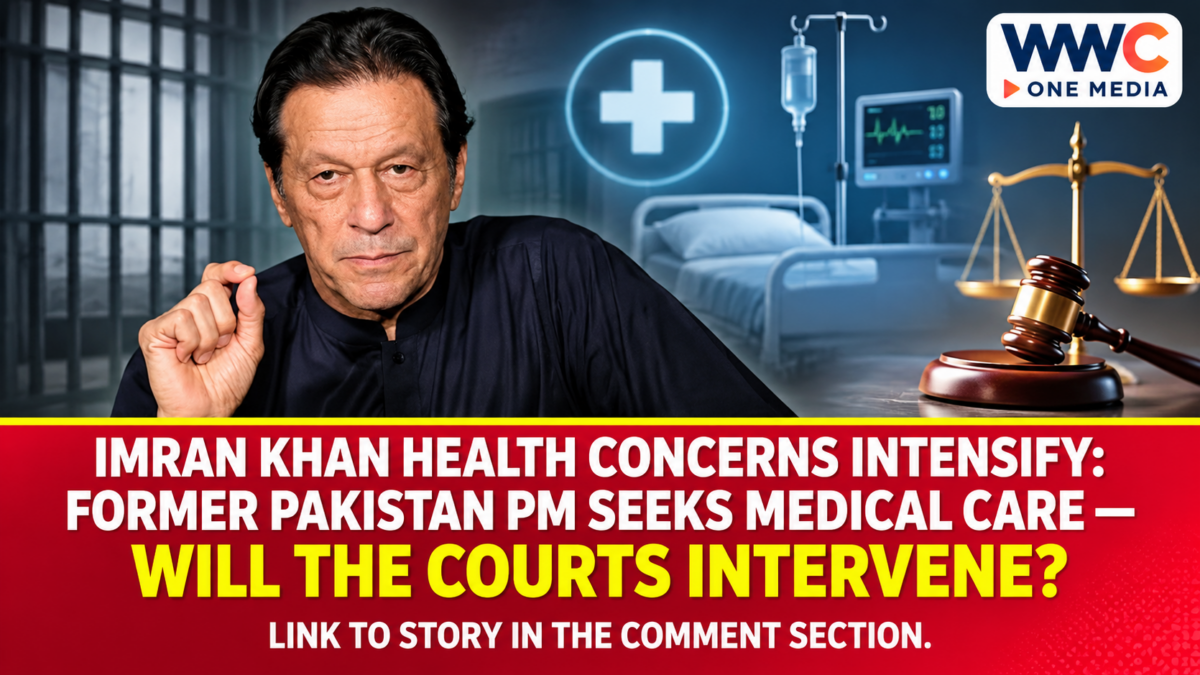
ISLAMABAD, PAKISTAN — Concerns surrounding the health of imprisoned former Pakistani Prime Minister Imran Khan have placed renewed attention on access to specialist medical treatment, judicial oversight and the rights of individuals in detention.
An announcement published through Khan’s official social media account on Nov. 16, 2026, disclosed an appeal addressed to Pakistan’s judiciary. The communication was prepared by his lawyer, Barrister Salman Safdar, following a meeting at Adiala Jail on Nov. 11.
The appeal comes against a backdrop of longstanding international concern about Khan’s detention conditions and access to healthcare.
While the full extent of his current medical condition has not been independently established, the controversy raises an important question: how can Pakistan ensure that medical decisions involving high-profile prisoners are guided by clinical necessity?
Imran Khan Health Concerns Renew Scrutiny of Prison Conditions
The latest appeal brings the relationship between healthcare and judicial responsibility back into focus.
Khan’s detention at Adiala Jail in Rawalpindi has previously attracted scrutiny from international human rights mechanisms.
A United Nations communication dated December 2025 documented allegations concerning prolonged solitary confinement and detention conditions that potentially fell below international standards.
These allegations should be distinguished from independently established clinical findings.
In June 2026, the United Nations Committee against Torture also expressed concerns about the circumstances of several individuals detained in Pakistan, including Khan and his wife, Bushra Bibi.
The committee recommended reviewing their circumstances and ensuring access to adequate healthcare during detention.
WWC ONE MEDIA previously covered Imran Khan’s August hospital transfer and subsequent return to prison, highlighting the continuing debate surrounding independent medical assessments.
The renewed appeal illustrates why the adequacy of medical treatment remains an important issue requiring reliable documentation rather than political speculation.
Why Uncontrolled Blood Pressure Can Threaten Heart Health
Hypertension, commonly known as high blood pressure, is a potentially serious medical condition that can damage vital organs when inadequately managed.
Persistent elevation in blood pressure increases cardiovascular strain and can contribute to heart disease, stroke and kidney complications.
However, high blood pressure alone does not establish that permanent cardiac damage has occurred.
Assessing an individual patient’s condition requires appropriate clinical examinations, consideration of medical history and diagnostic testing where necessary.
It is also important to distinguish between a warning about potential complications and a confirmed diagnosis of existing organ damage.
In Khan’s case, a complete, independently verified cardiac assessment would be necessary before definitive conclusions could be drawn about his current heart function.
The broader importance of prevention and monitoring has also been examined in WWC’s coverage of cardiovascular disease risk and early heart-health interventions.
Hypertension Remains a Major Global Health Challenge
An estimated 1.4 billion adults aged 30 to 79 were living with hypertension worldwide in 2024, representing approximately 33% of that age group.
Only about 23% of adults with hypertension had their condition under control.
These figures demonstrate that identifying hypertension does not automatically mean that it is being managed effectively.
Regular clinical monitoring and appropriate treatment remain important because the condition can progress without obvious symptoms.
For individuals living in detention, the ability to obtain medical examinations, prescribed medicines and specialist consultations depends substantially on institutional arrangements.
This creates a responsibility for prison administrators to ensure that healthcare systems are capable of responding to patients’ medical requirements.
The global statistics provide context for the broader healthcare issue. They do not establish the severity of Khan’s individual condition.
Healthcare in Detention Is an Institutional Responsibility
The debate surrounding Khan’s health should not be reduced to a contest between political supporters and government officials.
Medical assessments must address the patient’s condition, while judicial and administrative institutions must ensure that applicable healthcare obligations are fulfilled.
An independent medical evaluation can help clarify disagreements over the seriousness of a patient’s symptoms and the need for further treatment.
The same principle applies whether the patient is a former national leader or an ordinary detainee.
The broader relationship between healthcare obligations and legal accountability has also featured in Victoria’s proposed medical abandonment legislation.
Although the Australian proposal involves a different legal jurisdiction and circumstances, it illustrates the wider public-policy debate surrounding access to necessary medical assistance.
In Pakistan, the Committee against Torture’s June 2026 recommendations provide an additional framework for examining whether detained individuals can obtain adequate healthcare.
The committee’s concerns are not, however, a substitute for a current medical assessment or a domestic judicial determination.
Why Independent Medical Findings Matter
A dispute involving a prisoner’s health cannot be reliably resolved through competing political statements alone.
Clinical documentation can establish whether a patient’s condition is stable, whether additional examinations are necessary and whether existing treatment is achieving its intended objectives.
For prison administrators, such documentation can also provide a basis for demonstrating that appropriate healthcare arrangements are in place.
For courts, reliable medical findings can assist in evaluating applications concerning treatment access or detention conditions.
Medical confidentiality must remain an important consideration. Public interest in a former national leader does not automatically justify unrestricted disclosure of private clinical information.
As of Nov. 24, 2026, a complete independent cardiac assessment establishing Khan’s latest condition has not been obtained for this report.
The possibility of irreversible heart damage should therefore not be presented as an established medical outcome.
What Happens Next?
The important outstanding developments include any formal judicial response to Khan’s appeal, an updated clinical assessment and confirmation of appropriate specialist treatment arrangements.
Any subsequent statement concerning his health should distinguish between the patient’s reported symptoms, medical professionals’ risk assessments and confirmed diagnostic findings.
The political significance of Khan’s detention makes accurate reporting particularly important.
Ultimately, the question is not whether a prominent prisoner deserves preferential treatment. It is whether the healthcare available to him is appropriate for his clinical needs and consistent with applicable standards.
Frequently Asked Questions
What is the latest development concerning Imran Khan’s health?
An appeal to Pakistan’s judiciary was publicised through Khan’s official social media account on Nov. 16, 2026, following a meeting with his lawyer at Adiala Jail. His complete current medical condition remains independently unverified.
Has Imran Khan suffered permanent heart damage?
A complete independent cardiac assessment confirming permanent heart damage has not been obtained. Medical risks must be distinguished from confirmed diagnoses.
Where is Imran Khan being held?
International human rights records identify Adiala Jail in Rawalpindi, Pakistan, as his place of detention.
Why is uncontrolled hypertension dangerous?
Persistently high blood pressure can contribute to heart disease, stroke, kidney damage and other serious health complications.
Has the United Nations raised concerns about Imran Khan’s treatment?
Yes. The UN Committee against Torture’s June 2026 concluding observations recommended reviewing the circumstances of Khan and other detained individuals and ensuring adequate medical care.