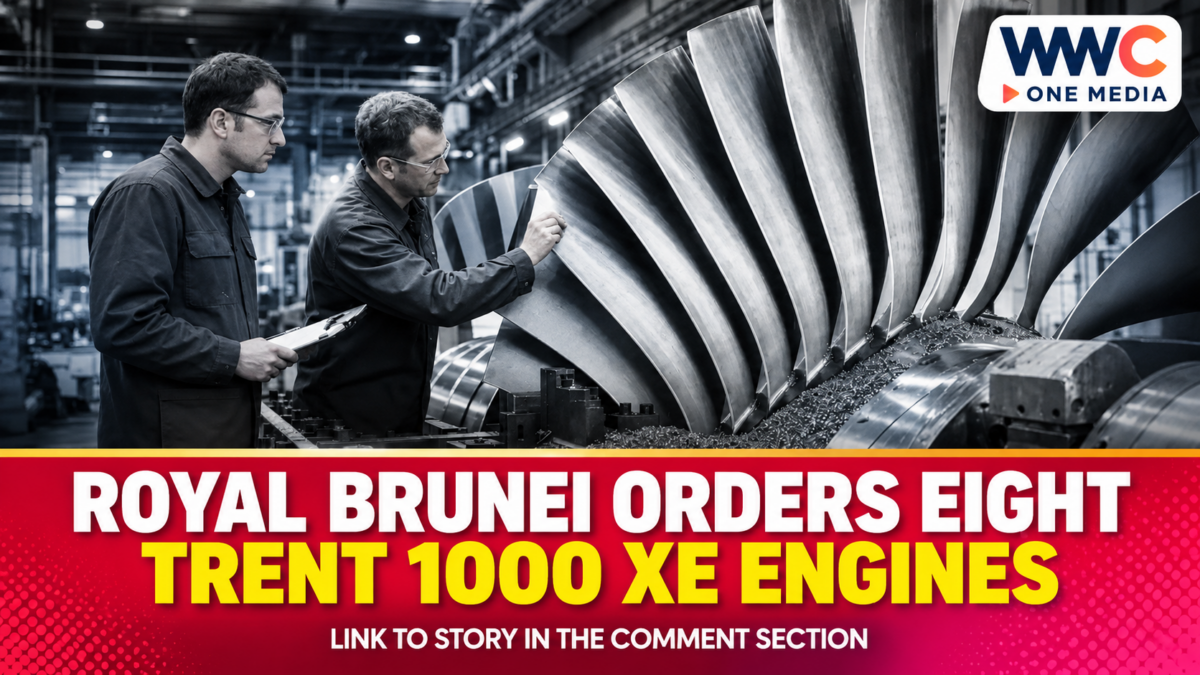
Royal Brunei Airlines is moving forward with its long-term fleet modernisation programme after selecting eight Trent 1000 XE engines from British aerospace manufacturer Rolls-Royce. The engine manufacturer announced the order on Nov. 19, 2026, covering four Boeing 787 Dreamliners that the Southeast Asian carrier ordered in 2024.
The transaction represents another commercial opportunity for Rolls-Royce as it seeks to improve the competitiveness of its widebody aircraft engines through engineering upgrades, maintenance capabilities and long-term customer relationships.
For Royal Brunei Airlines, however, the investment is about more than acquiring newer technology. Aircraft availability, maintenance costs and operational reliability will help determine whether its fleet renewal delivers sustainable commercial benefits.
A fleet renewal strategy years in the making
Royal Brunei’s engine selection forms part of an aircraft investment programme that began well before the November announcement.
On Feb. 20, 2024, Boeing confirmed that Brunei’s national carrier had purchased four 787-9 Dreamliners. At the time, the airline operated five 787-8 aircraft serving markets across Asia, Australia, the Middle East and the United Kingdom.
The newer aircraft offer greater passenger capacity than the earlier variant, giving the airline additional flexibility when planning international services.
However, acquiring larger aircraft does not automatically translate into profitable expansion. Airlines must balance additional seating capacity against passenger demand, maintenance expenditure, financing obligations and operating costs.
The same investment considerations are relevant to other Southeast Asian carriers, as illustrated by Cebu Pacific’s fleet modernisation and profitability challenges.
Royal Brunei’s November engine order represents another step towards implementing its previously announced aircraft investment rather than a separate purchase of four additional aircraft.
Why the Trent 1000 XE matters for Rolls-Royce
The Trent 1000 XE incorporates engineering improvements intended to extend the intervals between major engine maintenance requirements.
A central element of the manufacturer’s upgrade programme involves redesigned turbine components capable of operating more effectively under demanding thermal conditions.
Rolls-Royce’s technical disclosures indicate that the combined improvements could extend engine operating periods before removal by as much as threefold compared with the preceding Trent 1000 TEN configuration.
In aviation, this measurement is commonly described as time on wing.
Longer operating intervals can potentially allow airlines to deploy their aircraft more consistently while reducing the frequency of maintenance-related interruptions.
The commercial implications extend beyond the engineering itself. An aircraft that spends less time undergoing maintenance may provide its operator with greater flexibility when allocating capacity across its network.
Nevertheless, the manufacturer’s projected durability improvement should not be interpreted as a guarantee that every engine will achieve identical results. Actual performance must be assessed through operational experience.
Rolls-Royce is investing beyond engine production
The Royal Brunei transaction comes as Rolls-Royce continues developing its worldwide maintenance infrastructure.
Its November announcement identified dedicated Trent 1000 XE maintenance facilities in Britain, Singapore and Germany. The manufacturer has also expanded its inventory of replacement engines to support customers experiencing unexpected operational interruptions.
These initiatives complement a wider £1 billion commitment covering improvements across the Trent engine range.
The distinction matters because an engine manufacturer’s commercial relationship with an airline can continue long after the original equipment purchase.
Maintenance, replacement components and technical support represent continuing requirements throughout an aircraft’s operating life.
For an airline with a relatively concentrated widebody fleet, dependable access to these services can be particularly important. An unexpected aircraft interruption may have consequences for scheduling, passenger connections and operational costs.
Rolls-Royce’s investment in engineering and maintenance capacity therefore addresses two interconnected priorities: improving its products and strengthening the support available after delivery.
A broader opportunity in Southeast Asian aviation
Royal Brunei’s investment provides another example of how Southeast Asian airlines are approaching long-term fleet development.
Boeing’s original 2024 announcement identified the region as a significant prospective market for commercial aircraft deliveries.
For aerospace suppliers, such investments create opportunities that extend beyond the initial sale. Aircraft purchases can generate demand for engineering services, technical training, maintenance infrastructure and replacement equipment.
The Philippines is also participating in this regional investment cycle. Readers can examine the broader commercial implications through WWC’s coverage of Philippine Airlines’ Dreamliner transaction and Southeast Asian aviation investments.
Investment decisions differ between airlines, reflecting their respective networks, commercial priorities and aircraft requirements.
Meanwhile, developments such as Cebu Pacific’s anniversary Dreamer Plane and continuing fleet development illustrate how aircraft modernisation also forms part of broader corporate positioning.
The challenge is ensuring that these investments generate lasting operational value rather than simply increasing the size or visibility of an airline’s fleet.
Can the engine order strengthen Rolls-Royce’s competitive position?
Rolls-Royce’s Nov. 12, 2026, trading update reported that roughly 60% of eligible Trent 1000 engines already operating had received the XE upgrade incorporating improved turbine blades.
The company also recorded a 4% annual increase in large-engine flying hours during January to October 2026, reaching 114% of the equivalent 2019 level.
These figures provide context for the manufacturer’s continuing transformation programme.
WWC business analysis: Royal Brunei’s decision is commercially meaningful because an existing customer has selected an upgraded engine for its future aircraft. Retaining established customers can help manufacturers sustain relationships that extend across multiple aircraft investment cycles.
However, one order cannot establish an industry-wide shift in market share or guarantee higher corporate earnings.
The financial contribution will depend on factors including contractual terms, production costs, delivery schedules and subsequent service requirements.
Rolls-Royce’s announcement did not disclose the monetary value of the Royal Brunei transaction. Investors should therefore avoid treating the eight-engine order as a confirmed increase of any particular amount in company revenue or profit.
What happens next
The next meaningful developments will involve aircraft deliveries, engine installation and operational performance.
For Royal Brunei Airlines, the central question is whether the modernised fleet can support its network requirements while maintaining dependable service and commercially sustainable operating costs.
For Rolls-Royce, the longer-term test will be whether improved durability and expanded maintenance capacity translate into sustained customer confidence.
The November order establishes a concrete commercial milestone. Its broader significance will become clearer as the upgraded engines accumulate operating experience and airlines assess their performance.
In an industry where expensive equipment must generate value over many years, the ultimate measure of an engine’s success is not simply how many units are ordered, but how effectively they support the aircraft entrusted to them.
Frequently asked questions
How many Rolls-Royce engines did Royal Brunei Airlines order?
Royal Brunei Airlines ordered eight Trent 1000 XE engines for four Boeing 787 Dreamliner aircraft.
Did Royal Brunei order four additional aircraft in November 2026?
No. The engine order relates to four Boeing 787-9 aircraft purchased in 2024.
What makes the Trent 1000 XE different?
It incorporates durability improvements, including redesigned turbine components intended to increase operating intervals between maintenance requirements.
How much is the Royal Brunei Rolls-Royce deal worth?
The Nov. 19, 2026, announcement did not disclose the transaction’s financial value.
Why is the deal important to Rolls-Royce?
It demonstrates continued demand from an established airline customer and provides another commercial opportunity for the manufacturer’s upgraded engine platform.