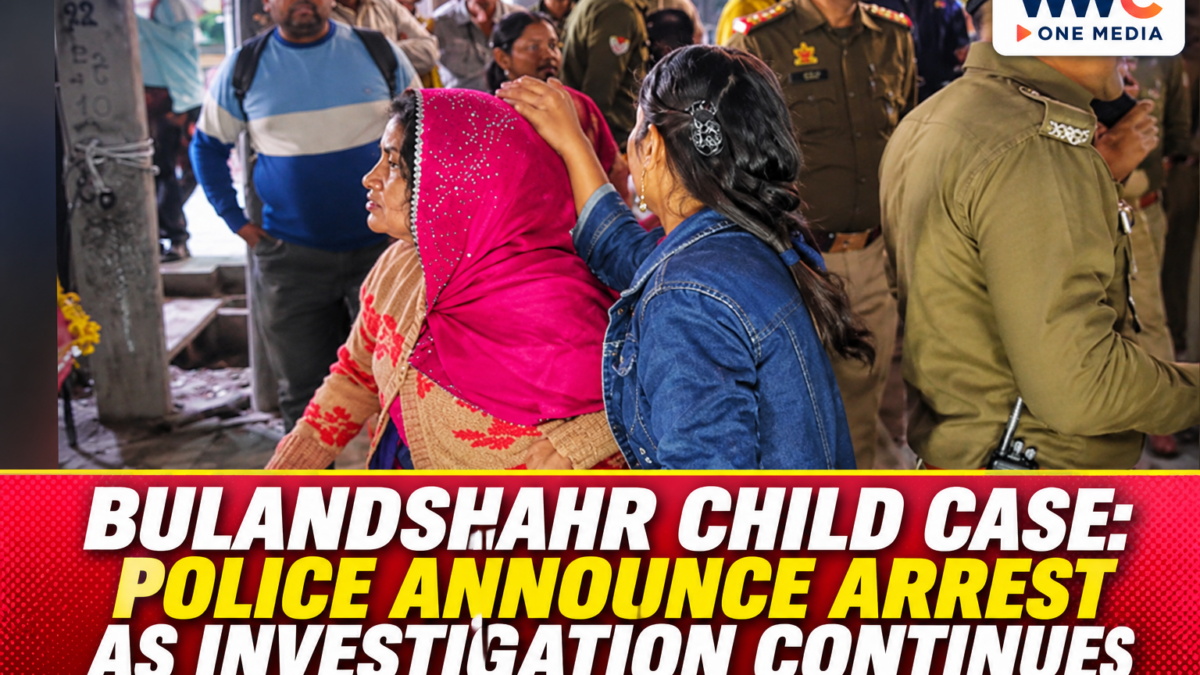
Police in Uttar Pradesh have announced the arrest of a woman in connection with the death of a three-year-old girl whose body was recovered from a rented room in Bulandshahr. The arrest follows an initial police search after the child was reported missing on Nov. 21.
The case has moved from an early missing-child response to a criminal investigation involving a formal arrest. But several important questions remain unanswered publicly, including the medical findings on the child’s death and whether investigators can establish the suspected circumstances described in the initial police statement.
Police announce arrest after joint operation
In its latest public update, Bulandshahr Police said its SWAT team and Kotwali Nagar police had arrested a woman in connection with the child’s death. The department also published a statement from Additional Superintendent of Police (City) Abhishek Pratap Ajay.
The announcement marks a change in the woman’s reported legal status. An earlier police statement said she had been taken into custody for questioning while officers investigated the circumstances surrounding the child’s death.
The latest announcement confirms an arrest, but it does not establish guilt. That determination belongs to the judicial process, where allegations must be tested against evidence and applicable law.
For readers following the case, the distinction matters: police can announce an arrest while the investigation remains active and before a court has reached any conclusion.
What the initial police statement established
Bulandshahr Police said it received information on Nov. 21 that a three-year-old girl had gone missing from the Avantika Nagar Bhud locality under Kotwali Nagar police station.
Officers went to the area and began searching for the child. During the search, police recovered her body from a room occupied by a woman renting accommodation in a house owned by Rohtash Rajput.
The police statement placed the room approximately 40 metres from the child’s home. It also said the child’s body was sent for post-mortem examination after the required inquest documentation was completed.
These details provide the basic sequence disclosed by the investigating department: a missing-child report, a search in the neighbourhood, the recovery of the body and the subsequent police investigation.
The statement does not provide a complete investigative chronology. It does not publish the underlying complaint, the full evidence collected at the scene or the medical findings needed to establish the cause of death.
Why the suspected motive must remain unproven
The initial police statement said the circumstances at the scene raised a preliminary suspicion that the child had been killed by suffocation in connection with an occult practice.
That wording is important. Police described an early investigative suspicion, not a final forensic conclusion or a motive established in court.
The arrest announcement also does not, by itself, prove that the suspected ritual explanation is correct. Investigators would need evidence that supports the relevant allegations, while medical findings would be necessary to establish the cause and manner of death.
The public should therefore avoid treating rumours, neighbourhood claims or online speculation as established facts. An allegation about a suspected practice is not proof that such a practice occurred or that it explains the child’s death.
WWC has previously examined the importance of separating police claims from established findings in its report on the Gorakhpur death investigation and the limits of CCTV evidence. The circumstances are different, but the reporting principle is the same: evidence must support each conclusion.
The investigation now faces several evidence questions
The next stage will depend on the evidence collected by investigators and the findings of the post-mortem examination.
The medical report may help clarify the cause of death. Police evidence, witness accounts and other material gathered during the investigation may help establish the sequence of events and whether the arrested woman can be linked to the alleged offence.
The initial police statement confirms that the body was sent for post-mortem examination. However, the public police updates reviewed for this report do not disclose the examination’s findings.
Nor do the statements provide a complete account of the formal charges, the evidence relied upon for the arrest or the next court proceedings. Those details should be reported only when confirmed through an official police announcement or an accessible court record.
This is not a minor distinction. An arrest is a procedural development, while a charge and a judicial finding are separate stages. Treating them as interchangeable risks misleading readers about the status of a criminal case.
Child protection and responsible reporting
The death of a young child is a matter of serious public concern. It also requires care in how information is presented, particularly when the investigation involves allegations against an adult and a family whose privacy should be protected.
The child’s name, photographs and identifying family details are not necessary to explain the police response. Publishing them could expose relatives to unwanted attention without adding meaningful information about the investigation.
WWC has addressed similar reporting responsibilities in its coverage of the Ameenpur child rescue and the limits of what a police account can establish. That was a separate case, but it illustrates why a child’s welfare and privacy should remain central even when authorities release details of an investigation.
The same care applies to the arrested woman. The police announcement should be reported accurately, without language that presents an allegation as a conviction.
In a separate Philippine case, WWC also examined how authorities and communities should handle incidents involving young people in its report on Davao police and the protection of students’ identities. The legal circumstances differ, but responsible reporting requires restraint whenever children are involved.
What happens next
The investigation remains the central issue. The public needs a clear account of the post-mortem findings, the formal legal action taken after the arrest and any subsequent court proceedings.
A further police statement could clarify the evidence supporting the arrest and whether investigators have filed or forwarded a formal case. Any such update should be distinguished from a court’s eventual assessment of the evidence.
For now, the confirmed public record establishes that a three-year-old girl was reported missing on Nov. 21, that her body was recovered from a rented room nearby, and that Bulandshahr Police later announced the arrest of a woman in connection with the case.
The suspected motive and the final medical findings should remain open questions until supported by official records.
Frequently asked questions
1. Where did the incident happen?
The incident occurred in the Avantika Nagar Bhud locality in Bulandshahr, Uttar Pradesh, India, within the area served by Kotwali Nagar police station.
2. How old was the child?
Bulandshahr Police described the missing child as a three-year-old girl.
3. Has a suspect been arrested?
Yes. Bulandshahr Police later announced that a woman had been arrested following an operation involving its SWAT team and Kotwali Nagar police.
4. Has the motive been established?
No final motive has been established in the public police statements reviewed. The initial statement described an occult-practice-related explanation as a preliminary suspicion, which should not be treated as proven.
5. Has the cause of death been confirmed?
The initial police statement said the child’s body was sent for post-mortem examination. The medical findings were not included in the public updates reviewed for this report.