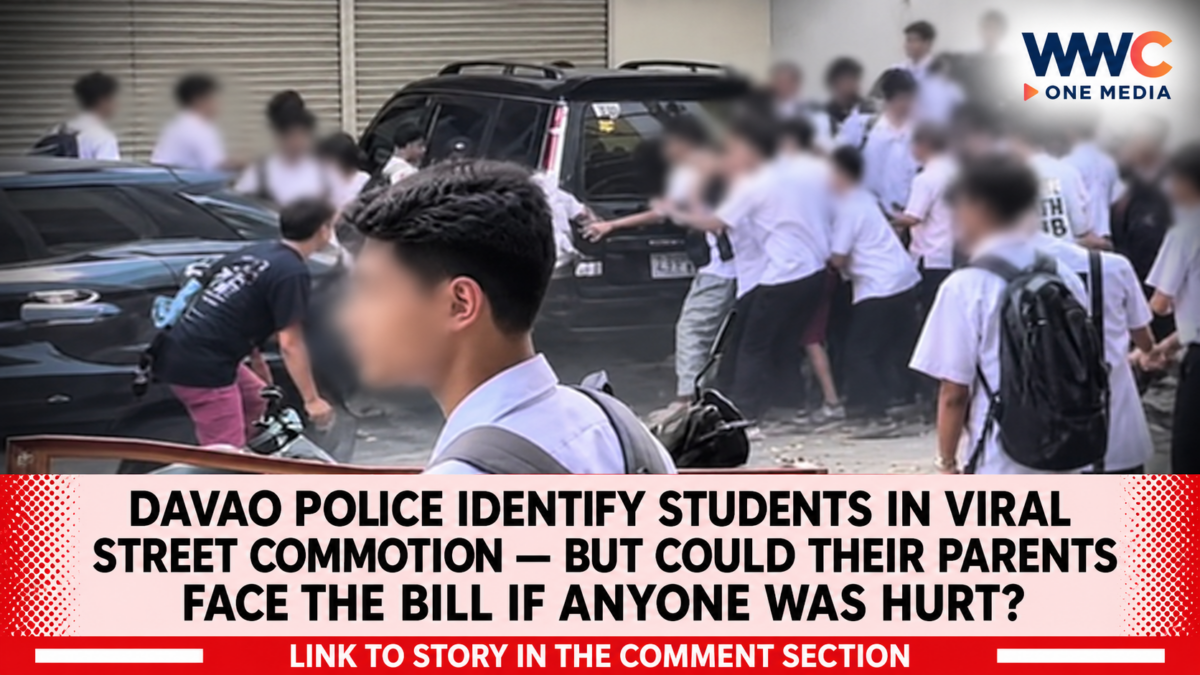
DAVAO CITY, Philippines — A street commotion involving students in school uniforms has drawn police attention after a video of the incident circulated on social media, prompting authorities to identify the minors involved and arrange a conference with their parents or guardians.
The Davao City Police Office (DCPO), through Police Station 2 (San Pedro), said it coordinated with the school administration to establish the identities of the students involved. The police statement was issued on November 7 and reported by SunStar Davao on November 11.
Authorities have not publicly identified the school or disclosed the exact location of the incident. While the circulating video appeared to show the disturbance along Torres Street, police have not independently confirmed that location in their public statement.
The immediate response is now focused on addressing the incident with the students, their families and the school, while ensuring that the legal protections afforded to minors are observed.
“Even when minors are involved, accountability remains,” the San Pedro Police Station said.
But police are also delivering a second warning: parents may face civil liability in certain circumstances if their children cause injuries or property damage, and the public should stop circulating photos, videos or personal details that could expose the identities of the minors.
Police Have Identified the Students and Scheduled a Meeting With Their Parents
In its November 7 statement, Police Station 2 said it worked closely with the concerned school administration to identify the students involved in the reported commotion.
A conference with their respective parents or guardians has also been scheduled to discuss the incident and determine the appropriate next steps.
Major Robel Saavedra, chief of San Pedro Police Station, led the police response, according to reports by SunStar Davao and Edge Davao.
The police have not released the students’ names, the school’s identity or other details that could reveal who they are. That restraint is important because the individuals involved are minors, whose identities and records receive special protection under Philippine law.
The incident has also prompted authorities to remind young people that public disturbances and physical confrontations can have consequences beyond the immediate altercation.
Police urged students to think carefully about their actions and encouraged parents to strengthen supervision and guidance at home.
What Does the Law Say About Minors Involved in a Street Disturbance?
The case raises an important legal question: can students involved in a street altercation face criminal consequences even if they are below 18?
The answer depends on their age, the circumstances and the applicable provisions of Republic Act No. 9344, or the Juvenile Justice and Welfare Act of 2006, as amended by Republic Act No. 10630.
Under the law:
- Children aged 15 and below are exempt from criminal liability, although they may still be subject to appropriate intervention programs.
- Children above 15 but below 18 are also exempt from criminal liability unless they acted with discernment.
- If a child in this age group is found to have acted with discernment, the case must still be handled under the juvenile justice system and its applicable safeguards.
Discernment is not automatically established simply because a young person participated in a fight or disturbance. It must be assessed under the law and the circumstances of the particular case.
The juvenile justice framework emphasizes rehabilitation, intervention and reintegration rather than treating children in conflict with the law in the same way as adult offenders.
Depending on the circumstances and the offense involved, diversion may also be available under the law. It is not an automatic outcome for every incident.
For the Davao students, police have not publicly disclosed their ages or announced any criminal charges. It would therefore be premature to conclude that any of them will face prosecution.
Could Parents Be Held Financially Responsible?
The police warning to parents is another significant part of the case.
San Pedro police reminded parents and guardians that they may be held civilly liable for injuries or property damage caused by their minor children under applicable provisions of Philippine law.
This does not mean parents automatically owe compensation whenever their child is involved in a disturbance.
Civil liability depends on the facts, the legal relationship involved, the nature of the damage and the applicable rules. Article 2180 of the Civil Code, for example, provides for parental responsibility for damages caused by minor children who live in their company, subject to the law’s conditions and defenses.
The Family Code also recognizes parental authority and responsibilities toward children.
In practical terms, if an incident results in documented injuries or damaged property, affected parties may seek appropriate remedies. Whether parents or guardians are legally responsible must be determined based on the circumstances and applicable law.
No publicly disclosed information in the reports establishes that anyone suffered a particular injury, that property was damaged, or that a compensation claim has already been filed in this Davao incident.
The police reminder is therefore a warning about possible legal consequences, not an announcement that the students’ parents have already been ordered to pay damages.
Why Police Are Asking the Public to Stop Sharing the Video
Beyond the disturbance itself, authorities are concerned about the continued circulation of images and videos that could identify the students.
The DCPO urged social media users not to share photographs, recordings or other identifying information involving the minors.
Section 43 of Republic Act No. 9344 protects the confidentiality of records and proceedings involving children in conflict with the law. The law’s protections are intended to prevent the exposure of children to public identification and the lasting stigma that can follow them.
The Data Privacy Act of 2012 also establishes requirements for the lawful processing and disclosure of personal information. Its application depends on the circumstances, but it reinforces the need to handle identifiable information responsibly.
A viral video can remain accessible long after the incident has ended. Reposting it, adding names, identifying a school or tagging the students can increase the risk of harassment, humiliation and unwanted attention.
Even when a post is intended to criticize behavior or demand accountability, exposing a minor’s identity can cause further harm.
The police message is clear: report disturbances to authorities rather than recording and spreading material that could identify children.
What Other Davao Reports Reveal About the Concern Over Student Safety
The latest incident comes amid broader discussions about school safety, bullying and the protection of young people in Davao.
In a separate report published on November 12, The Philippine Star said Ateneo de Davao University was investigating an alleged bullying incident involving junior high school students. The university said its children’s protection committee was reviewing the case, parents had been informed, and the matter had been referred to the Department of Education.
The university also urged the public and media to avoid sharing names, images or details that could identify the minors involved.
That investigation is separate from the street commotion addressed by San Pedro police. There is no established evidence connecting the two incidents. However, both reports highlight the importance of protecting children while ensuring that allegations are properly investigated and addressed.
Earlier, SunStar Davao reported in 2022 that a bullying incident involving minors at a public school had been resolved at the school level following discussions between parents and the school’s Child Protection Committee.
The Department of Education’s regional spokesperson at the time emphasized that schools must implement anti-bullying and child-protection policies, while parents also have a role in guiding children’s behavior.
These reports point to a continuing challenge: student safety cannot depend on police intervention alone. Schools, families, local authorities and social welfare agencies all have responsibilities in preventing violence and responding when incidents occur.
Davao Schools Face Wider Security and Child-Protection Challenges
The issue also connects to the wider security preparations being undertaken by education authorities in the Davao Region.
A regional school-security audit reported by WWC ONE MEDIA found differences in the availability of security guards, CCTV cameras, emergency communication systems and police visibility across schools.
The findings are discussed in DepEd-Davao Strengthens School Security as Audit Reveals Gaps Across the Region.
The audit is relevant because a safe learning environment requires more than responding after an incident becomes viral. Schools need appropriate reporting channels, effective supervision, clear response procedures and coordination with law enforcement.
But physical security is only one part of the solution. Bullying, peer conflict and other behavioral concerns also require early intervention, counseling and support for students.
WWC ONE MEDIA has also examined the role of local youth leaders in identifying warning signs before conflicts escalate in PNP Taps SK Officials to Spot Early Warning Signs Among Youth as School Violence Raises Concern.
That approach highlights the value of community involvement. Youth leaders, parents, teachers and police can help identify problems early, provided that concerns are handled responsibly and young people are not unfairly labeled.
Can Schools and Parents Prevent the Next Viral Student Incident?
The police response in Davao is focused on the students already identified, but preventing similar incidents will require action beyond a single parents’ meeting.
Schools can reinforce student discipline through clear conduct rules, guidance services, anti-bullying policies and child-protection procedures. Parents can strengthen supervision, discuss responsible behavior and respond promptly when they notice signs of conflict or distress.
Students also need safe ways to report bullying, threats or escalating disputes without fear of retaliation.
A reporting mechanism is useful only when students trust that adults will listen, protect their identities where appropriate and act on credible concerns.
WWC ONE MEDIA previously reported on one such initiative in Speak-Up Boxes Could Give Students a Safer Way to Report Bullying — But Will Schools Act on What They Hear?.
The broader lesson is that prevention works best when students know where to seek help and authorities respond before disagreements turn into public confrontations.
Accountability Must Not Come at the Expense of Children’s Rights
The Davao incident has triggered understandable concern because a street disturbance involving students can raise questions about discipline, safety and parental supervision.
But accountability and child protection are not opposing principles.
Authorities can address misconduct while observing juvenile justice procedures. Parents can be reminded of their responsibilities without being presumed liable before the facts are established. The public can demand safer communities without exposing the identities of minors.
That balance is especially important when a video goes viral and online reactions move faster than official investigations.
For now, police have identified the students and scheduled a conference with their parents or guardians. The school has not been publicly named, and authorities have not disclosed the students’ identities or announced criminal charges.
The next steps will depend on the outcome of the discussions and any further findings by the authorities and school administration.
The bigger question for Davao is not simply who appeared in the viral video. It is whether the incident will lead to stronger prevention, responsible reporting and a safer environment for students—without turning minors into targets of online punishment before the facts and appropriate interventions are established.