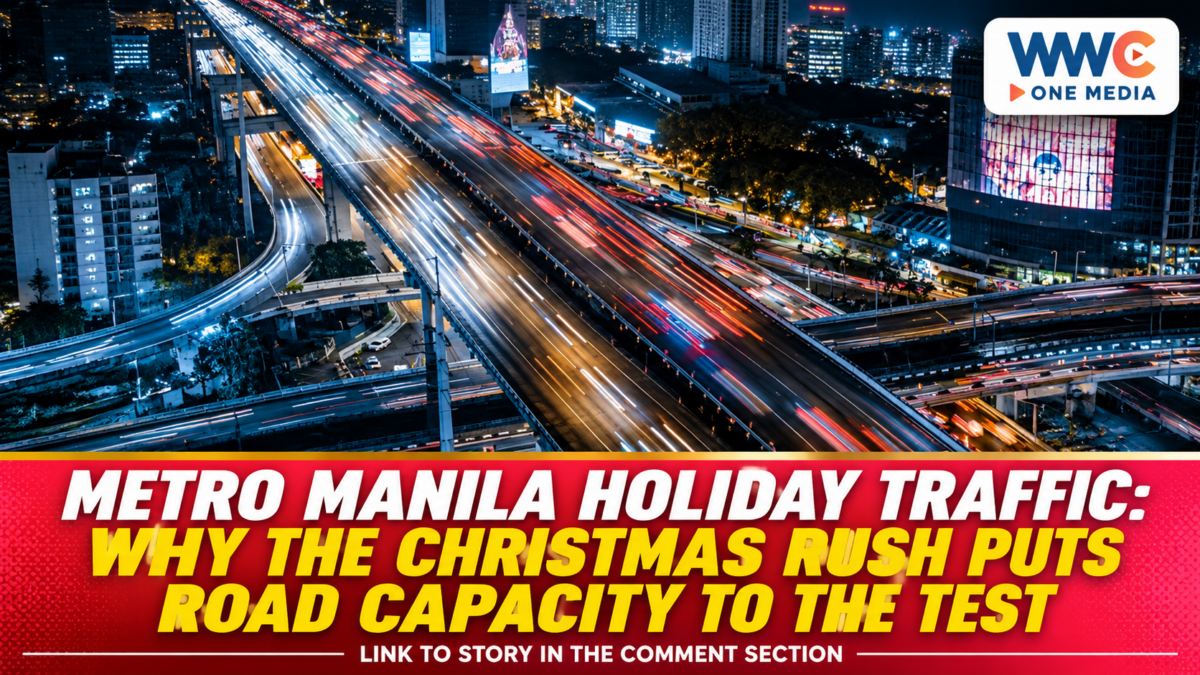
Metro Manila’s Christmas travel period is approaching with government traffic measures already in place, including adjusted mall operating hours and a nighttime delivery window intended to manage vehicle movement in the capital. The arrangements, announced ahead of the November ASEAN Summit, remain relevant as businesses and commuters enter the final weeks before Christmas.
The challenge is bigger than keeping vehicles moving during peak hours. Metro Manila must accommodate shoppers, workers, delivery operators and families travelling for holiday gatherings while maintaining access to major commercial areas and transport routes. Government announcements provide a picture of the measures adopted so far, but they do not establish how much travel time motorists will save or whether congestion will ease.
Metro Manila holiday traffic faces a different set of demands
The November preparations for the 49th ASEAN Summit brought traffic management into sharp focus. Malacañang declared November 16 to 18, 2026, special non-working days throughout the National Capital Region, citing the need to ease congestion and support the security arrangements for the regional gathering.
Proclamation No. 1447, signed by Acting Executive Secretary Ralph G. Recto on September 17 by authority of President Ferdinand R. Marcos Jr., covered the three-day period. The declaration was specific to Metro Manila and was connected to the Philippines’ hosting of the summit and related meetings. Presidential Communications Office+1
That temporary work suspension has ended. The Christmas period, however, presents a different mobility challenge because shopping, deliveries, regular employment and personal travel continue at the same time.
Unlike a three-day suspension of work, the holiday season does not remove ordinary commuting demand. Instead, it can add trips connected with shopping, dining, events and family visits. The scale of any increase should be measured through actual traffic data rather than assumed from seasonal expectations.
Mall hours and delivery schedules are part of the traffic response
A government briefing on November 12 outlined adjustments affecting commercial activity in Metro Manila.
The announced mall operating hours were set at 11 a.m. to 11 p.m., excluding weekends and holidays, from November 16 to December 25, 2026. Deliveries of non-perishable goods were also assigned a window from 11 p.m. to 5 a.m.
The measures were presented as part of preparations to manage traffic during the ASEAN Summit and the approaching Christmas season. Presidential Communications Office+1
For retailers, the adjusted schedule means planning staff shifts, customer service and store operations around the announced hours. Delivery operators handling non-perishable products must also account for the specified overnight period.
The distinction between perishable and non-perishable goods matters. The announcement referred specifically to non-perishable deliveries; it should not be interpreted as a blanket restriction covering every type of shipment.
The practical effect will depend on how businesses coordinate their supply chains and how consistently the arrangements are implemented. Moving some deliveries outside daytime periods may reduce competition for road space during certain hours, but it does not automatically eliminate congestion elsewhere in the network.
Road repairs remain a separate pressure on mobility
Traffic management also depends on how road maintenance and infrastructure work are scheduled.
Metro Manila’s major corridors have faced rehabilitation requirements, and roadwork can affect traffic even when it is intended to improve long-term conditions. A project that narrows lanes or changes vehicle access can reduce the amount of road space available while construction is underway.
WWC ONE MEDIA has previously examined the disruption associated with EDSA rehabilitation work and the traffic-management requirements imposed on contractors. The broader lesson is that construction schedules and on-site traffic management can influence how smoothly a major road operates.
The Department of Public Works and Highways has also been preparing further rehabilitation work on C5. The project’s progress is relevant because the corridor serves commuters and commercial traffic across several parts of the capital region. Its eventual construction schedule will matter to motorists once major works begin.
Readers can review the background in WWC’s report on the planned C5 rehabilitation and the road upgrade programme.
These projects should not be confused with a confirmed Christmas traffic disruption. Their relevance is that Metro Manila must balance road maintenance with the need to keep existing routes usable. The actual effect on motorists depends on the location, timing, scope and traffic controls for each project.
Why traffic management matters to businesses and workers
Traffic congestion carries costs beyond the time motorists spend behind the wheel.
For employees, longer journeys can affect attendance, working hours and the ability to meet personal commitments. For businesses, delays can complicate deliveries, shift changes and the movement of goods between warehouses, stores and customers.
Retailers also face a scheduling challenge during the holiday period. Mall hours influence when employees report for work, when customers can visit and when suppliers can complete deliveries. Businesses that rely on overnight logistics need to coordinate transport, receiving operations and inventory planning.
These are reasonable operational considerations, not evidence that every company will experience losses or that the government’s measures will fail.
The importance of the issue is reflected in earlier government preparations for major travel periods. During Undas, the Philippine National Police Highway Patrol Group announced personnel deployments and motorist assistance measures intended to support road safety and traffic management. WWC previously covered those preparations in its report on the HPG’s Undas deployment and highway assistance operations.
The Christmas period requires its own operational assessment. Measures designed for a major diplomatic event or a cemetery-related holiday cannot automatically be treated as a complete plan for the weeks surrounding Christmas and New Year.
What commuters should watch for
Motorists and commuters should distinguish between standing traffic rules, temporary restrictions and advisories issued for specific dates or locations.
The November 16–18 special non-working days have passed. The announced mall-hour adjustment and non-perishable delivery schedule, however, were set to run through December 25.
Travellers should check current advisories before leaving, particularly when their routes pass through major commercial districts or areas undergoing road works. Businesses should confirm delivery arrangements with suppliers and transport partners rather than assume that every route or operating schedule remains unchanged.
The government’s public announcements establish that traffic and commercial schedules were adjusted for the summit and the Christmas period. They do not provide a comprehensive forecast of holiday traffic volumes, average travel times or the number of motorists expected on each major road.
That information would be needed to assess whether the measures are producing measurable improvements.
What happens next
The immediate test is how effectively agencies, local governments, commercial establishments and delivery operators coordinate during the remaining weeks before Christmas.
Clear communication will be essential. Motorists need accurate information about road conditions and restrictions, while businesses need enough notice to adjust operating hours, staffing and logistics.
A more complete assessment would require updated traffic counts, travel-time comparisons and information on how the announced delivery and mall schedules are being implemented. Without those figures, claims that congestion has improved or worsened would be premature.
Metro Manila’s holiday traffic problem cannot be solved by a schedule adjustment alone. The city’s road capacity, construction activity, public transport services and the timing of commercial trips all influence how people and goods move.
The Christmas season will show whether the current arrangements can help manage those competing demands without placing unnecessary pressure on commuters and businesses.
Frequently Asked Questions
When do the announced Metro Manila mall hours apply?
The government announced mall operating hours of 11 a.m. to 11 p.m., excluding weekends and holidays, from November 16 to December 25, 2026. Presidential Communications Office
What are the announced delivery hours for non-perishable goods?
The November 12 government briefing specified a delivery window from 11 p.m. to 5 a.m. for non-perishable goods. Presidential Communications Office
Were November 16 to 18 declared holidays nationwide?
No. Proclamation No. 1447 declared those dates special non-working days in the National Capital Region, not throughout the entire country. Presidential Communications Office+1
Does the announced schedule guarantee lighter Christmas traffic?
No. The announcements describe traffic-management measures, not measured reductions in congestion. Actual results would require traffic-volume and travel-time data.
What should motorists do before travelling?
Check current traffic advisories, confirm whether road works or temporary restrictions affect the intended route, and allow additional travel time when schedules or road conditions are uncertain.